



Listening Article
Table of Contents
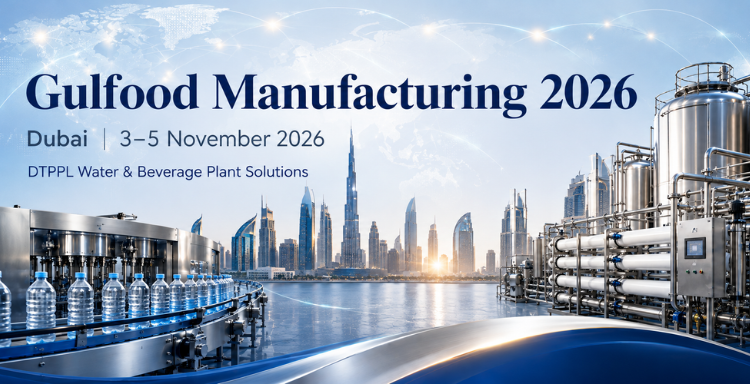
Gulfood Manufacturing 2026 in Dubai: Connecting DTPPL’s Water and Beverage Plant Solutions with Global Growth Markets
July 22, 2026
Event: Gulfood Manufacturing 2026
Dates: 3–5 November 2026
Venue: Dubai World Trade Centre, Dubai, UAE
Industry: Food and beverage processing, packaging, automation, ingredients and supply-chain solutions
AI Summary
Gulfood Manufacturing 2026 will bring food and beverage manufacturers, investors, plant owners and technology providers to Dubai from 3–5 November 2026. The exhibition provides a strategic setting for evaluating technologies that can improve production capacity, hygiene, packaging consistency and operational efficiency.
For international businesses planning packaged drinking water, mineral water, juice or carbonated soft drink facilities, Dharmanandan Techno Projects Pvt. Ltd. (DTPPL) offers integrated solutions covering water treatment, bottle production, filling, labelling, coding and secondary packaging. Its equipment portfolio can support both developing markets that require accessible drinking-water production and mature markets seeking automation, product diversification and scalable manufacturing.
Gulfood Manufacturing 2026 and the Next Phase of Global Beverage Production
The global beverage industry is entering a period in which production capacity alone is no longer sufficient. Manufacturers must respond to changing packaging formats, tighter hygiene expectations, rising operating costs and growing demand for reliable local supply. Gulfood Manufacturing 2026 provides an international meeting point where these priorities can be translated into practical plant and machinery decisions.
Scheduled for 3–5 November 2026 at the Dubai World Trade Centre, the exhibition covers processing, packaging, ingredients, automation and supply-chain technologies. Its location in Dubai makes it especially relevant to companies serving the Middle East, Africa, South Asia and other export-oriented markets. According to the official event information, the exhibition is expected to bring together more than 2,500 global exhibitors representing the food and beverage manufacturing ecosystem.
For DTPPL, the event represents more than an opportunity to introduce individual machines. It creates a platform for discussing how an entire production line can be designed around local water conditions, intended products, packaging preferences, target capacity and future expansion.
Why International Plant Investors Are Looking Beyond Standalone Machines
A mineral water or beverage facility is a connected production environment. Water treatment capacity must correspond with the filling speed. Bottle availability must support uninterrupted production. Filling, capping, labelling and wrapping equipment must also operate at compatible speeds.
When machines are selected independently, the plant may experience bottlenecks, excessive handling or uneven utilisation. This is why international investors increasingly look for suppliers capable of coordinating multiple stages of production.
DTPPL provides integrated plant solutions that may include:
- Raw-water treatment and reverse osmosis systems
- Mineral water plants
- Packaged drinking-water production lines
- Carbonated soft drink plants
- Juice processing and filling plants
- PET bottle filling machines
- Automatic PET blow moulding machines
- Bottle rinsing, filling and capping systems
- Jar washing and jar filling machines
- Water pouch packing machines
- Shrink-sleeve and sticker labelling machines
- BOPP labelling machines
- Batch coding machines
- Automatic and semi-automatic shrink-wrapping machines
- Water chillers and supporting utility systems
This broad portfolio allows discussions to begin with the manufacturer’s business objective rather than with a predetermined machine. A start-up may require a lower-capacity, semi-automatic configuration, while an established beverage company may need a higher-speed line with integrated bottle production and end-of-line packaging.
Read Our Article
Market Demand Across the Middle East
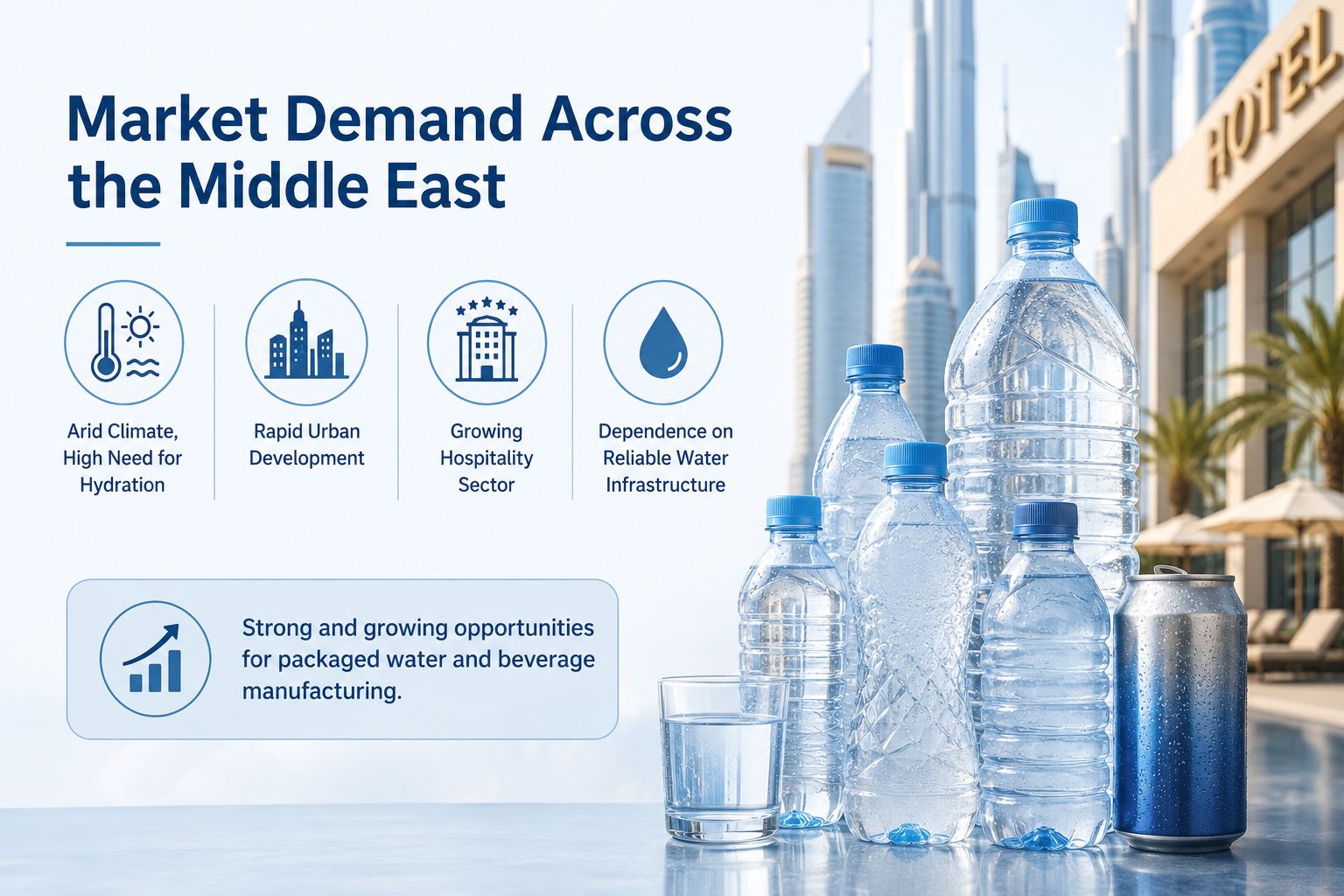
The Middle East offers opportunities for packaged water and beverage manufacturing because of its climatic conditions, urban development, hospitality sector and dependence on dependable water-treatment infrastructure. However, the region is not a single uniform market.
In the UAE and Saudi Arabia, manufacturers are increasingly interested in automation, consistent packaging quality and efficient plant layouts. Companies serving supermarkets, hotels, restaurants and institutional buyers require lines capable of maintaining steady output across different bottle sizes and multipack formats.
Oman, Qatar, Kuwait and Bahrain offer opportunities for compact but efficient facilities serving local distribution networks. In these markets, a modular plant can help a manufacturer begin with packaged water and subsequently add flavoured beverages, juices or carbonated drinks.
DTPPL can assist such businesses by aligning treatment capacity, bottle format, filling speed and packaging configuration. Equipment selection can also account for high ambient temperatures, demanding production schedules and the need for reliable maintenance planning.
Africa: Local Production and Scalable Water Infrastructure
Across Africa, demand is shaped by population growth, expanding cities and the need for dependable packaged drinking water. Opportunities are particularly visible in countries such as Nigeria, Ghana, Kenya, Tanzania, Senegal, Côte d’Ivoire, Uganda and South Africa, although operating conditions differ considerably.
Some investors require entry-level production lines for local or regional distribution. Others need fully automatic plants for national retail networks. Packaging preferences also vary: PET bottles may dominate organised retail, while jars and water pouches can remain commercially important in price-sensitive markets.
DTPPL’s value in these markets lies in its ability to configure plants around the intended business scale. A project may combine an RO system with bottle filling or it may extend to an integrated line incorporating blow moulding, labelling, coding and shrink wrapping. This approach allows entrepreneurs to invest in the functions they need while preparing the facility for later expansion.
The company already reports a presence in more than 20 countries, with project experience that includes African, Middle Eastern and Asian markets. This international exposure is valuable when planning equipment installation, operator training, spare-parts requirements and remote technical assistance.
OUR OTHER PRODUCT
South Asia: Capacity Expansion and Product Diversification
India, Nepal, Bangladesh and Sri Lanka have substantial opportunities in packaged water and ready-to-drink beverages. Demand is not limited to major cities; smaller urban centres, tourism destinations, transport corridors and industrial areas are creating viable regional markets.
In South Asia, the challenge frequently involves balancing investment with output. A plant must be commercially appropriate for its immediate market but should not become obsolete when demand increases. DTPPL can support this requirement through semi-automatic and automatic configurations suited to different production levels.
Existing mineral water manufacturers can also use DTPPL’s portfolio to address specific line constraints. For example, a company may add an automatic blow moulding machine to reduce dependence on purchased bottles, install a faster rinsing-filling-capping unit or introduce automatic shrink wrapping to improve dispatch efficiency.
For juice and carbonated beverage manufacturers, diversification can help improve equipment utilisation and reach additional consumer segments. The correct solution, however, depends on recipe requirements, container type, filling conditions and production volume. These are precisely the project-level discussions that an international manufacturing exhibition can facilitate.
Client Review
“We are highly satisfied with the Water Purification Plant supplied by DTPPL. The system consistently delivers pure, safe water with excellent efficiency and reliable performance. Its robust design ensures smooth, long-term operation across various industrial applications. The professional installation, technical expertise, and responsive after-sales support provided by the DTPPL team make them a trusted partner for advanced water purification solutions.”
– Hamid Sepidnam
North America and Latin America: Automation, Consistency and Regional Brands
In the United States and Canada, beverage businesses often place strong emphasis on automation, repeatable performance, operator safety and traceable packaging. Opportunities exist among regional water brands, private-label producers, contract packers and companies developing functional or flavoured beverages.
DTPPL has documented a US-based project involving a 90 BPM fully automatic mineral water plant, demonstrating how its solutions can be applied beyond cost-sensitive emerging markets. For North American buyers, the conversation may focus on line compatibility, plant footprint, changeover requirements and the level of technical support available during commissioning.
Latin American countries such as Colombia, Mexico, Peru and Brazil offer a different combination of opportunities. Growing urban markets, regional beverage brands and varied water conditions can create demand for adaptable treatment and packaging lines. Modular equipment can help a manufacturer serve an existing market while retaining the option to introduce additional bottle sizes or beverage categories.
Europe: Flexible Lines for Specialised Beverage Production
European markets are mature, but they continue to present opportunities in premium water, functional beverages, natural juices, contract bottling and private-label production. Manufacturers operating in these categories may prioritise shorter production runs and multiple packaging formats rather than a single high-volume product.
For these buyers, flexibility is as important as speed. Labelling systems, coding machines and shrink-wrapping equipment must accommodate product changes without creating excessive downtime. New projects may also require compact layouts that make efficient use of available factory space.
DTPPL’s machinery portfolio enables project discussions covering the entire production sequence or selected line upgrades. This means a European manufacturer can evaluate a dedicated machine without losing sight of its integration with upstream and downstream equipment.
 Call Now
How DTPPL Can Support Different Manufacturing Segments?
Mineral Water and Packaged Drinking-Water Businesses
DTPPL can support a project from water analysis and treatment planning through filling and final packaging. Its turnkey mineral water plant solutions cover capacities ranging from 500 LPH to 50,000 LPH, allowing equipment to be matched with local demand and distribution plans.
Juice Manufacturers
Juice projects require careful coordination between processing, hygienic handling, filling and packaging. DTPPL can help manufacturers plan a production line around the required product type, container format and intended output rather than treating filling as an isolated operation.
Carbonated Soft Drink Manufacturers
Carbonated beverage production depends on controlled processing and dependable filling performance. DTPPL’s carbonated soft drink plant solutions can serve businesses establishing a new beverage brand or expanding an existing product portfolio.
Established Bottlers and Contract Packers
An existing facility may not need a completely new plant. It may require a blow moulding machine, bottle filler, BOPP labeller, coding system or shrink wrapper to remove a production bottleneck. DTPPL can evaluate such requirements as targeted line-modernisation projects.
Hotels, Institutions and Industrial Facilities
Jar filling systems, commercial RO plants and customised water-treatment installations may be suitable for hospitality groups, hospitals, educational campuses, factories and other organisations seeking a dependable internal water supply or a dedicated packaged-water operation.
Turning an Exhibition Discussion into a Viable Plant Project
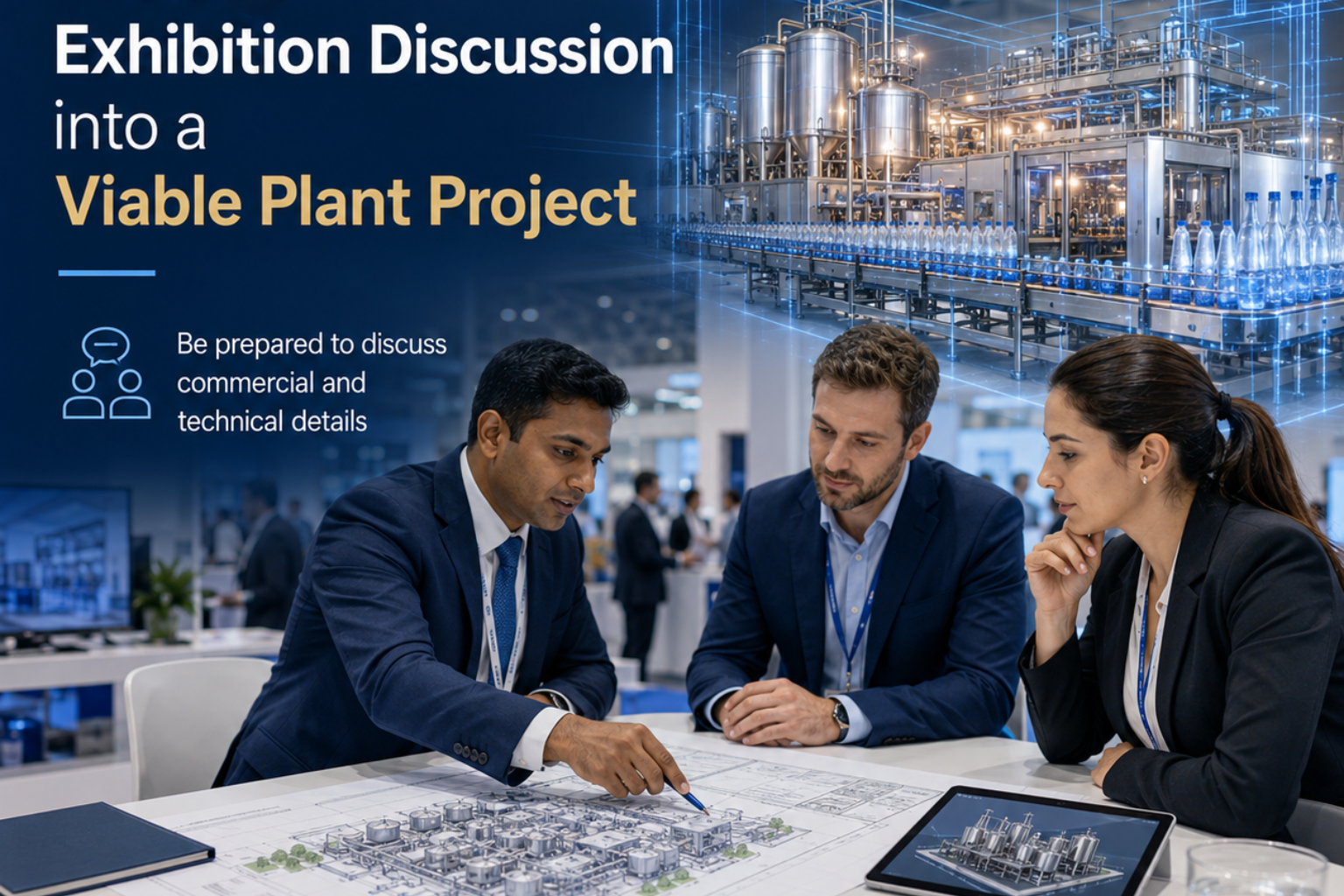
A productive meeting at Gulfood Manufacturing should begin with defined commercial and technical information. Prospective buyers should be prepared to discuss:
- Source-water quality and available utility infrastructure
- Required output in litres per hour or bottles per minute
- Bottle, jar or pouch sizes
- Water, juice or carbonated beverage categories
- Available factory space and preferred automation level
- Target markets and distribution distance
- Current production constraints, if upgrading a plant
- Expected capacity over the next three to five years
Using these details, DTPPL can help determine whether the project requires a complete turnkey plant, a phased installation or selected machinery. This consultative approach can reduce mismatched capacity and create a clearer route from initial investment to commercial production.
Conclusion
Gulfood Manufacturing 2026 arrives at a time when food and beverage companies are reassessing how and where they produce. The Middle East is strengthening domestic manufacturing, African markets require scalable water infrastructure, South Asian businesses are expanding beyond local production and mature markets are investing in flexible automation and specialised beverages.
DTPPL’s relevance to this international audience comes from the breadth of its offering. Its capabilities extend from water treatment and mineral water plants to juice and carbonated soft drink lines, bottle manufacturing, filling, labelling, coding and secondary packaging.
For an entrepreneur evaluating a first packaged-water facility, an established bottler planning higher output or an industrial organisation requiring a customised treatment plant, Gulfood Manufacturing provides a valuable setting for converting an operational requirement into a structured project. DTPPL can contribute the engineering scope, equipment integration and capacity planning required to move that project forward.
Frequently Asked Questions
When and where will Gulfood Manufacturing 2026 take place?
Gulfood Manufacturing 2026 will be held from 3–5 November 2026 at the Dubai World Trade Centre in Dubai, UAE. The exhibition covers food and beverage processing, packaging, automation, ingredients and supply-chain solutions.
What types of projects can international buyers discuss with DTPPL?
Buyers can discuss turnkey mineral water plants, packaged drinking-water lines, commercial RO systems, carbonated soft drink plants, juice plants and individual filling or packaging machines.
Can DTPPL provide machinery for different production capacities?
Yes. DTPPL’s mineral water plant solutions cover capacities from 500 LPH to 50,000 LPH, while filling and packaging configurations can be selected according to the required production speed and automation level.
Does DTPPL only work with mineral water manufacturers?
No. Its solutions are also relevant to juice manufacturers, carbonated beverage producers, contract bottlers, hotels, institutions, industrial facilities and companies requiring commercial water-treatment systems.
Can an existing plant purchase only one machine?
Yes. Existing manufacturers can evaluate individual equipment such as blow moulding machines, rinsing-filling-capping systems, jar fillers, labelling machines, batch coders or shrink-wrapping machines.
What information should buyers prepare before discussing a project?
Buyers should provide source-water details, desired capacity, product category, container sizes, available space, preferred automation level and future expansion targets. These inputs help create a more appropriate plant configuration.
Why is Dubai a useful location for this exhibition?
Dubai connects buyers and technology suppliers from the Middle East, Africa, Asia and other international markets. Its role as a commercial and logistics centre makes the exhibition suitable for discussing regional manufacturing and export-oriented projects.
Our associates





































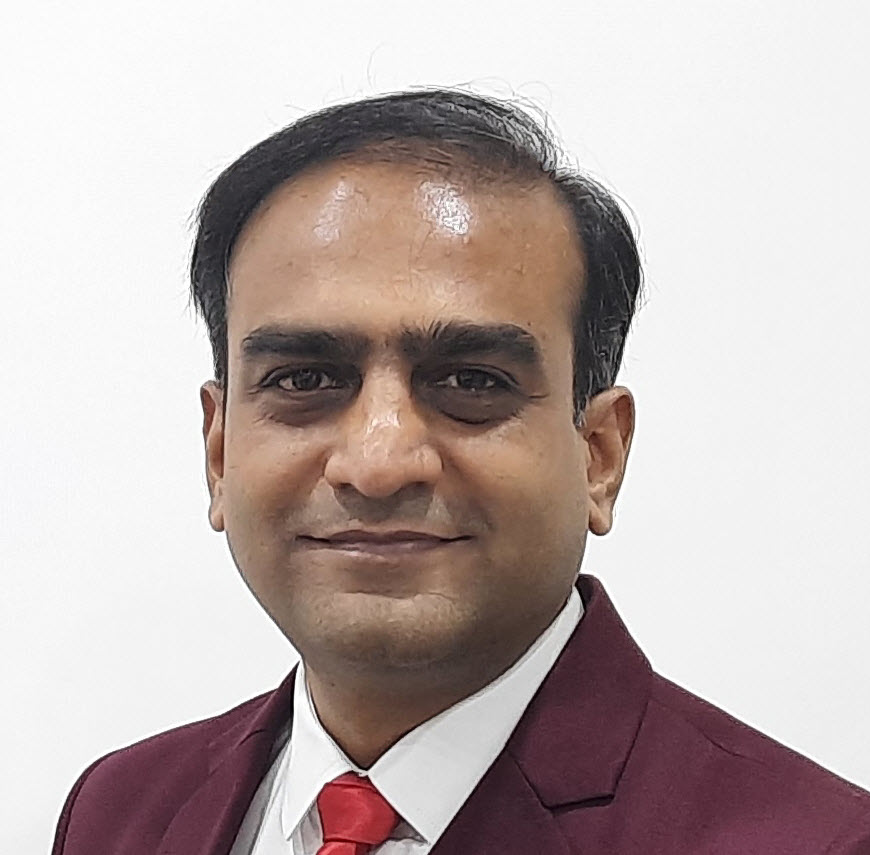
Director – Global Marketing and Sales
Mr. Bhavesh from Dharmanandan Techno Projects Pvt. Ltd. has played a pivotal role in elevating the DTPPL brand to the global stage, leveraging his exceptional expertise in marketing and communications. He is committed to helping clients achieve significant growth while strengthening their own brands. Dharmanandan Techno Projects Pvt. Ltd. is a leading manufacturer and supplier of water purification systems and turnkey solutions for mineral water plants. With years of experience in designing and delivering high-quality water treatment solutions, the company provides end-to-end services, including system design, installation, maintenance, and ongoing support. Specializing in scalable and customizable water plants, DTPPL has successfully served industries worldwide, ensuring clean and safe drinking water across diverse applications.