


dtppl

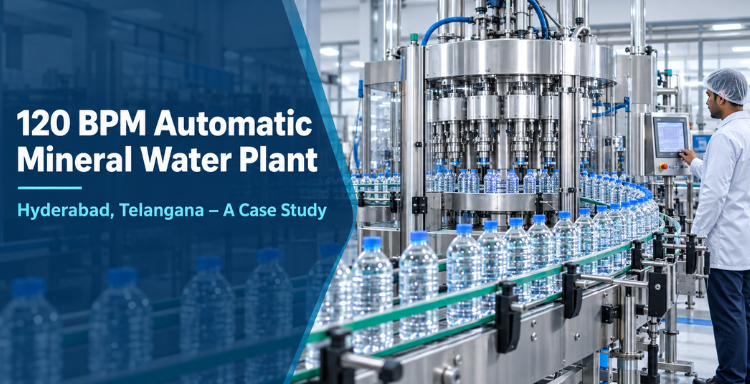
120 BPM Automatic Mineral Water Plant in Hyderabad, Telangana – A Case Study
Share At:
Google AI ChatGPT Grok Perplexity

Listening Article

120 BPM Automatic Mineral Water Plant in Hyderabad, Telangana – A Case Study

September 16, 2026

AI Summary

This case study showcases the establishment of a 120 BPM automatic mineral water plant in Hyderabad, Telangana, focusing on independent entrepreneurship, capacity planning, single-source machinery procurement, automation, and ease of operation. It demonstrates how an integrated bottling solution can simplify equipment coordination while providing a scalable foundation for a growing packaged drinking water business.

From Government Roots to Entrepreneurial Independence: Mr. Srinivas Reddy’s Automatic Mineral Water Plant Success Story

When Mr. Srinivas Reddy, an MBA graduate from Hyderabad, Telangana, decided to step out of his family’s political shadow and build something of his own, he didn’t choose the easy path. Despite his father’s standing as a government minister, Mr. Reddy wanted khud ka business – a business built entirely on his own merit. His choice: setting up an automatic mineral water plant in the heart of Hyderabad’s growing packaged drinking water market.

This case study walks through his journey – from research and hesitation to a confident investment in a 120 BPM automatic mineral water plant – and why a single-source machinery solution made all the difference.

Let’s Discuss! Request a Call Now!
WhatsApp Call Now!

Automatic Mineral Water Plant by DTPPL: A Vision Rooted in Independence

Mr. Reddy’s background made his decision even more striking. Coming from a family with deep government and political connections, he could have taken the conventional route of leveraging influence for a ready-made business. Instead, he chose to prove himself through entrepreneurship, using land he already owned to lay the foundation for a mineral water bottling plant.

His long-term vision wasn’t modest either – he set out to become the largest manufacturer of mineral water in the local Hyderabad market, a goal that shaped every decision he made afterward, from machinery selection to plant capacity.

Mineral Water Plant Cost Evaluation: Why the Franchise Route Was Reconsidered

Before committing fully, Mr. Reddy did what any MBA-trained entrepreneur would do – he evaluated his options thoroughly. He explored taking up a mineral water franchise, weighing the pros and cons against setting up an independent unit. This research phase caused some delay in launching the project, but it also gave him a realistic understanding of the DTPPL’s automatic mineral water plant cost, ongoing royalty commitments of franchise models and long-term profitability of owning an independent brand.

In the end, he decided that building his own mineral water bottling plant – rather than operating under someone else’s brand name – aligned better with his goal of building an independent identity and a scalable, wholly-owned business.

Mineral Water Bottling Plant Location First Mover Advantage Hyderabad

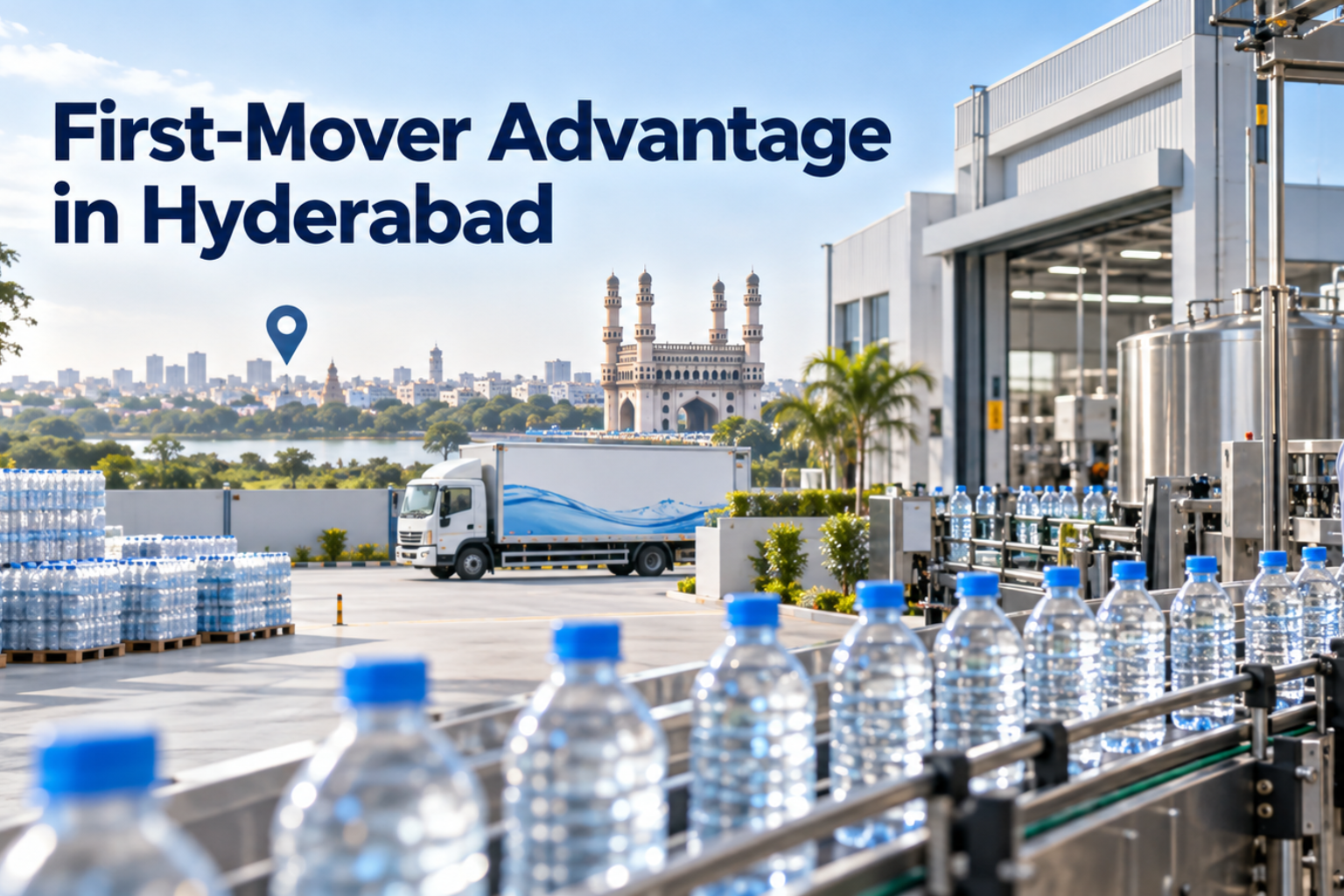
Mineral Water Bottling Plant Location: A First-Mover Advantage in Hyderabad

One of the strongest strategic assets in Mr. Reddy’s plan was location. The area surrounding his plant had no existing mineral water manufacturer, giving him a rare first-mover advantage in a market that typically sees heavy local competition. With minimal competing suppliers nearby, his bottling plant of mineral water was positioned to capture significant local demand right from the start – a critical factor supporting his ambition to dominate the local market.

Mineral Water Machinery Sourced From One Place: The Deciding Factor

For a first-time entrepreneur, coordinating a project of this scale can be overwhelming – especially when it involves sourcing multiple types of equipment from different vendors. This is where the decision became easy for Mr. Reddy. He chose to source all his mineral water machinery from a single supplier, eliminating the need to manage multiple vendors, delivery timelines and compatibility issues between machines.

This one-stop approach meant:

  • A single point of contact for the entire mineral water equipment setup
  • Seamless integration between machines since they were designed to work together
  • Faster installation and commissioning timelines
  • Simplified after-sales service and maintenance support

Client Review

“Upgrading to a 120 BPM automatic mineral water line was a high-stakes capital investment for our commercial expansion, and DTPPL justified every rupee. The plant hit rated speeds on the third day of commissioning with near-zero bottle rejection. The synchronization between the rinsing, filling, and capping modules is seamless, allowing us to run double shifts without bottle-jam bottlenecks.”

– Amit Singhania

Mineral Water Filling Machine: Built for Simplicity by Dharmanandan Techno Projects Pvt. Ltd.

What impressed Mr. Reddy most once the plant was operational was how “down to earth” and simple the machinery was to operate. Both the Mineral Water Bottle Filling Machine and the Mineral Water Filling Machine were engineered with ease of use in mind, ensuring that day-to-day operations didn’t require specialized technical expertise.

For a new entrant into manufacturing, this simplicity was invaluable – it meant fewer training requirements for staff, reduced downtime and confidence that daily operations would run smoothly without constant troubleshooting.
Mineral Water Bottling Machine Specifications BPM Automatic Plant

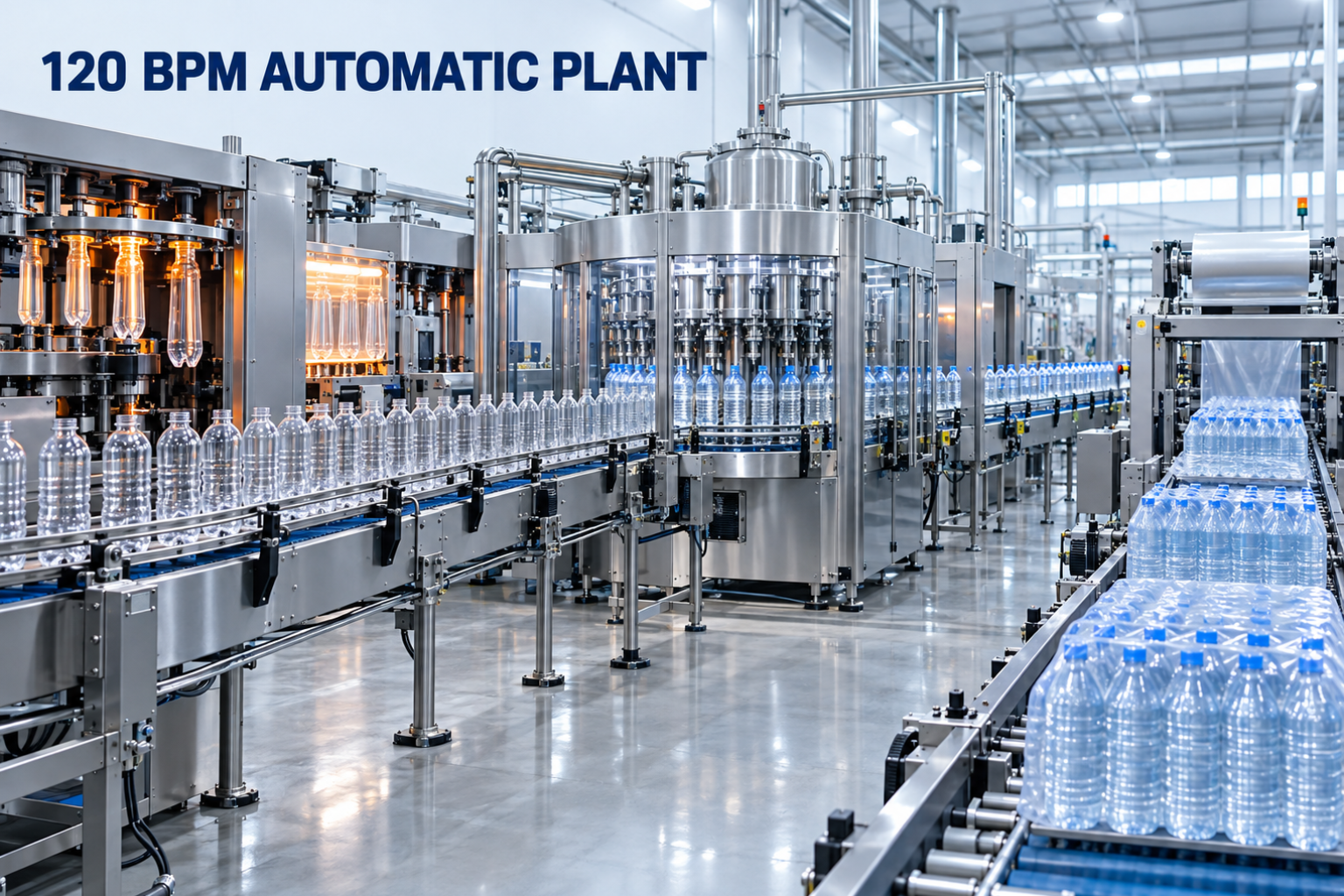
Mineral Water Bottling Machine Specifications: The 120 BPM Automatic Plant

Mr. Reddy ultimately invested in a 120 BPM (Bottles Per Minute) Automatic Mineral Water Plant – a complete, integrated solution built for scale. The setup combined:

Mineral Water Bottle Making Machine – for in-house bottle production

Mineral Water Bottle Packing Machine – for efficient, hygienic packaging

A fully integrated mineral water bottling machine line connecting filling, capping, labeling and packing in one continuous process

This configuration gave him the production capacity needed to meet growing local demand while keeping operations centralized and efficient.

Quick Response Guaranteed
WhatsApp Email Us Now!

Quick Reference: Customer Snapshot

Detail Information
Customer Name Mr. Srinivas Reddy
Location Hyderabad, Telangana
Background MBA graduate, family in government/political background
Business Goal To become the largest mineral water manufacturer in local Hyderabad
Key Challenge Delay due to evaluating franchise options
Location Advantage No other manufacturer in the surrounding area
Reason for Choosing Us All machinery available from one place
Machine Experience Down to earth and simple to operate
Product Purchased 120 BPM Automatic Mineral Water Plant

Conclusion: A Blueprint for Building a Mineral Water Bottling Plant From Scratch

Mr. Srinivas Reddy’s journey demonstrates how a well-researched automatic mineral water plant investment can turn an ambitious entrepreneurial vision into a real, scalable business. By choosing a complete, single-source DTPPL’s mineral water machinery setup – one that paired a simple-to-operate mineral water filling machine and bottle filling machine with a location free of local competition – he positioned himself for sustainable growth.

His story offers a practical takeaway for aspiring entrepreneurs: independence doesn’t come from ready-made privilege, but from thoughtful planning, the right equipment partner and the confidence to build something entirely your own.

FAQs

A single-source solution can simplify project coordination, equipment integration, installation, communication, and after-sales support.

Depending on the configuration, a complete line may include water treatment, bottle manufacturing, rinsing, filling, capping, labeling, coding, and secondary packaging equipment.

A bottle-making machine produces PET bottles from preforms, while a bottle-filling machine fills treated water into bottles and performs associated filling and capping operations.

Not necessarily. Capacity should be matched to market demand, distribution capabilities, investment capacity, available infrastructure, and planned production volumes.

Automation can reduce manual intervention, improve production consistency, increase throughput, streamline packaging operations, and support efficient large-scale production.

Our associates