




Listening Article
Table of Contents
How to Diagnose VFD Alarms and Fix Common Problems in Your Fully Automatic Rinsing Filling and Capping Machine
September 30, 2026
AI Summary
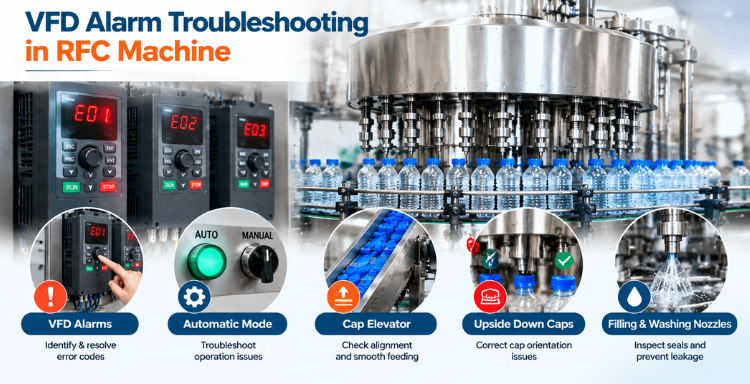
This guide covers operating a Fully Automatic Rinsing Filling and Capping Machine, including electrical panel VFDs, alarm troubleshooting, automatic mode issues, cap elevator alignment, upside down cap correction, and filling and washing nozzle seal maintenance. Trained personnel can recognise problems and determine when to contact DTPPL support.
Understanding RFC Machine Maintenance
Mineral water plant often experience downtime from electrical faults, cap orientation problems or nozzle leaks. Understanding the electrical panel and seal systems helps your team recognise problems and take corrective action.
Dharmanandan Techno Project Pvt. Ltd. (DTPPL) manufactures automated forming, filling, sealing and capping equipment for mineral water and juice production. This guide helps plant teams maintain these machines.
How the Fully Automatic Rinsing Filling and Capping Machine Electrical Panel Controls Operation
The electrical panel in a Fully Automatic Rinsing Filling and Capping Machine contains three Variable Frequency Drives (VFDs). Each VFD controls the speed of a different motor:
- Main machine motor VFD (controls the primary production mechanism) • Conveyor motor VFD (controls bottle movement along the line) • Cap elevator motor VFD (controls the automated cap delivery system)
A Variable Frequency Drive is an electronic device that regulates motor speed. Without a VFD, operators cannot control motor speed or respond to changing production requirements.
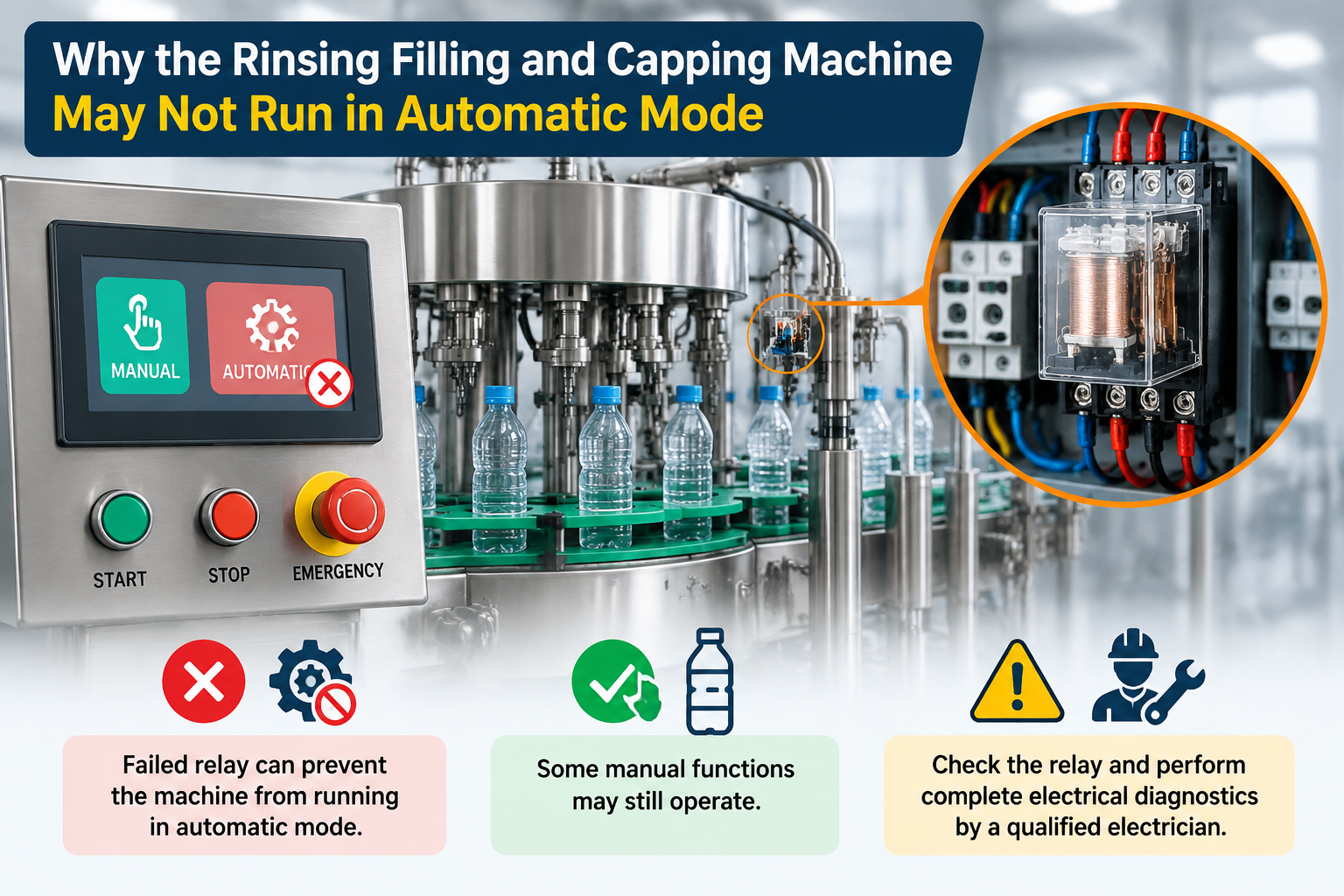
The panel also contains a relay that enables automatic machine operation. When the machine starts, power flows through the relay. If the relay fails, the machine cannot run in automatic mode, even though manual operation may still be possible.
Two contactors manage critical functions: one operates the filling pump and another controls the blower that pressurises air for bottle handling. The on-off timer controls the cap elevator, determining how long it remains stopped after a sensor detects a signal and when it resumes operation.
The GIC water level controller monitors the filling tank. When water reaches the required level, the controller cuts power to the solenoid valve, preventing the tank from overflowing. This protective function stops supply without requiring manual intervention.
 Call Us Now!
How to Understand VFD Alarms in the Mineral Water Packaging Machine
VFDs display alarms when problems are detected. Common alarms are overload and overvoltage types. Overload alarms indicate mechanical resistance, motor problems or VFD faults. Overvoltage alarms usually clear when voltage is adjusted correctly.
Do not repeatedly reset alarms without identifying the cause. To diagnose problems, stop the machine and manually rotate the motor belt. Smooth rotation indicates the mechanical system is not blocked. If the belt rotates freely, the problem involves the VFD or motor.
If mechanical movement is normal, reset the alarm and restart. If the alarm reappears, a qualified electrician should disconnect the motor’s three wires and test again. If the alarm clears after disconnection, the motor is faulty. If it persists, the VFD requires service. Only qualified electricians should perform wiring checks or panel diagnostics after power isolation.
The same approach applies to all three VFDs.
OUR OTHER PRODUCT
Why the Rinsing Filling and Capping Machine May Not Run in Automatic Mode
The relay is essential for automatic wate bottling machine operation. A failed relay prevents the machine from running automatically, though some manual functions may still operate. If your machine starts but fails to run in automatic mode, the relay should be one of the first components checked by a qualified electrician.
However, automatic mode failure can have other causes. Do not assume every automatic mode problem results from relay failure. Complete electrical diagnostics by qualified personnel are necessary to identify the true cause.
How the RFC Machine Cap Elevator Timer and Water Level Controller Work
The on-off timer connected to the cap elevator controls its operating cycle. After a sensor detects a signal, the timer holds the elevator in a stopped position for a predetermined time. Once this period expires, the timer automatically restarts the elevator. This automated sequence prevents caps from colliding with bottles and maintains production rhythm.
The GIC water level controller operates continuously during filling. As water enters the tank, the controller monitors the level. When water reaches the set level, the controller cuts power to the solenoid valve, stopping incoming water supply. This prevents overfilling and the costly waste that results from tank overflow.
Why Caps Travel Upside Down in the Mineral Water Packaging Machine Cap Elevator
Upside down caps indicate the elevator chain or belt is misaligned. The common cause is loosened adjustment bolts on the cap elevator sides. Vibration and stress gradually loosen these bolts. When loose, the chain shifts position, changing the angle at which caps travel, causing them to go upside down.
How to Correct Cap Elevator Alignment in the RFC Machine
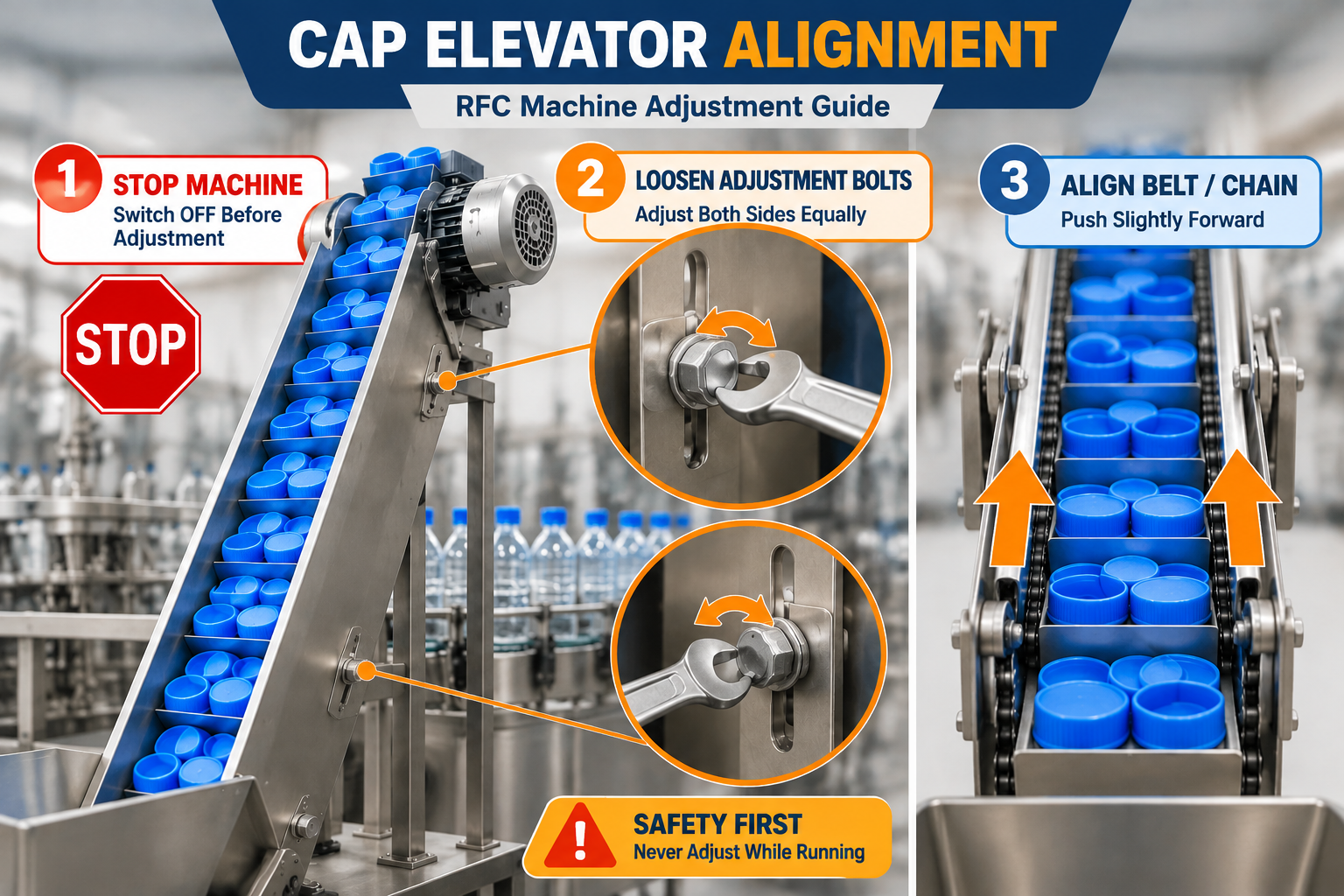
Stop the rinsing, filling, capping machine completely. Never adjust while components move. Locate adjustment bolts on both sides of the cap elevator. Loosen both bolts equally.
With both loose, gently push the belt or chain slightly towards the front. Movement should be small. Once positioned, tighten both bolts equally.
Upside down caps will now fall back into the hopper. Only correctly oriented caps proceed forward. Run the machine at low speed to verify caps travel correctly. Inspect these bolts during routine maintenance, as they may loosen again over time.
Why Water Leaks from the Filling Nozzle in the Fully Automatic Rinsing Filling and Capping Machine
Water dripping continuously from a filling nozzle when no bottle is present indicates a seal problem inside the nozzle assembly. The filling nozzle contains two O rings and a rubber seal component.
The small O ring sits in an inner groove and is the primary seal controlling water flow. The large O ring provides secondary sealing protection. The front filling rubber (also called the filling nozzle rubber) contacts bottle necks repeatedly during normal operation.
When an O ring becomes cut or damaged, water bypasses the seal and drips out. The damage may be visible as a split, crack or missing section of the rubber. When the front filling rubber wears or tears from repeated bottle contact, it can also allow water to leak.
Replacement O rings and filling rubber must fit precisely into their grooves. An O ring that sits loose or rides on the edge of its groove will not seal properly and leakage will continue.
How to Inspect and Replace Filling Nozzle O Rings in the RFC Packaging Machine
Move all filling nozzles to a consistent maintenance position for safe access. Locate the three bolts securing each nozzle assembly. Loosen and remove all three bolts, then gently lower the nozzle to access internal seals.
Inspect both O rings for cuts, cracks or wear. Check the front filling rubber for wear or tears. To remove a damaged O ring, gently prise it out using your fingers. Insert a new O ring of identical size and push it firmly into its groove. Replace the front filling rubber if wear is visible.
Once seals are replaced and seated correctly, reassemble the nozzle and refit the three bolts. Tighten evenly and do not over-tighten.
Why Water Leaks from the Washing Nozzle in the Mineral Water Plant Equipment
The washing nozzle also contains O rings that control water flow during the bottle rinsing process. When a washing nozzle O ring becomes cut or damaged, water flows continuously even when no bottle is present and no washing action is occurring.
In normal operation, the O ring seal opens only when a bottle enters the nozzle and pressure is applied. If the O ring is cut, water bypasses the seal and flows constantly, wasting water and compromising production efficiency.
How to Inspect Washing Nozzle O Rings in the RFC Machine
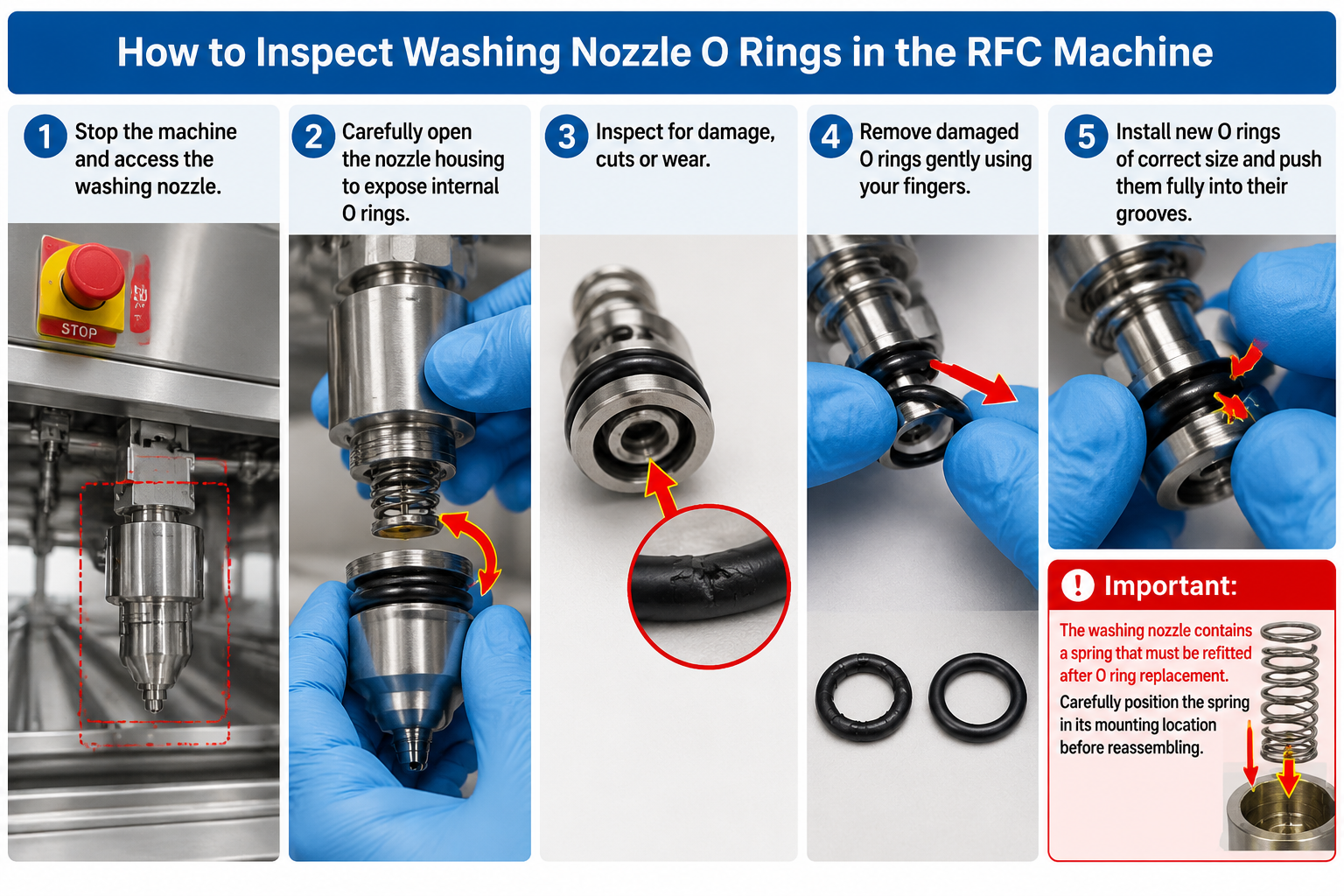
Stop the machine and access the washing nozzle. Carefully open the nozzle housing to expose internal O rings. Inspect for damage, cuts or wear. Remove damaged O rings gently using your fingers.
Install new O rings of correct size and push them fully into their grooves. Important: The washing nozzle contains a spring that must be refitted after O ring replacement. Carefully position the spring in its mounting location before reassembling.
Reassemble the nozzle completely. Test by running water without a bottle present. Water should not flow unless the nozzle is pressed. If leakage continues, contact DTPPL technical support.
Final Checks Before Restarting the Fully Automatic Rinsing Filling and Capping Machine
Confirm all bolts are tightened securely, including cap elevator and nozzle bolts. Confirm all guards and protective components are restored. Confirm nozzle O rings sit completely in their grooves with no gaps. Confirm the washing nozzle spring is refitted.
Check nozzles for leakage by running water without bottles. Filling nozzles should not drip; washing nozzles should not flow. Observe cap movement and confirm correct orientation. Start the machine and watch for repeated VFD alarms. Run a controlled test at reduced speed before normal production.
Client Review
“DTPPL provides practical information for handling common RFC machine problems. The section about VFD alarms, automatic mode issues, and when to contact technical support was useful for our production team.”
– Naval Seth
Maintenance Warning Signs in the RFC Packaging Machine That Require Technical Support
Repeated VFD alarms, restricted motor movement, automatic mode failures, pump or blower starting problems, cap elevator alignment repeatedly changing, upside down caps continuing after adjustment, nozzle leakage persisting after seal inspection, and damaged electrical components all require qualified technical assessment before further troubleshooting.
 Email Us
When to Contact DTPPL for Technical Assistance
Contact DTPPL for electrical panel diagnostics, motor problems, cap elevator structural issues, advanced nozzle repairs, production downtime beyond your team’s capability or when safety concerns arise. DTPPL provides on-site technical support, component replacement and maintenance training.
OUR OTHER PRODUCT
Conclusion
Organised maintenance supporting electrical control inspection, cap elevator alignment and nozzle seal replacement extends RFC machine performance and reduces downtime. Regular inspection of bolts, O rings and springs catches problems early. Knowing when to request professional support prevents costly damage.
Frequently Asked Questions
What does a VFD do in a Fully Automatic Rinsing Filling and Capping Machine?
A VFD (Variable Frequency Drive) controls electric motor speed. Three VFDs operate in the RFC machine: one for the main production motor, one for the conveyor motor, and one for the cap elevator motor. VFDs allow operators to adjust motor speeds to match production requirements.
Why might a Fully Automatic Rinsing Filling and Capping Machine fail to run in automatic mode?
Automatic mode requires the relay to function properly. If the relay fails, power cannot flow through the production sequence and the machine will not run automatically. Other electrical components like contactors, timers or wiring can also prevent automatic operation. A qualified electrician should diagnose the specific cause.
What causes caps to travel upside down in the cap elevator of the RFC machine?
Loosened adjustment bolts on the cap elevator sides allow the chain or belt to shift position. This changes the angle at which caps travel, causing them to move upside down. Tightening the bolts or repositioning the belt typically resolves the problem.
What are the main reasons the filling nozzle leaks in a Mineral Water Packaging Machine?
The filling nozzle contains two O rings and a front filling rubber seal. Damaged O rings allow water to bypass the seal and drip continuously. Worn front filling rubber from repeated bottle contact can also cause leakage. Replacing damaged seals and ensuring they sit properly in their grooves resolves most nozzle leakage.
When should DTPPL technical support be contacted for the RFC machine?
Contact DTPPL for VFD panel diagnostics, motor problems, cap elevator structural issues, advanced nozzle repairs, or when production downtime extends beyond your team’s troubleshooting capability. DTPPL offers on-site technical support, component replacement and maintenance training.
Our associates









































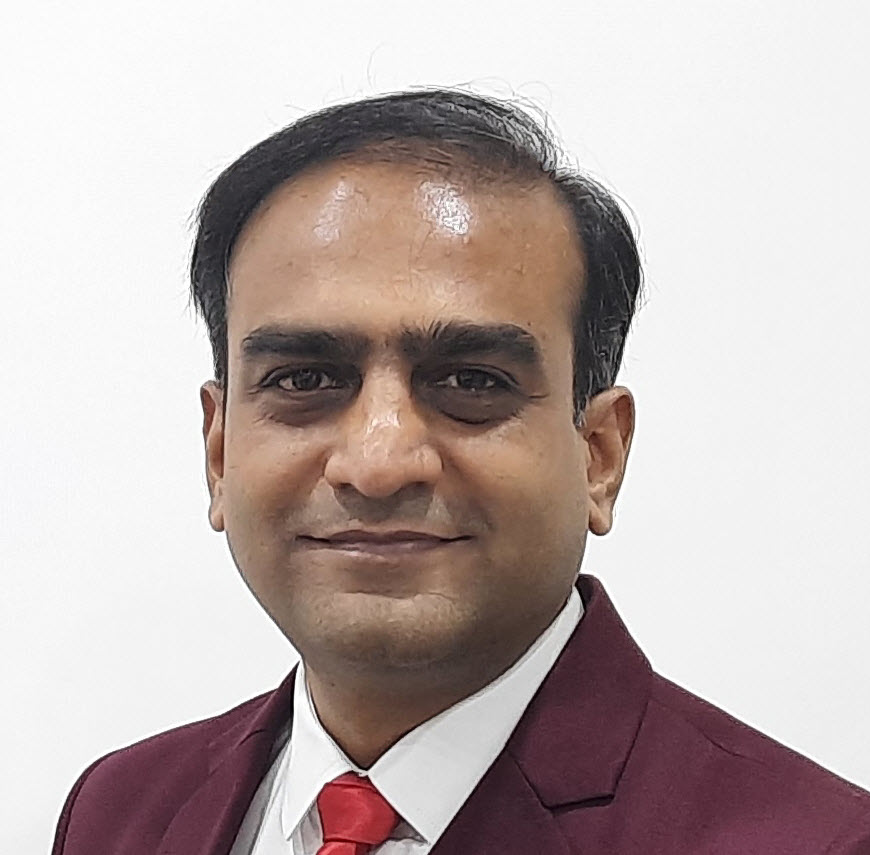
Director – Global Marketing and Sales
Mr. Bhavesh from Dharmanandan Techno Projects Pvt. Ltd. has played a pivotal role in elevating the DTPPL brand to the global stage, leveraging his exceptional expertise in marketing and communications. He is committed to helping clients achieve significant growth while strengthening their own brands. Dharmanandan Techno Projects Pvt. Ltd. is a leading manufacturer and supplier of water purification systems and turnkey solutions for mineral water plants. With years of experience in designing and delivering high-quality water treatment solutions, the company provides end-to-end services, including system design, installation, maintenance, and ongoing support. Specializing in scalable and customizable water plants, DTPPL has successfully served industries worldwide, ensuring clean and safe drinking water across diverse applications.