




Listening Article
Table of Contents
Mineral Water Treatment Plants in Deoghar & Jharkhand’s Mining Belt
August 25, 2026
AI Summary
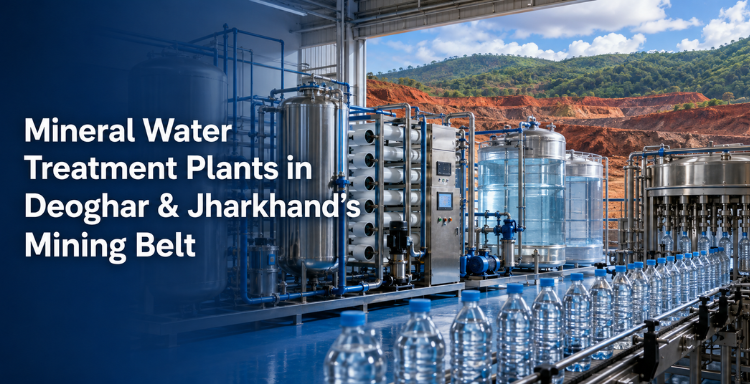
Jharkhand combines two water demand drivers rarely found together in a single state. Central Ground Water Board data shows fluoride concentrations above the 1.5 milligram per litre permissible limit across a dozen districts, including Bokaro, Dhanbad, Garhwa, Giridih, Godda, Gumla, Koderma, Pakur, Palamu, Ranchi, Sahibganj and Khunti, and the state government has separately identified 73 hamlets affected by fluoride and arsenic contamination requiring targeted intervention. At the same time, Jharkhand’s industrial heartland around Jamshedpur, Bokaro and Dhanbad supports a very large mining and manufacturing workforce, while Deoghar hosts the annual Shravani Mela, a month long pilgrimage to the Baba Baidyanath Dham temple that drew more than 40 lakh participants in 2024 according to official figures. Together, documented fluoride contamination, a dense industrial workforce and a major seasonal pilgrimage create a genuine, evidence backed case for new mineral water plant and RO plant capacity across Jharkhand. This article examines the state’s groundwater quality data, its industrial and pilgrimage demand centres, and how Dharmanandan Techno Projects Pvt. Ltd. (DTPPL) can support new water treatment investment in the state.
Fluoride, Fatigue and Footfall: Why Jharkhand’s Mining Belt and Deoghar’s Pilgrim Economy Need More Water Treatment Plants
Jharkhand is a mineral rich state whose groundwater tells a more complicated story than its name might suggest. Alongside genuine natural abundance, the state’s Central Ground Water Board data documents fluoride contamination across a significant number of districts, a geochemical issue distinct from the arsenic problem found in neighbouring West Bengal and Bihar, though a small number of Jharkhand districts show both. This water quality reality sits alongside two very different demand centres, the dense industrial workforce of the Jamshedpur, Bokaro and Dhanbad belt, and the enormous, calendar bound pilgrim surge that Deoghar experiences every year during the Shravani Mela.
Fluoride Contamination Across Jharkhand’s Districts
According to Central Ground Water Board data cited by Jharkhand’s own Drinking Water and Sanitation Department, fluoride concentration above the 1.5 milligram per litre permissible limit has been recorded in parts of Bokaro, Dhanbad, Garhwa, Giridih, Godda, Gumla, Koderma, Pakur, Palamu, Ranchi, Sahibganj and Khunti districts, while arsenic concentration above the permissible limit has separately been found in parts of Sahibganj and Lohardaga. The state government has identified 73 specific hamlets, largely in Garhwa and Palamu, affected by fluoride and arsenic contamination and has applied for accreditation of ten district level water quality testing laboratories, including at Deoghar, to strengthen monitoring. Long term fluoride exposure is associated with dental and skeletal fluorosis, making reliable, tested drinking water a genuine public health as well as commercial consideration across these districts.
OUR OTHER PRODUCT
Jamshedpur, Bokaro and Dhanbad: A Dense Industrial Workforce
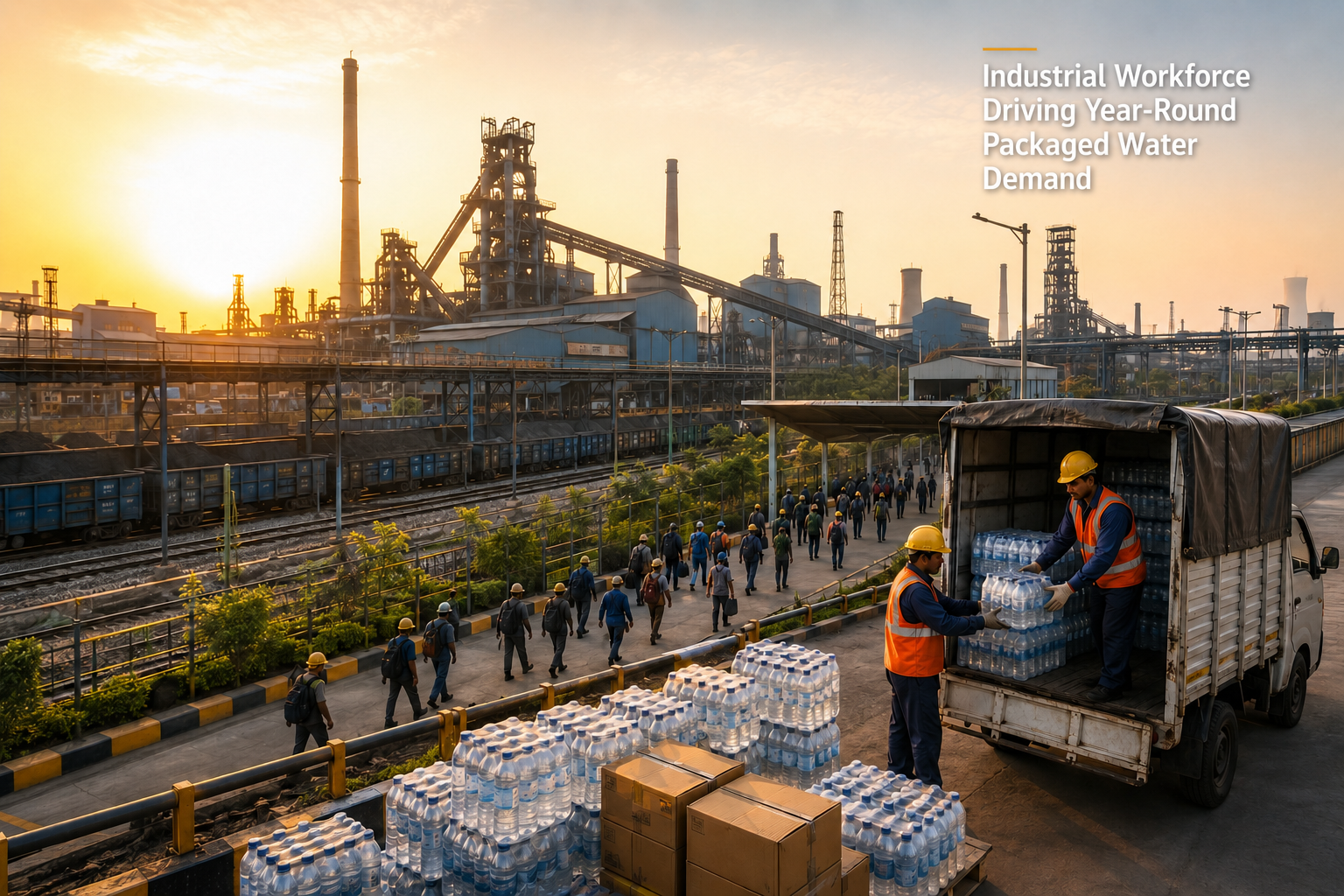
East Singhbhum district, anchored by Jamshedpur, India’s first planned industrial city and home to Tata Steel, hosts roughly 1,500 large and small scale industries, and academic groundwater studies of the district specifically flag it as an important industrial zone requiring dedicated fluoride and water quality monitoring. Bokaro and Dhanbad add a further dense concentration of steel, coal and heavy industry workers to this belt. Together, these three cities sustain a large, steady, workforce driven demand for certified packaged drinking water that is largely independent of tourism or festival cycles, a more predictable, year round market than Deoghar’s pilgrim driven demand.
 Email !
Deoghar’s Shravani Mela: A Month Long Pilgrim Surge
Deoghar’s Baba Baidyanath Dham temple, one of the twelve Jyotirlingas, hosts the Shravani Mela every year during the Hindu month of Shravan, typically July to August, drawing more than 40 lakh participants in 2024 according to official festival records, with pilgrims, known as Kanwariyas, often walking long distances carrying holy water from the Ganges to offer at the temple. This month long, sharply seasonal surge is layered on top of Deoghar’s own documented groundwater fluoride readings, which local studies have found range from roughly 0.34 to 1.67 parts per million across different zones of the city, reinforcing the case for treated, tested packaged water specifically for the pilgrim season rather than reliance on untreated local sources.
Comparing Jharkhand’s Key Demand Centres
| Location | Core Challenge or Driver | Water Situation | Strongest Opportunity |
| Jamshedpur (East Singhbhum) | Dense industrial workforce, 1,500 plus industries | Documented fluoride variability across the district | Industrial RO plant and workforce packaged water supply |
| Bokaro and Dhanbad | Steel and coal industrial belt | Fluoride above permissible limits recorded by CGWB | Commercial RO plant and packaged drinking water plant |
| Deoghar | Shravani Mela, 40 lakh plus pilgrims in 2024 | Fluoride readings recorded locally, sharp seasonal demand | Scalable mineral water plant for pilgrim season and daily use |
| Ranchi | State capital, growing urban and institutional demand | Fluoride recorded in parts of the district by CGWB | Water purification plant for institutional and retail supply |
Government Standards and Mitigation Framework in Jharkhand
- FSSAI licensing and BIS certification under IS 14543 or IS 13428 apply to all packaged drinking water production in Jharkhand.
- The Jharkhand Drinking Water and Sanitation Department has identified specific fluoride and arsenic affected hamlets and is expanding accredited district level water testing laboratories, including at Deoghar.
- The Jharkhand State Pollution Control Board issues consent to establish and operate for new water treatment facilities.
- Central Ground Water Board fluoride and arsenic district data is publicly available and is a useful reference point when siting a new plant anywhere in the state.
Client Review
“Dharmanandan Techno Projects has a well-equipped manufacturing facility and an experienced technical team. Their staff provided excellent support throughout the process, and the machine quality is highly satisfactory. A reliable Indian company offering complete solutions for packaged drinking water plants.”
– Amit Kumar Singh
How Dharmanandan Techno Projects Pvt. Ltd. (DTPPL) Can Help in Jharkhand
DTPPL supports entrepreneurs and institutional buyers across Jamshedpur, Bokaro, Dhanbad, Ranchi and Deoghar with turnkey design, supply and installation of reverse osmosis plants configured for fluoride reduction, industrial RO systems for manufacturing workforce supply, and packaged mineral water plants scalable for Deoghar’s Shravani Mela pilgrim season. Because Jharkhand’s demand spans both a steady industrial workforce market and a sharply seasonal pilgrimage market, DTPPL helps entrepreneurs choose the right plant configuration and capacity for their specific location, supporting the project from water testing through installation and commissioning.
 Call Now
OUR OTHER PRODUCT
How to Set Up a Water Treatment Plant in Jharkhand: Step by Step
- Test source water specifically for fluoride and, in relevant districts, arsenic, referencing published Central Ground Water Board district data.
- Select an RO configuration appropriate for fluoride reduction, since standard filtration alone is generally insufficient.
- Register the business and obtain FSSAI licensing and BIS certification under IS 14543 or IS 13428.
- Secure Jharkhand State Pollution Control Board consent to establish and operate.
- If targeting Deoghar, plan production scaling around the Shravani Mela calendar in July and August alongside steady year round local demand.
- Build supply relationships with industrial employers, institutions, temple trusts or retailers appropriate to your chosen city.
Frequently Asked Questions
Which districts in Jharkhand have documented fluoride contamination?
Central Ground Water Board data cited by the state government shows fluoride above the permissible limit in parts of Bokaro, Dhanbad, Garhwa, Giridih, Godda, Gumla, Koderma, Pakur, Palamu, Ranchi, Sahibganj and Khunti districts.
How many pilgrims visit Deoghar during the Shravani Mela?
Official festival figures recorded more than 40 lakh participants in 2024 at the Shravani Mela, a month long pilgrimage to the Baba Baidyanath Dham temple held during the Hindu month of Shravan.
Is Jamshedpur a good location for an industrial RO plant?
Yes. Jamshedpur anchors East Singhbhum district, home to roughly 1,500 large and small scale industries, and academic groundwater studies specifically highlight the district’s need for dedicated water quality monitoring, supporting demand for both industrial and drinking water RO capacity.
What water treatment technology addresses fluoride contamination?
Reverse osmosis is among the most effective and widely deployed technologies for reducing fluoride to safe levels in contaminated groundwater, and is central to most fluoride mitigation efforts in affected Jharkhand districts.
How can DTPPL help set up a mineral water plant for Deoghar's pilgrim season?
DTPPL can design a scalable mineral water plant that handles Deoghar’s steady local and industrial demand year round while ramping up production for the Shravani Mela’s month long pilgrim surge, supporting the project from planning through commissioning.
Mineral Water Plant
Capacity: 500 LPH to 50,000 LPH
(USD 27,500 to USD 16,49,000)
Conclusion
Jharkhand’s water treatment opportunity rests on genuine, government documented groundwater quality data rather than assumption, fluoride contamination recorded across a dozen districts by the Central Ground Water Board, layered onto a dense industrial workforce in Jamshedpur, Bokaro and Dhanbad and an enormous, calendar bound pilgrim surge in Deoghar. Entrepreneurs who design a plant around Jharkhand’s specific water quality challenges, whether that means fluoride focused reverse osmosis for a mining town or scalable packaged water for the Shravani Mela, and who work with an experienced partner such as DTPPL, are well positioned to serve a market with a clear, evidence backed need.
Our associates







































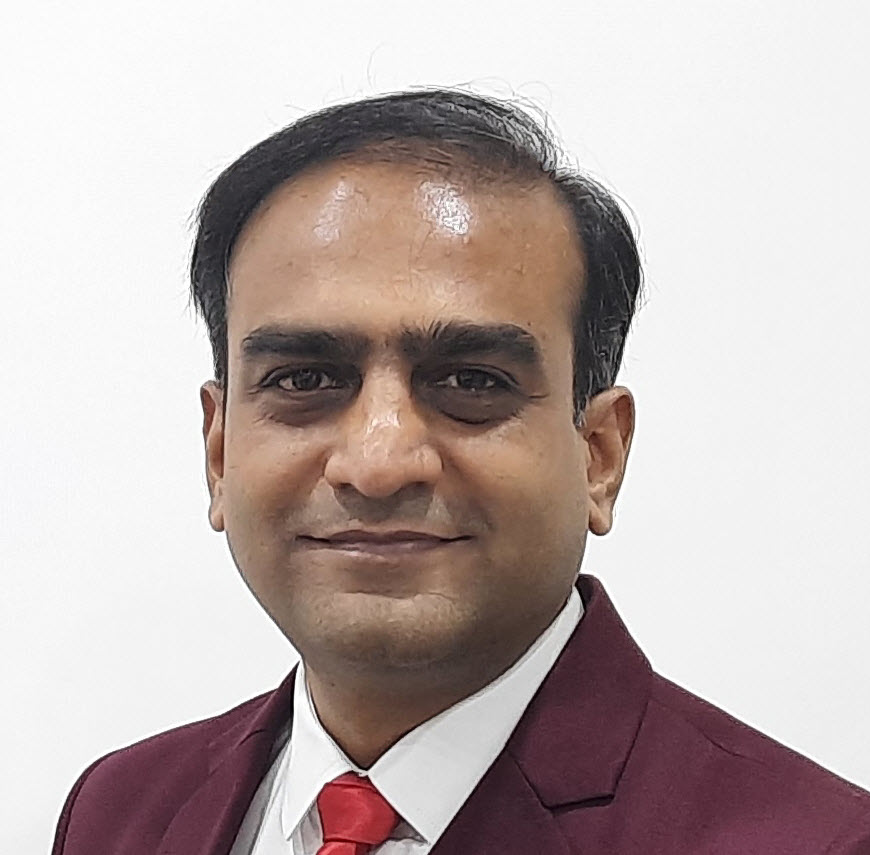
Director – Global Marketing and Sales
Mr. Bhavesh from Dharmanandan Techno Projects Pvt. Ltd. has played a pivotal role in elevating the DTPPL brand to the global stage, leveraging his exceptional expertise in marketing and communications. He is committed to helping clients achieve significant growth while strengthening their own brands. Dharmanandan Techno Projects Pvt. Ltd. is a leading manufacturer and supplier of water purification systems and turnkey solutions for mineral water plants. With years of experience in designing and delivering high-quality water treatment solutions, the company provides end-to-end services, including system design, installation, maintenance, and ongoing support. Specializing in scalable and customizable water plants, DTPPL has successfully served industries worldwide, ensuring clean and safe drinking water across diverse applications.