


Table of Contents
Global Mineral Water Industry: Mergers, Acquisitions, and Partnerships
February 12, 2026
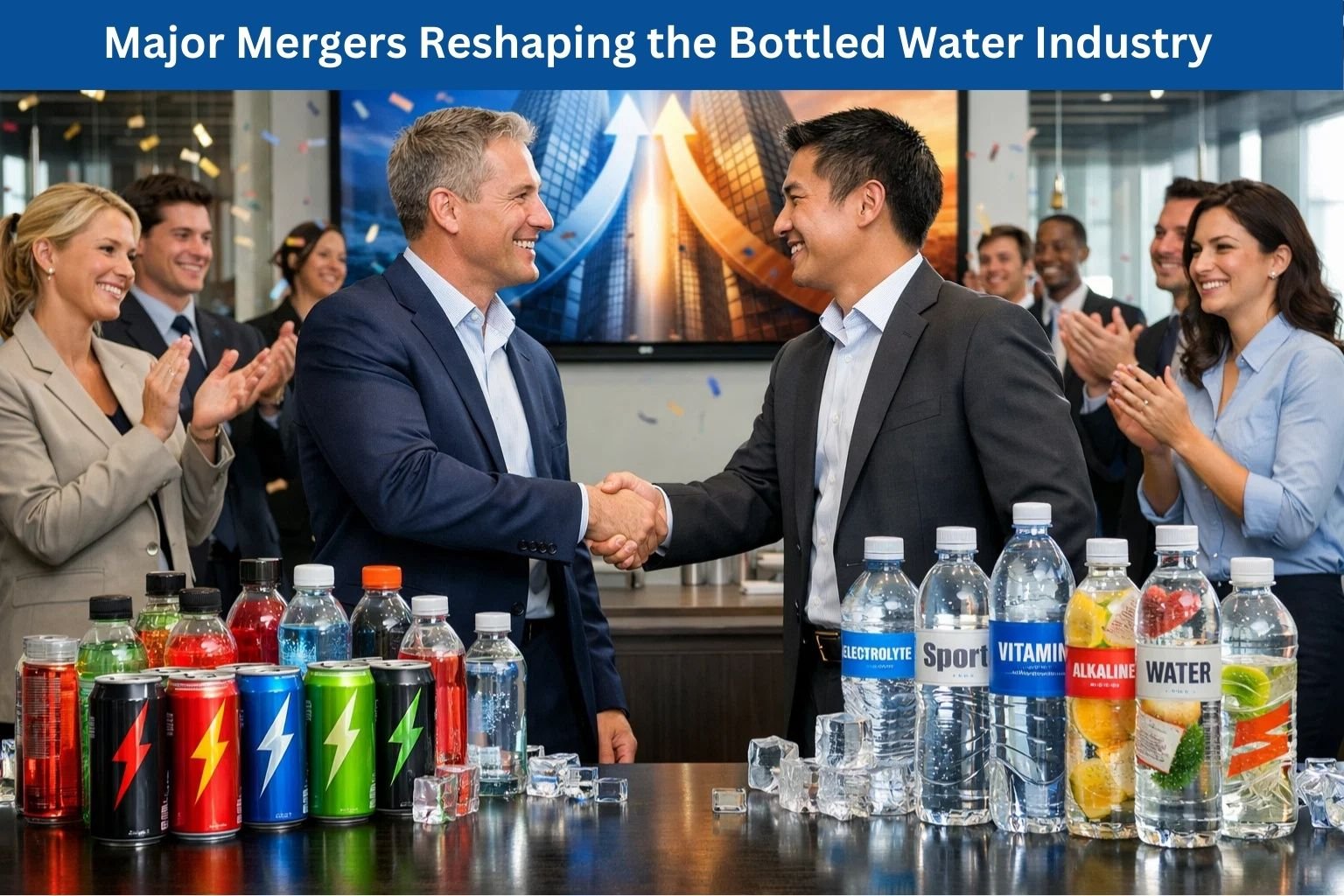
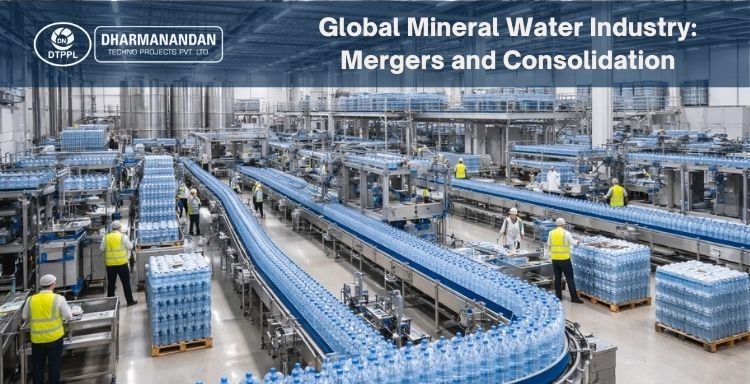
The global mineral water industry has evolved from a fragmented collection of local springs into a massive, consolidated multi-billion-dollar market. As of 2026, the sector continues to be shaped by a relentless wave of mergers and acquisitions (M&A), strategic bottled water partnerships, and high-stakes industry consolidation.
By analyzing both historical shifts and modern deals, it becomes clear that these corporate moves are not just about size-they are strategic plays for water rights, sustainable technology, and “premiumization.”
The Era of Giants: Historical Consolidation
The foundation of the modern bottled water landscape was built on massive historical mergers.
- The Rise of Nestlé and Danone: In the late 20th century, Swiss giant Nestlé and French powerhouse Danone engaged in aggressive acquisitions in mineral water. Nestlé’s acquisition of Perrier (1992) and Sanpellegrino (1997) turned it into the world’s leading water company.
- The BSN-Gervais Danone Merger: In 1973, the merger between bottle-maker BSN and food company Gervais Danone created a vertically integrated beast. This allowed the brand to control everything from the glass production to the mineral water inside (Evian), setting a template for industry consolidation in bottled water.
Read Our Article
Mineral Water Industry in India: Exploring the Economic Impact
Strategic Alliances and Modern Partnerships (2024–2026)
In the modern market, companies are moving away from traditional “buy-outs” toward strategic alliances in water brands to share the burden of distribution and environmental costs.
- The Evian x Michelin Partnership: In late 2024, Evian (Danone) strengthened its luxury positioning through a multi-year partnership with the MICHELIN Guide. This alliance leverages “on-trade” channels-high-end restaurants and hotels-to drive brand prestige without the need for a full acquisition.
- Sustainable Packaging Synergies: We are seeing a surge in bottled water partnerships focused on R&D. For example, the Suntory Group has partnered with biotech firms to produce 100% plant-based PET bottles, aiming for a production of 45 million bottles annually by 2026.

Recent Major Mergers: Redefining Market Share
The last 24 months have seen some of the most significant mergers in the bottled water industry aimed at operational efficiency.
- The Primo Brands Mega-Merger: In November 2024, the merger of Primo Water and BlueTriton Brands (formerly Nestlé Waters North America) created Primo Brands Corporation. This deal was a strategic move to dominate the “Home and Office Delivery” (HOD) segment, combining massive logistics networks to lower the cost per gallon.
- Keurig Dr Pepper’s Stake in Ghost: In October 2024, Keurig Dr Pepper acquired a 60% stake in Ghost Beverages for nearly $1 billion. While known for energy drinks, this move highlights the trend of “functional water” acquisitions, as brands look to add electrolytes and minerals to their portfolios to attract Gen Z.
OUR OTHER PRODUCT
Why Companies are Consolidating: Key Drivers
The primary motivations for mergers and acquisitions among mineral water companies today include:
- Resource Security: In an era of water scarcity, acquiring a company often means acquiring its legal rights to natural springs and deep aquifers.
- Premiumization: Companies are divesting “mass-market” brands to acquire “premium” labels. This shift allows for higher margins through “permissible indulgence”—selling water as a luxury wellness product.
- Scale and Distribution: By merging, companies can share massive bottling plants and regional distribution hubs, significantly reducing the “last-mile” delivery cost.
Client Review
“I received excellent support from Dharmanandan throughout the entire process, as they have dedicated departments to handle every customer requirement, making my experience smooth and well-coordinated. I was not familiar with the ISI licensing process, but DTPPL guided me step by step and helped me obtain the license in a single attempt, and I am extremely satisfied with their professional, customer-friendly approach and overall support.”

– Emeka Obi
Impact on the Global Economy and Consumers
Impact Area | Economic Consequence |
Pricing | Consolidation often leads to higher prices as a few giants gain “pricing power” over the market. |
Innovation | Megadeals provide the capital needed for expensive tech, like atmospheric water extraction or advanced RO filtration. |
Sustainability | Larger entities can better afford the transition to 30% recycled PET mandated by 2026-2030 regulations. |
The Future: A “K-Shaped” M&A Market
The outlook for 2026 and beyond suggests a K-shaped recovery in the M&A space. While “megadeals” (valued above $5 billion) like the Primo-BlueTriton merger drive the total market value, smaller local brands are increasingly forming “co-operatives” or being snatched up by private equity firms to serve niche, eco-conscious markets.

Mineral Water Plant
Capacity: 500 LPH to 50,000 LPH
(USD 27,500 to USD 16,49,000)
Conclusion
The impact of mergers, acquisitions, and partnerships has shifted the mineral water industry from a simple commodity business to a high-tech, brand-driven powerhouse, with every modern Mineral Water Plant now operating in a more competitive and innovation-focused environment. As global regulations on plastic and water usage tighten, expect further strategic alliances as companies realize they cannot solve the sustainability crisis alone.
OUR OTHER PRODUCT
FAQs About Mineral Water Industry
Why is there so much consolidation in the mineral water industry right now?
The primary drivers are resource security and operational efficiency. Companies are merging to gain legal rights to natural springs (which are increasingly scarce) and to combine their logistics networks. This helps reduce the “last-mile” delivery costs, which have risen significantly due to global fuel price volatility.
How do mergers like Primo-BlueTriton affect the average consumer?
Initially, consolidation can lead to slightly higher prices due to increased “pricing power” by dominant players. However, these mergers often result in better supply chain reliability, meaning fewer out-of-stock incidents and a wider availability of diverse water types (like alkaline or electrolyte-enhanced) in more retail locations.
What is "Premiumization" in the bottled water market?
Premiumization refers to the industry shift from selling “basic hydration” to “wellness products.” Brands are acquiring smaller labels that offer high mineral content, unique pH levels, or “functional” benefits (like added vitamins). This allows companies to sell water at a higher price point by targeting health-conscious consumers.
How does a merger impact the sustainability efforts of a water brand?
Consolidation often accelerates sustainability. Larger entities have the capital to invest in expensive technologies like 100% recycled PET (rPET) production lines or labelless bottle designs. By pooling resources, merged companies can more easily meet the 2026-2030 global plastic reduction targets.
Are local Indian brands at risk of being swallowed by global giants?
While some local brands are being acquired, many are forming strategic alliances instead. These partnerships allow local brands to use the distribution muscle of giants like Coca-Cola or PepsiCo while maintaining their regional brand identity, which is often more trusted by local consumers.
What is the difference between an acquisition and a strategic partnership in this sector?
In an acquisition, one company buys another entirely (e.g., Keurig Dr Pepper’s stake in Ghost). In a strategic partnership, two companies remain independent but work together-such as Evian partnering with the MICHELIN Guide to dominate the luxury dining segment.
Does consolidation lead to less variety for the consumer?
Paradoxically, it often leads to more variety. While there may be fewer parent companies, these giants use their scale to launch “sub-brands” (flavored, sparkling, artesian, etc.) to capture every possible consumer niche, from gym-goers to luxury hotel guests.
How does the government regulate these major water mergers?
Antitrust bodies (like the CCI in India or the FTC in the US) monitor these deals to prevent monopolies. They ensure that a single company doesn’t control too many water sources in one region, which would allow them to unfairly manipulate prices.
Why are tech companies and data centers being mentioned in water industry news?
As of 2025-2026, the AI boom has made water a “strategic asset” for tech. Data centers require millions of gallons for cooling. This has led to new partnerships where water companies provide high-volume “industrial-grade” water, sometimes even acquiring specialized treatment firms to serve the tech sector.
Is the mineral water industry still a good investment despite the 2026 plastic bans?
Yes. The industry is pivoting from “plastic selling” to “water management.” Investors are moving away from brands that rely on single-use plastic and toward companies that lead in circular packaging and Home and Office Delivery (HOD) systems (large 20L jars), which are seen as the future of sustainable hydration.
Our associates


About Author

Director – Global Marketing and Sales
Mr. Bhavesh from Dharmanandan Techno Projects Pvt. Ltd. has played a pivotal role in elevating the DTPPL brand to the global stage, leveraging his exceptional expertise in marketing and communications. He is committed to helping clients achieve significant growth while strengthening their own brands. Dharmanandan Techno Projects Pvt. Ltd. is a leading manufacturer and supplier of water purification systems and turnkey solutions for mineral water plants. With years of experience in designing and delivering high-quality water treatment solutions, the company provides end-to-end services, including system design, installation, maintenance, and ongoing support. Specializing in scalable and customizable water plants, DTPPL has successfully served industries worldwide, ensuring clean and safe drinking water across diverse applications.