




Listening Article
Table of Contents
Juice Manufacturing Plants in Mysuru, Kolar & Karnataka
August 7, 2026
AI Summary
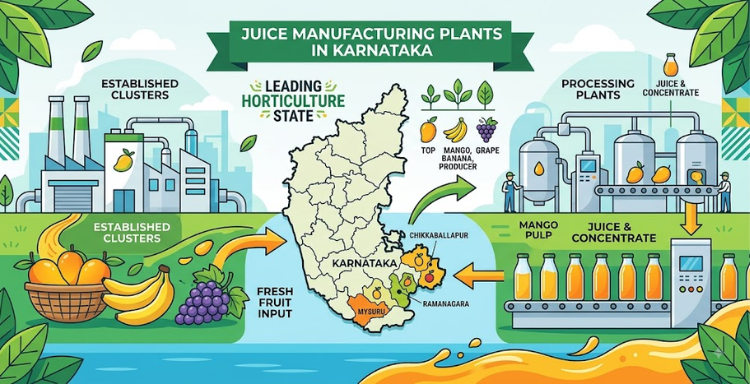
Karnataka is one of India’s leading horticulture states, the country’s top mango, banana and grape producing region in several assessments, and home to established mango pulp, juice and concentrate processing clusters already operating in Kolar, Ramanagara and Chikkaballapur districts. At the very same time, this horticulture belt sits inside one of the districts most affected by Karnataka’s 2024 groundwater crisis, the episode that pushed Bengaluru toward a widely reported Day Zero scenario, meaning growers and processors alike now depend on efficient, well engineered water use. This combination, abundant fruit raw material and a genuine water efficiency imperative, creates a distinctive opening for new juice manufacturing plant capacity across Mysuru, Kolar, Chikkaballapur and Bagalkot, alongside continued demand for commercial RO and packaged drinking water plants in water stressed Bengaluru itself. This article examines Karnataka’s horticulture data, the Bengaluru water crisis, and how Dharmanandan Techno Projects Pvt. Ltd. (DTPPL) can support new juice, water and beverage plant investment across the state.
Karnataka’s Fruit Basket Opportunity: Why Mysuru, Kolar and the State’s Horticulture Belt Need More Juice Manufacturing Plants
Karnataka rarely gets discussed as a beverage manufacturing state in the same breath as its reputation for information technology, yet its horticulture credentials are genuinely substantial. The state ranks among India’s leading producers of mango, banana, grapes and pomegranate, is the second largest producer of spices after Kerala, and is home to established fruit processing clusters that already turn mango into pulp, juice and concentrate for both domestic and export markets. Understanding where this raw material actually grows, and how Karnataka’s parallel water crisis is reshaping agriculture and consumption alike, is essential to seeing where new juice plant and water treatment investment makes the most sense.
Karnataka’s Horticulture Belt: The Raw Material Case for Juice Plants
Karnataka’s horticulture map is genuinely diverse. Bengaluru itself is sometimes called the Grape City of India, Kolar, Chikkaballapur and Ramanagara form a well known mango belt with existing mango pulp, juice and concentrate processing units already established there, and Bijapur and Bagalkot districts export table grapes to Europe and the Middle East under global quality certifications. State horticulture officials have separately identified pomegranate, banana and sapota as leading fruit crops, with dedicated Zone classifications built around pomegranate and onion in the northern dry zone and citrus and coffee in the hill zone around Chikmagalur and Kodagu.
Existing Processing Clusters Show the Model Already Works
The presence of mango pulp, juice and concentrate units already operating in Kolar, Ramanagara and Chikkaballapur is itself evidence that a fruit processing and juice manufacturing plant model is commercially proven in this belt. For a new entrant, the opportunity lies less in proving the concept and more in adding modern, efficient capacity, including water recycling and juice filling machine lines, that can process a larger share of the district’s mango, grape and pomegranate output locally rather than shipping raw or semi processed fruit out for processing elsewhere.
OUR OTHER PRODUCT
Bengaluru’s 2024 Water Crisis Changed the State’s Water Conversation
In early 2024, Bengaluru came close to what commentators widely described as a Day Zero scenario, with close to 7,000 of the city’s roughly 13,900 borewells running dry and households in some neighbourhoods surviving on as little as 20 litres of water a day. Officials estimated the city needed around 2,600 million litres of water daily, against a combined supply of about 2,100 million litres from the Cauvery river and groundwater, a shortfall of roughly 500 million litres a day at the peak of the crisis. The same water stress reached into Karnataka’s agricultural belt, with falling water tables in Kolar and Chikkaballapur reported to be damaging mango orchards and threatening the vegetable supply that feeds Bengaluru itself.
What This Means for Water and Beverage Investment
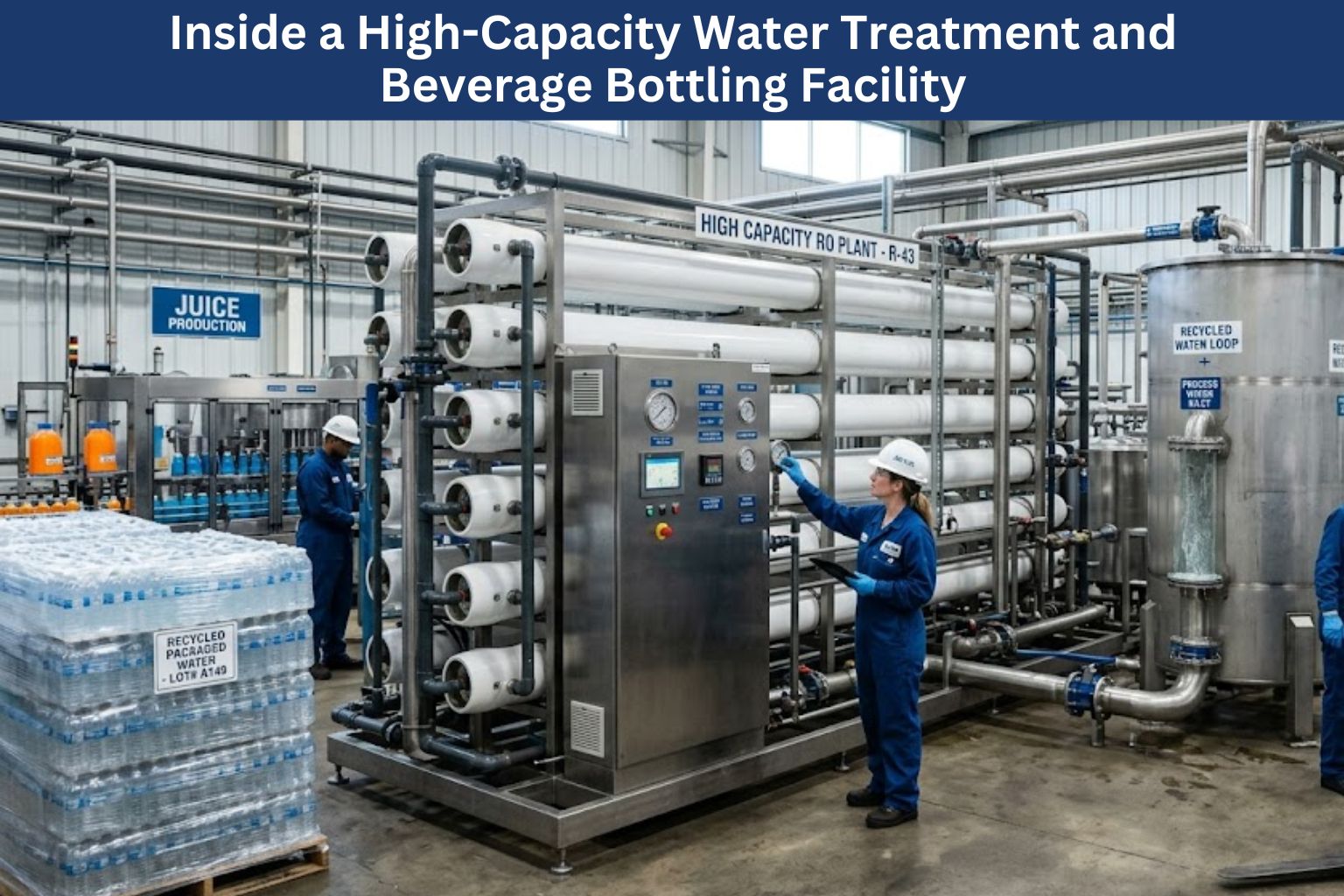
Bengaluru’s experience has visibly shifted institutional and corporate buyers toward more resilient water sourcing, including greater reliance on commercial RO plant capacity, water recycling and packaged drinking water contracts rather than assuming continuous borewell or municipal supply. For juice and beverage manufacturers specifically, the same crisis reinforces the case for water efficient processing technology and, where possible, sourcing raw fruit from the mango and grape belt itself rather than adding further groundwater pressure inside Bengaluru’s city limits.
Comparing Karnataka’s Key Opportunity Zones
| Location | Core Strength | Water Situation | Strongest Opportunity |
| Kolar and Chikkaballapur | Established mango belt with existing pulp and juice units | Falling water table, borewell dependent | Juice manufacturing plant expansion and efficient RO systems |
| Bagalkot and Bijapur | Export grade grape and pomegranate cultivation | Reliant on Tungabhadra canal irrigation | Juice and concentrate processing tied to export quality fruit |
| Bengaluru Urban | India’s tech capital, dense corporate and residential demand | Near Day Zero crisis in 2024, borewells widely dried up | Commercial RO plant and packaged drinking water plant capacity |
| Mysuru | Growing urban centre with tourism and food processing base | More stable than Bengaluru but tightening | Packaged water plant and juice bottling for regional distribution |
Government Standards and Support Relevant to Karnataka
- FSSAI licensing and BIS certification under IS 14543 or IS 13428 apply to all packaged water manufacturing in Karnataka, and food safety licensing also covers juice and beverage processing units.
- The Karnataka State Pollution Control Board issues consent to establish and operate for new water and beverage processing facilities.
- Karnataka’s horticulture department and food processing schemes support fruit processing infrastructure in districts such as Kolar and Chikkaballapur, in line with the state’s broader push to add value to its horticulture output rather than export raw produce.
- The Bangalore Water Supply and Sewerage Board has been expanding treated wastewater reuse for bulk industrial and commercial users following the 2024 crisis, a trend relevant to any new plant’s water sourcing strategy.
Client Review
“Best Machines Manufacturers in India. Loved the way they treat people and help them learn this new business. Also awsome technical team. Best part is they have different departments like marketing and sales, production, R & D, After sales & Service, ISI Department, Installation Team.Best Service - Cheers , Keep up the good work.”
– Rahul Bharti
How Dharmanandan Techno Projects Pvt. Ltd. (DTPPL) Can Help in Karnataka
DTPPL supports entrepreneurs and food processing businesses across Karnataka with turnkey design, supply and installation of juice manufacturing plants, including fruit processing and juice filling machine lines, alongside commercial and industrial RO plants, water softening plants and packaged mineral water plants for Bengaluru’s water stressed corporate and residential market. Because Karnataka’s opportunity spans both a horticulture led juice plant model in Kolar and Chikkaballapur and a water security led RO and packaged water model in Bengaluru, DTPPL works with entrepreneurs to identify the right plant configuration and capacity for their specific location and target market, from water testing and project cost estimation through machinery selection and commissioning.
 Call Us Now!
How to Set Up a Juice or Water Plant in Karnataka: Step by Step
- Decide on a raw material strategy, sourcing fresh mango, grape or pomegranate locally in districts such as Kolar or Bagalkot, or focusing on packaged water for the Bengaluru market.
- Test source water quality and confirm groundwater availability, particularly important in Bengaluru and the Kolar belt given ongoing water stress.
- Select processing and filling equipment sized to your target volume, including juice extraction, pasteurisation and filling lines or RO and bottling lines as appropriate.
- Register the business and obtain FSSAI licensing, BIS certification where applicable, and Karnataka State Pollution Control Board consent.
- Build supply relationships with local fruit growers or aggregators if operating a juice plant, or with corporate, institutional and retail buyers if focused on packaged water plant business.
- Plan for water efficiency from the outset, including recycling and reuse systems, given Karnataka’s demonstrated vulnerability to sudden water stress.
OUR OTHER PRODUCT
Frequently Asked Questions
Why is Karnataka a good location for a juice manufacturing plant?
Karnataka is among India’s leading producers of mango, banana, grapes and pomegranate, with established fruit processing and juice clusters already operating in districts such as Kolar, Ramanagara and Chikkaballapur, giving a new entrant proven raw material access and a demonstrated processing model to build on.
How bad was Bengaluru's 2024 water crisis?
Nearly 7,000 of Bengaluru’s roughly 13,900 borewells ran dry in early 2024, and the city faced an estimated daily shortfall of around 500 million litres against total demand of about 2,600 million litres, a situation widely compared to Cape Town’s Day Zero crisis.
Does Bengaluru's water crisis affect Karnataka's mango growing areas too?
Yes. Falling water tables in Kolar and Chikkaballapur, both significant mango growing districts, have been reported to damage orchards and threaten the vegetable supply that feeds Bengaluru, showing that the water crisis extends well beyond the city itself.
What licenses are needed to start a juice plant business in Karnataka?
A new juice manufacturing plant needs FSSAI food safety licensing, applicable BIS certification for any packaged water component, and consent to establish and operate from the Karnataka State Pollution Control Board.
Can DTPPL help set up a juice plant as well as a water plant in Karnataka?
Yes. DTPPL provides turnkey design, supply and installation for both juice manufacturing plants and packaged water or RO plants, helping entrepreneurs choose the right configuration for locations ranging from Karnataka’s mango belt to water stressed Bengaluru.
Mineral Water Plant
Capacity: 500 LPH to 50,000 LPH
(USD 27,500 to USD 16,49,000)
Conclusion
Karnataka’s story is really two water stories in one. In Kolar, Chikkaballapur, Bagalkot and Bijapur, abundant mango, grape and pomegranate cultivation, backed by already proven pulp and juice processing clusters, makes a strong case for new juice manufacturing plant investment. In Bengaluru, a near miss with Day Zero in 2024 has made resilient, efficient water sourcing a boardroom priority for corporate and residential buyers alike, sustaining strong demand for commercial RO plant and packaged mineral water plant capacity. Entrepreneurs who understand which of these two Karnatakas they are building for, and who partner with an experienced provider such as DTPPL to design the right plant, are well placed to succeed in either market.
Our associates









































Director – Global Marketing and Sales
Mr. Bhavesh from Dharmanandan Techno Projects Pvt. Ltd. has played a pivotal role in elevating the DTPPL brand to the global stage, leveraging his exceptional expertise in marketing and communications. He is committed to helping clients achieve significant growth while strengthening their own brands. Dharmanandan Techno Projects Pvt. Ltd. is a leading manufacturer and supplier of water purification systems and turnkey solutions for mineral water plants. With years of experience in designing and delivering high-quality water treatment solutions, the company provides end-to-end services, including system design, installation, maintenance, and ongoing support. Specializing in scalable and customizable water plants, DTPPL has successfully served industries worldwide, ensuring clean and safe drinking water across diverse applications.