





Listening Article
Table of Contents
Why You Should Avoid Drinking Tap Water
February 22, 2022
Water is an essential requisite of life for every living being. But one should also take the necessary care when consuming it. Like animals or other creatures, humans cannot drink water just from anywhere.
A proper source and filtration of water is required before its consumption to remain healthy and carry out vital functions.
Water is available to us from various sources like tap, packaged bottles, pouches, etc. The most common source being tap water that is usually found at every household or office and other premises of work and stay.
Let us take you through some reasons why you should avoid drinking tap water.
Drinking tap water exposes people to dangerous germs that can cause an array of ailments.
Metal Poisoning
Your tap water could be contaminated with heavy metals laded with metallic elements with a relatively high density that are toxic or even poisonous when consumed. This can lead to metal poisoning, and as a result you may experience nerve damage, diarrhea, memory loss, or muscle cramps.
High Chances of Arsenic, Pesticide, and Industrial Waste Contamination
Arsenic is a naturally occurring chemical commonly found in groundwater. It can be found in household tap water as a result of agricultural or industrial contamination or from a private well. When consumed, it can cause health problems like sensation in the hands and feet, nausea, vomiting, stomach discomfort, and diarrhea.
In many regions, tap water sources such as rivers, lakes, and underground wells are exposed to agricultural runoff and industrial discharge. Farms often use pesticides, fertilizers, and chemicals that seep into groundwater, which eventually becomes part of the tap water supply. Similarly, untreated or poorly managed industrial waste containing harmful chemicals, heavy metals, and toxins finds its way into water sources. These contaminants may not always be eliminated completely during basic municipal treatment processes. Prolonged consumption of such water can lead to serious health issues such as liver damage, kidney problems, hormonal imbalance, and even cancer in extreme cases. Since pesticides and industrial chemicals are invisible and tasteless, consumers might drink contaminated water without realizing the risk. This makes pesticide and industrial waste contamination one of the strongest reasons to avoid relying solely on tap water.
Chlorine
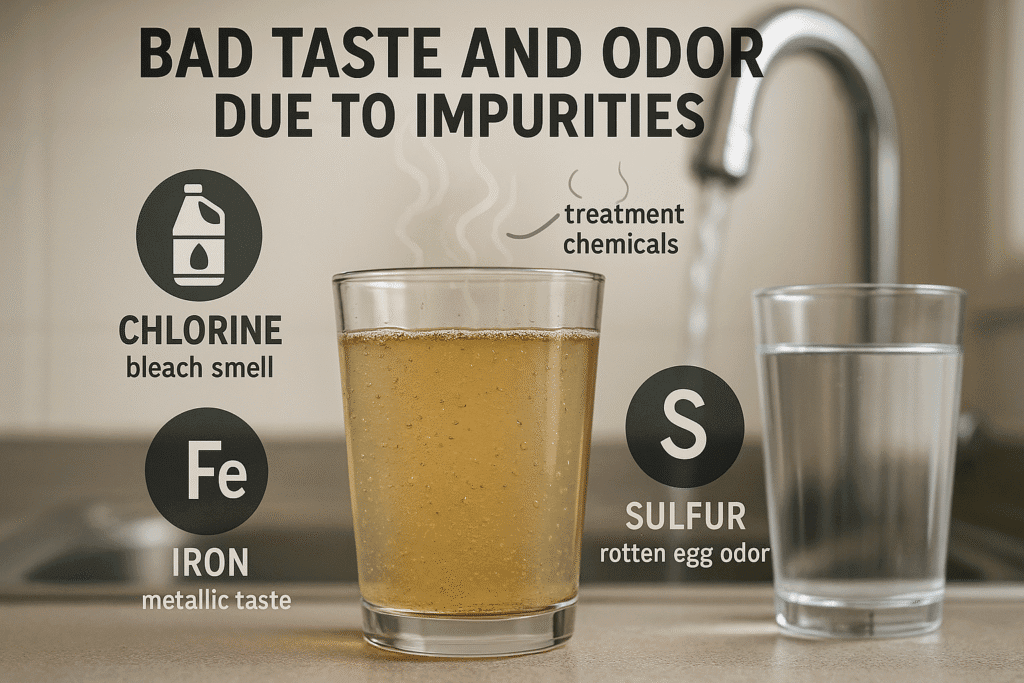
Known to kill bacteria and germs in water, chlorine also damages the human body when consumed orally or inhaled in large quantities. When chlorine comes into contact with water in the body, it forms corrosive acids. Excessive chlorine exposure can lead to health problems.
Chemical
Water can sometimes taste like a chemical when it comes into contact with rubber or plastic pipes and small amount of these substances dissolve in the water.
Presence of Algae and Bacteria
The presence of Algae, bacteria or other organic material in a water source is commonly responsible for an earthy or musty taste in tap water. This can also happen when water passes through peaty lands, such as moorlands, or when water is left standing in your home’s pipes for an extended period of time.

From the above reasons, we can conclude that the taps that provide drinking water is not of superior quality and that it should be further boiled or filtered before consuming to keep health ailments at bay.

Director – Global Marketing and Sales
Mr. Bhavesh from Dharmanandan Techno Projects Pvt. Ltd. has played a pivotal role in elevating the DTPPL brand to the global stage, leveraging his exceptional expertise in marketing and communications. He is committed to helping clients achieve significant growth while strengthening their own brands. Dharmanandan Techno Projects Pvt. Ltd. is a leading manufacturer and supplier of water purification systems and turnkey solutions for mineral water plants. With years of experience in designing and delivering high-quality water treatment solutions, the company provides end-to-end services, including system design, installation, maintenance, and ongoing support. Specializing in scalable and customizable water plants, DTPPL has successfully served industries worldwide, ensuring clean and safe drinking water across diverse applications.