




Listening Article
Table of Contents
What Is the pH of Purified Water? Complete Guide to Water pH Levels
July 3, 2026
AI Summary
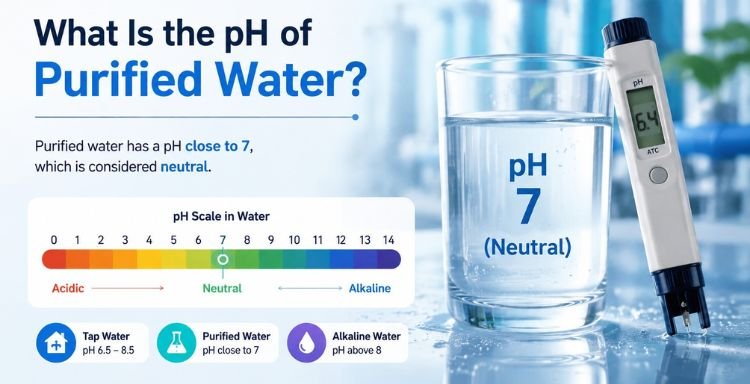
The pH of purified water is generally close to 7, which is considered neutral under ideal laboratory conditions. However, purified water can become slightly acidic after exposure to air because it naturally absorbs carbon dioxide. Different water sources have different pH values. Tap water usually ranges from 6.5 to 8.5, while alkaline water typically has a pH above 8. Understanding pH in water helps industries, laboratories, and consumers select the right water treatment process and maintain water quality.
Introduction
Water quality is determined by several important characteristics, and one of the most discussed among them is the pH level. Whether you are operating a water treatment plant, purchasing a commercial RO system, manufacturing packaged drinking water, or simply trying to understand purified water, knowing the pH level of water is essential.
Many people assume that all water has the same pH. In reality, the pH varies depending on the water source, purification process, dissolved minerals, storage conditions, and environmental exposure. For example, purified water, tap water, mineral water, RO water, and alkaline water each have different pH characteristics.
This guide explains everything you need to know about pH in water, including the pH of purified water, normal water pH value, alkaline water pH, and tap water pH levels. Instead of focusing only on drinking water standards, this article explores the science behind water pH and how different treatment methods influence it.
Whether you are a homeowner, water treatment professional, industrial buyer, or bottled water manufacturer, this guide will help you better understand how pH affects water quality.
 Drop Us an Email!
What Is pH in Water?
The term pH stands for Potential of Hydrogen, which measures the concentration of hydrogen ions present in water. It indicates whether water is acidic, neutral, or alkaline.
The pH scale ranges from 0 to 14.
| pH Range | Water Condition |
| Below 7 | Acidic |
| 7 | Neutral |
| Above 7 | Alkaline |
Pure water under ideal laboratory conditions has a pH of 7, making it chemically neutral.
As the pH decreases below 7, water becomes more acidic. As the pH rises above 7, it becomes increasingly alkaline.
Although pH itself does not indicate whether water is safe to drink, it plays an important role in water treatment, corrosion control, equipment protection, and industrial processes.
Read Our Article
Why Does pH Matter?
The pH level influences several characteristics of water, including:
- Corrosion of pipes and plumbing
- Scaling inside RO membranes and boilers
- Performance of water treatment chemicals
- Efficiency of filtration systems
- Taste characteristics
- Mineral stability
- Industrial process compatibility
For industries, maintaining the appropriate pH helps protect expensive equipment and improves treatment efficiency.
OUR OTHER PRODUCT
What Is the pH of Purified Water?
One of the most common questions is: What is the pH of purified water?
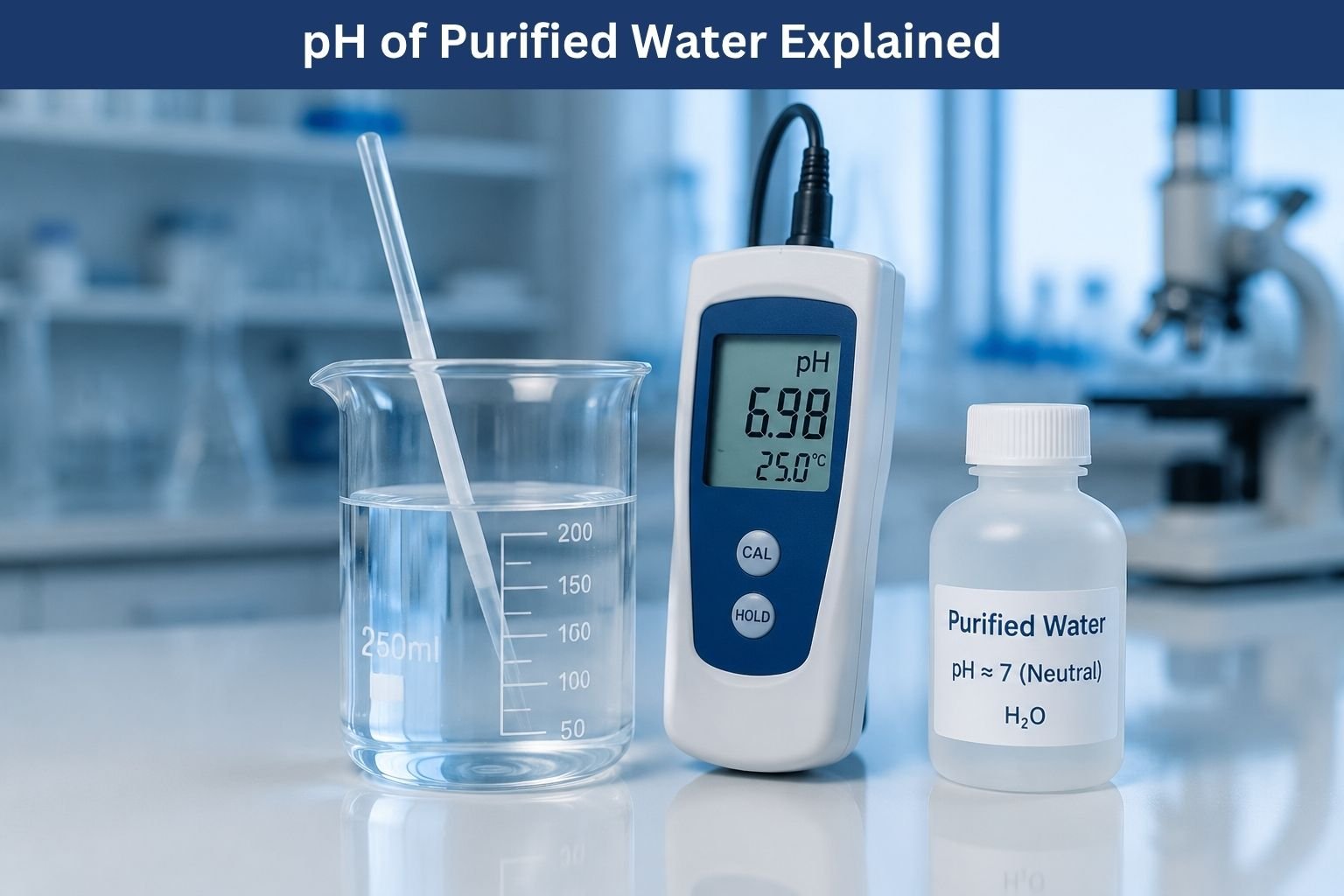
Under controlled laboratory conditions, purified water has a pH very close to 7, making it neutral.
However, in real world conditions, purified water rarely remains exactly at pH 7 for long.
As soon as purified water comes into contact with air, it begins absorbing carbon dioxide. This dissolved carbon dioxide forms a weak carbonic acid, which can gradually lower the pH.
Because of this natural process, purified water often measures between:
pH 5.8 to pH 7.0
This slight reduction in pH is completely normal and does not necessarily indicate contamination or poor water quality.
Why Does Purified Water Become Slightly Acidic?
Many people believe that purification itself makes water acidic.
This is not entirely true.
The purification process removes dissolved minerals, salts, and impurities that normally help stabilize pH. Once these buffering minerals are removed, purified water becomes more sensitive to environmental changes.
When exposed to air, purified water naturally absorbs carbon dioxide, resulting in a small decrease in pH.
This is a normal chemical reaction rather than a defect in the purification process.
Does Every Purification Method Produce the Same pH?
No.
Different purification technologies can produce water with slightly different pH values.
| Purification Method | Typical pH |
| Reverse Osmosis | 5.5 to 7 |
| Distillation | Around 7 before air exposure |
| Deionization | Close to 7 |
| UV Purification | Depends on source water |
| Ultrafiltration | Similar to source water |
The final pH depends not only on the purification technology but also on source water quality, mineral content, storage conditions, and post treatment processes.
What is the pure water pH level?
Scientifically, completely pure water has a pH of 7 at 25°C.
This value represents chemically pure water that contains only hydrogen and oxygen molecules without any dissolved minerals, salts, gases, or contaminants.
However, achieving perfectly pure water outside laboratory environments is extremely difficult.
Once pure water is exposed to normal atmospheric conditions, it quickly absorbs gases from the surrounding air, causing the measured pH to change slightly.
For this reason, laboratory measurements often differ from field measurements.
Client Review
“DTPPL is hands down the best manufacturer for Mineral Water and Soda plant setups in India. Their team is highly professional, and the technology they use in bottle-filling and blow-molding machines is top-notch. They deliver exactly what they promise, maximizing value for money. Excellent post-installation support and 24/7 customer care!”
– Aniket Choudhary
Normal pH Level in Water
The normal pH level in water varies depending on the source and intended application.
Rather than expecting every type of water to have the same pH, it is more useful to understand the typical range for each category.
The table below provides a general comparison.
| Water Type | Typical pH Range |
| Pure Water | Around 7 |
| Purified Water | 5.8 to 7 |
| RO Water | 5.5 to 7 |
| Distilled Water | Around 7 before exposure |
| Tap Water | 6.5 to 8.5 |
| Mineral Water | 6.5 to 8.5 |
| Alkaline Water | 8 to 9.5 |
These values may vary depending on water source, mineral composition, treatment process, and storage conditions.
Therefore, understanding the water source is often more important than focusing on a single pH number.
 WhatsApp
Key Takeaways
✔ Pure water is chemically neutral with a pH of approximately 7.
✔ Purified water may become slightly acidic after exposure to air.
✔ Different purification methods produce different pH values.
✔ Tap water and alkaline water naturally have different pH ranges.
✔ The pH of water is influenced by dissolved minerals, carbon dioxide, and treatment processes.
Understanding Tap Water pH Levels
Many people assume that tap water has a fixed pH value. In reality, tap water pH levels vary from one city to another because municipal water sources, treatment methods, and distribution systems differ.
Surface water, groundwater, and blended water supplies each have unique chemical characteristics. During treatment, utilities may also adjust pH to reduce pipe corrosion and improve water distribution.
In most cases, tap water falls within a slightly acidic to slightly alkaline range.
| Water Source | Typical pH Range |
| Groundwater | 6.5 to 8.0 |
| Surface Water | 6.0 to 8.5 |
| Municipal Tap Water | 6.5 to 8.5 |
The pH of tap water can also change while traveling through pipelines. Older plumbing, dissolved minerals, seasonal variations, and local water chemistry may influence the final pH at your tap.
Why Does Tap Water pH Matter?
Maintaining an appropriate pH helps:
- Reduce corrosion in plumbing systems
- Minimize metal leaching
- Improve water treatment efficiency
- Protect municipal distribution infrastructure
- Enhance compatibility with household appliances
For industrial applications, monitoring tap water pH before treatment can also improve the performance of RO systems, softeners, and filtration equipment.
What Is Alkaline Water pH?
Another frequently searched topic is alkaline water pH.
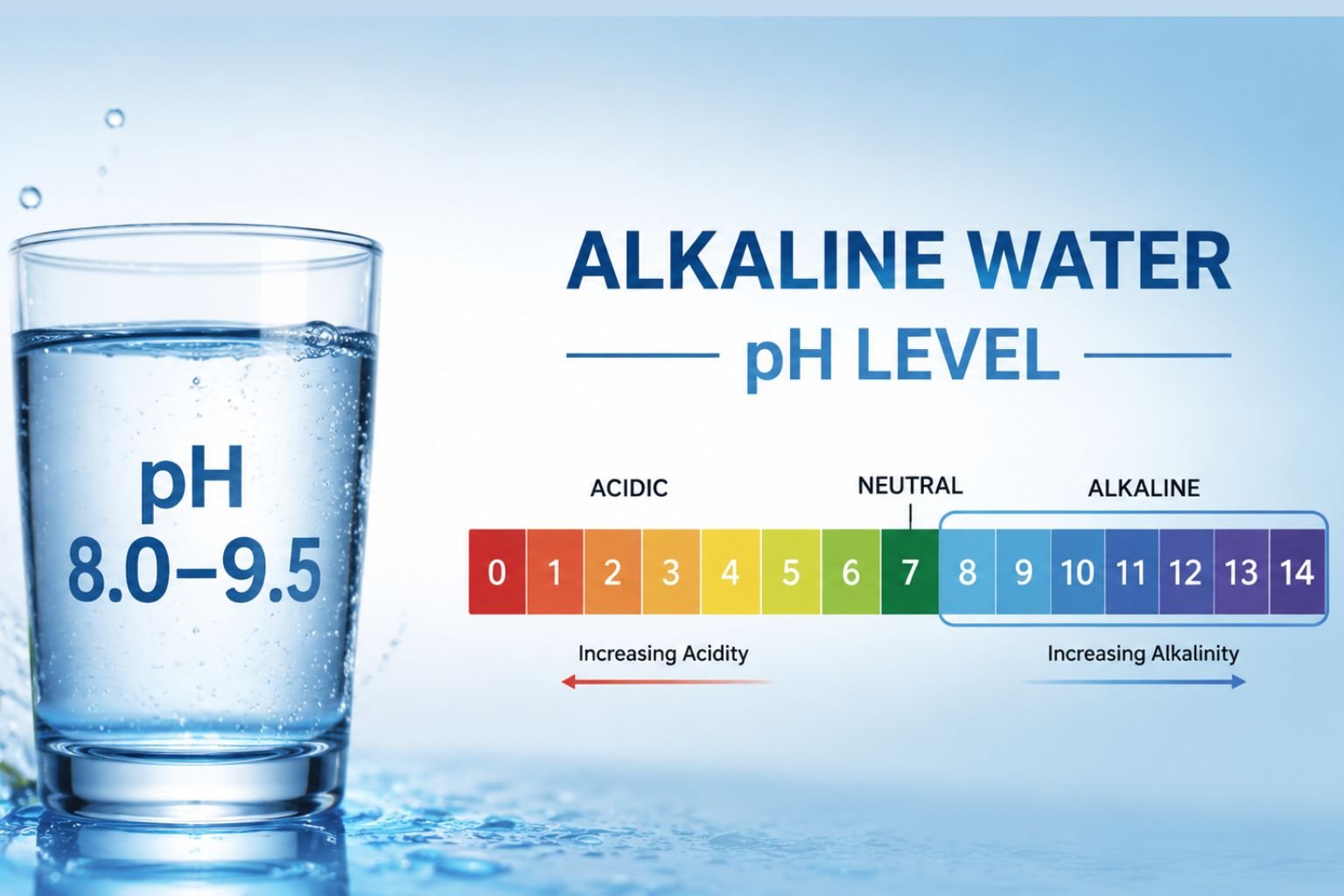
Alkaline water is water with a pH higher than neutral. Instead of containing more hydrogen ions, it contains a greater concentration of hydroxide ions, resulting in a higher pH value.
Most commercially available alkaline water typically ranges between:
pH 8.0 and pH 9.5
Some products may advertise even higher pH values, but a higher number does not automatically indicate better quality.
How Does Water Become Alkaline?
Water can become alkaline in two common ways.
Naturally
As water flows through rocks containing calcium, magnesium, and other minerals, it naturally dissolves these minerals, increasing its alkalinity.
Natural mineral springs are a common example.
Through Water Treatment
Many alkaline water systems increase pH using:
- Mineral cartridges
- Electrolysis
- Remineralization filters
- Alkaline filter media
These systems raise the pH while adding minerals back into purified water.
OUR OTHER PRODUCT
Typical Alkaline Water pH Values
| Water Type | Approximate pH |
| Neutral Water | 7 |
| Mildly Alkaline Water | 7.5 to 8.5 |
| Commercial Alkaline Water | 8 to 9.5 |
| Highly Alkaline Water | Above 9.5 |
The exact value depends on the treatment method and mineral composition.
Is Higher pH Always Better?
This is one of the biggest misconceptions about pH water.
A higher pH does not necessarily mean better water.
Water quality depends on many factors, including:
- Total dissolved solids
- Mineral composition
- Microbiological safety
- Chemical contaminants
- Source water quality
- Treatment process
- Intended application
For example, ultrapure water used in laboratories has very different characteristics from mineral water or alkaline water, even though each serves a specific purpose.
Instead of focusing only on pH, it is important to evaluate overall water quality.
 Call Now
Normal Water pH Value Across Different Water Types
Many users search for the normal pH level in water without realizing that different types of water naturally have different pH values.The table below provides a broader comparison.| Water Type | Typical pH | Main Characteristics |
| Pure Water | Around 7 | Chemically neutral |
| Purified Water | 5.8 to 7 | Low mineral content |
| RO Water | 5.5 to 7 | Demineralized during treatment |
| Distilled Water | Around 7 | Highly purified |
| Tap Water | 6.5 to 8.5 | Mineral content varies |
| Mineral Water | 6.5 to 8.5 | Naturally occurring minerals |
| Alkaline Water | 8 to 9.5 | Higher alkalinity |
This comparison helps illustrate why there is no single “normal” pH value applicable to every type of water.
Factors That Can Change Water pH
Even after treatment, water pH can change over time.
Several environmental and operational factors influence pH.
Exposure to Air
Purified water absorbs carbon dioxide from the atmosphere, forming weak carbonic acid and lowering pH slightly.
Mineral Content
Calcium, magnesium, bicarbonates, and other dissolved minerals help stabilize water pH.
Water Source
Rainwater, rivers, lakes, groundwater, and spring water all have different natural pH characteristics.
Treatment Process
Reverse osmosis, deionization, distillation, softening, and remineralization each affect pH differently.
Storage Conditions
Storage tanks, piping materials, temperature, and exposure to sunlight may gradually alter water chemistry.
Read Our Article
Common Myths About Water pH
Understanding the science behind pH helps separate facts from misconceptions.
Myth 1: Pure Water Always Measures Exactly pH 7
Reality: Pure water starts at pH 7 under laboratory conditions but may become slightly acidic after absorbing carbon dioxide from the air.
Myth 2: Higher pH Means Healthier Water
Reality: Water quality depends on many physical, chemical, and microbiological parameters, not just pH.
Myth 3: Purified Water Is Acidic Because Purification Adds Chemicals
Reality: Most purification processes remove impurities rather than adding acidic substances. The slight drop in pH usually occurs after exposure to air.
Myth 4: All Tap Water Has the Same pH
Reality: Tap water pH varies depending on the source, local treatment practices, and distribution system.
Myth 5: Alkaline Water and Mineral Water Are the Same
Reality: While both may contain minerals, mineral water is naturally sourced, whereas alkaline water may be naturally alkaline or produced through treatment technologies.
Quick Summary
- Tap water pH levels vary by location and treatment process.
- Alkaline water generally has a pH between 8 and 9.5.
- A higher pH does not automatically indicate better water quality.
- Purified water, RO water, mineral water, and tap water each have different natural pH ranges.
- Environmental exposure, dissolved minerals, and treatment methods all influence water pH.
How to Measure the pH Level of Water
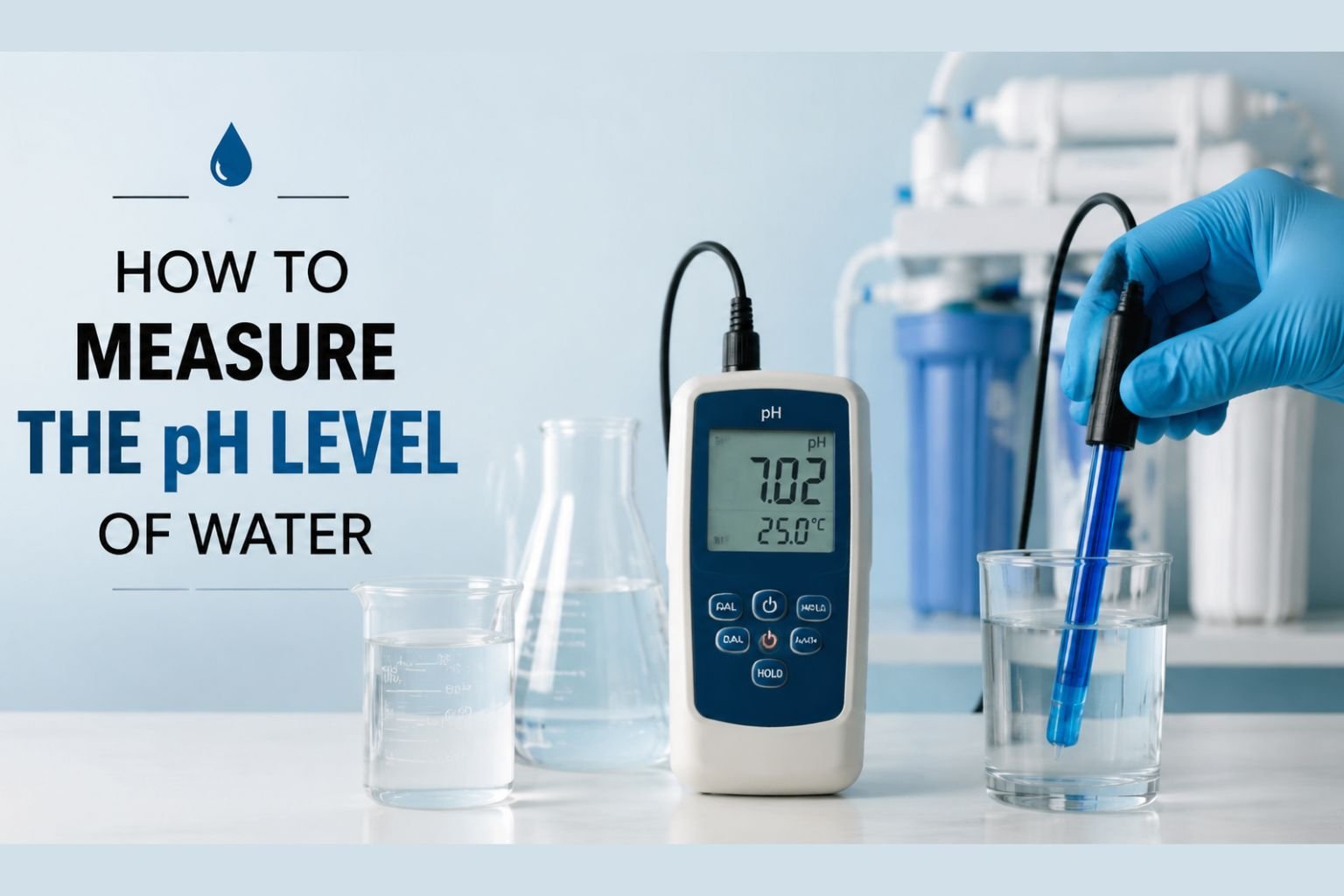
Whether you are managing a water treatment plant, operating an industrial RO system, or simply checking household water quality, measuring pH is a straightforward process when the correct method is used.
Step 1: Select the Right Testing Method
Choose a testing method based on the level of accuracy you need.| Testing Method | Best For | Accuracy |
| Digital pH Meter | Laboratories and industries | High |
| pH Test Strips | Home use | Moderate |
| Liquid Reagent Test Kit | General testing | Good |
| Online pH Sensor | Industrial plants | Continuous Monitoring |
Digital pH meters are preferred for commercial and industrial applications because they provide quick and accurate readings.
Step 2: Collect the Water Sample
Collect the sample in a clean glass or food grade plastic container.
Avoid using containers that previously held chemicals or detergents, as residue can affect the reading.
Step 3: Test the Sample
Follow the instructions supplied with your testing device.
For a digital meter:
- Switch on the meter.
- Rinse the probe with distilled water.
- Immerse the probe in the sample.
- Wait until the reading stabilizes.
Record the pH value.
Step 4: Compare the Reading
Compare your measured pH with the expected range for that type of water.
Remember that purified water, tap water, RO water, mineral water, and alkaline water each have different normal pH values.
Step 5: Calibrate Regularly
If you use a digital pH meter, calibrate it regularly using standard buffer solutions to maintain accuracy.
Routine calibration is especially important in commercial water treatment plants and manufacturing facilities.
Mineral Water Plant
Capacity: 500 LPH to 50,000 LPH
(USD 27,500 to USD 16,49,000)
Applications of Water pH in Different Industries
Understanding pH in water is important far beyond household use. Many industries rely on accurate pH control to maintain product quality, equipment performance, and regulatory compliance.
Packaged Drinking Water Plants
Water pH is monitored throughout purification, remineralization, and final quality testing to ensure process consistency.
Natural mineral content influences pH, making regular monitoring an important part of quality control.
Feed water pH affects membrane performance, scaling potential, and overall treatment efficiency.
Pharmaceutical Industry
Highly purified water requires precise monitoring during manufacturing and cleaning processes.
Food and Beverage Industry
Water chemistry influences product consistency, taste, and processing efficiency.
Power Plants
Boilers and cooling systems require controlled water chemistry to minimize corrosion and scale formation.
Chemical Manufacturing
Many industrial reactions depend on maintaining a specific water pH for stable production.
Choosing the Right Water Treatment Solution
Different water sources require different treatment technologies.
Instead of selecting a system based only on pH, a complete water analysis should be performed.
Factors to consider include:
- Source water quality
- Total Dissolved Solids
- Hardness
- Iron content
- Silica
- Organic contaminants
- Microbiological quality
- Intended application
- Required production capacity
A professional water analysis helps determine whether your application requires filtration, softening, reverse osmosis, demineralization, ultraviolet disinfection, or remineralization.
Conclusion
Water pH is an important indicator of water chemistry, but it represents only one aspect of overall water quality.
Pure water has a pH close to 7 under ideal laboratory conditions, while purified water may become slightly acidic after exposure to air. Tap water, mineral water, and alkaline water each have their own natural pH ranges depending on their source and treatment process.
Rather than focusing solely on achieving a specific pH value, it is more important to understand how water composition, dissolved minerals, purification methods, and intended use work together.
Whether you are designing a commercial RO plant, operating a packaged drinking water facility, or selecting a water treatment system for industrial use, regular water testing and a complete quality assessment provide the most reliable basis for decision making.
At DTPPL, we help businesses choose the right water treatment solutions based on comprehensive water analysis, application requirements, and long term operational efficiency.
Frequently Asked Questions on PH of Water
What is the pH of purified water?
Purified water is generally close to pH 7 under ideal conditions. After exposure to air, it commonly measures between 5.8 and 7 because it absorbs carbon dioxide.
What is the normal pH level in water?
The normal pH depends on the type of water. Pure water is around 7, while tap water, mineral water, purified water, and alkaline water each have their own typical ranges.
What is pure water pH level?
Chemically pure water has a pH of 7 at 25°C under laboratory conditions.
Does purified water always have a pH of 7?
No. Once exposed to air, purified water naturally absorbs carbon dioxide, which can lower its pH slightly.
What are normal tap water pH levels?
Tap water commonly ranges from 6.5 to 8.5 depending on the local water source and treatment process.
What is alkaline water pH?
Alkaline water generally has a pH between 8 and 9.5, although the exact value depends on its mineral content and production method.
Does higher pH mean better water?
No. Water quality depends on several factors, including mineral composition, contaminants, microbiological safety, and intended application, not just pH.
Why does RO water have a lower pH?
Reverse osmosis removes dissolved minerals that help buffer water. After purification, the water may absorb carbon dioxide from the air, causing a slight reduction in pH.
How can I measure water pH?
Water pH can be measured using a digital pH meter, pH test strips, liquid reagent kits, or online industrial sensors.
Can water pH change during storage?
Yes. Exposure to air, temperature changes, storage materials, and dissolved gases can gradually influence water pH over time.
Is alkaline water the same as mineral water?
No. Mineral water naturally contains dissolved minerals from its source, whereas alkaline water may be naturally alkaline or produced through specialized treatment processes.
Why is pH important in industrial water treatment?
Water pH affects membrane performance, scaling, corrosion, chemical dosing, and overall system efficiency, making it an essential parameter in industrial water treatment.
Our associates
























































Director – Global Marketing and Sales
Mr. Bhavesh from Dharmanandan Techno Projects Pvt. Ltd. has played a pivotal role in elevating the DTPPL brand to the global stage, leveraging his exceptional expertise in marketing and communications. He is committed to helping clients achieve significant growth while strengthening their own brands. Dharmanandan Techno Projects Pvt. Ltd. is a leading manufacturer and supplier of water purification systems and turnkey solutions for mineral water plants. With years of experience in designing and delivering high-quality water treatment solutions, the company provides end-to-end services, including system design, installation, maintenance, and ongoing support. Specializing in scalable and customizable water plants, DTPPL has successfully served industries worldwide, ensuring clean and safe drinking water across diverse applications.