
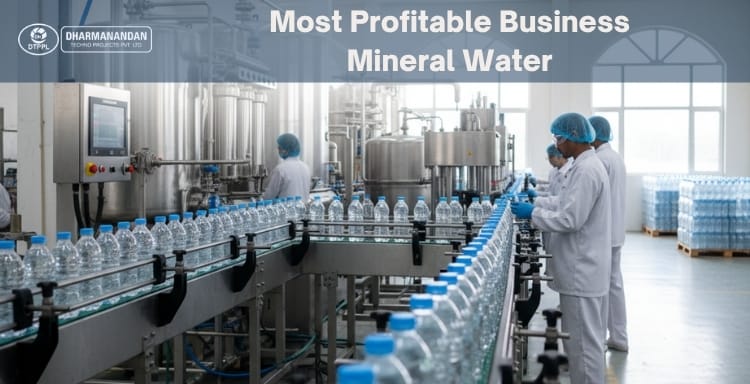




Listening Article
Table of Contents
Why Mineral Water is the Most Profitable Manufacturing Business to Start
November 14, 2025
Introduction: Why Everyone Is Talking About Mineral Water Plants
Walk into any shop, restaurant, office, petrol pump, or railway station and you’ll notice one common thing on almost every counter: packaged drinking water. People might cut down on luxury items, but safe drinking water? Non-negotiable. That’s exactly why the mineral water manufacturing business has quietly become one of the most stable, profitable, and scalable manufacturing opportunities today.
Unlike many traditional industries that need heavy machinery, complex processes, or highly specialized skills, a mineral water plant can be started with a relatively simple setup and a clear process flow. The demand is everywhere—cities, towns, and even remote rural areas. Add to that the rising awareness about health, hygiene, and safe water consumption, and you’ve got a product that practically sells itself.
This business sits at the intersection of three powerful trends: high water consumption demand, increasing bottled water trend, and growing consumer preference for safe, purified drinking water. When a product is both essential and aspirational (people prefer branded safe water), the opportunity becomes even more attractive. The best part? Once your plant is set up and running smoothly, the operations can be largely system-driven, allowing you to focus more on sales, branding, and expansion rather than “firefighting” daily issues.For many first-time entrepreneurs, mineral water manufacturing has become a powerful new business opportunity that doesn’t demand extreme capital or complex technology.
In simple words, you’re not just selling water—you’re selling trust, safety, and convenience in a bottle. And that, as you’ll see, is a very profitable combination.If you’re actively hunting for a new profitable business idea that’s not just trendy but genuinely sustainable, mineral water deserves serious attention.
Objective of This Article
The main objective of this article is very straightforward: to show, step by step, why mineral water manufacturing is one of the most profitable and practical manufacturing businesses you can start today-even if you’re a first-time entrepreneur.In this guide, you’ll also clearly understand the business model for bottled water manufacturing, including investment, capacity planning, and revenue streams.
Specifically, this article aims to:
- Explain the 20 most important factors that make this business so attractive
- Connect each factor to real-world situations like hotels, corporate offices, rural markets, and exports
- Highlight why this project offers quick ROI, high profit margins, and low risk
- Help you clearly understand the business model, scalability, and revenue potential
- Show how supportive government policies, modern automation, and strong consumer demand all work in your favor
You’ll notice keywords such as high water consumption demand, low startup cost, FMCG growth, recession-proof business, and safe drinking water awareness throughout the content. These aren’t just buzzwords; they’re the core drivers that make this industry stand out.
By the end of this article, you should be able to answer questions like:
- “Is a small-scale mineral water plant a good idea for me?”
- “How risky is this business compared to other manufacturing ideas?”
- “Can I really start with a low budget and still scale big later?”
In short, the objective is to give you a clear, practical, and honest picture of why mineral water is the most profitable manufacturing business to start and whether it fits your goals, resources, and ambitions.Whether you’re just researching or seriously planning how to build a water bottling plant from scratch, this article walks you through the logic behind why this business works so well.

1. Rising Consumer Demand for Packaged Drinking Water
The first and biggest reason to consider this business is simple: demand. High water consumption demand is a daily reality. Every person needs water multiple times a day, and in many places, tap or ground water is either unsafe or unreliable. That’s where the increasing bottled water trend comes in. People prefer paying a small amount for branded, sealed, purified water rather than risking their health.
Consumer preference for safe drinking water has shifted from “optional” to “essential.” Earlier, packaged water was seen mostly at hotels, restaurants, or during travel. Today, you see it in:
- Homes and apartments
- Offices and co-working spaces
- Clinics and hospitals
- Coaching centers and schools
- Functions, events, and religious gatherings
This growing packaged water market is powered by concern over waterborne diseases, pollution, and aging municipal infrastructure. When people don’t trust the tap, they trust the bottle.
Here’s the beauty of it: once people form a habit of buying bottled water, they rarely go back. They may change brands occasionally, but not the habit itself. That makes the baseline demand for your product strong and consistent. You are not betting on a “trendy” product that might go out of fashion. You’re entering a category that’s tied to daily human survival.
So from a purely demand-side perspective, mineral water manufacturing checks all the right boxes: large consumer base, rising awareness, habitual repeat purchases, and constant usage throughout the year.
2. Low Initial Investment Compared to Other Manufacturing Industries
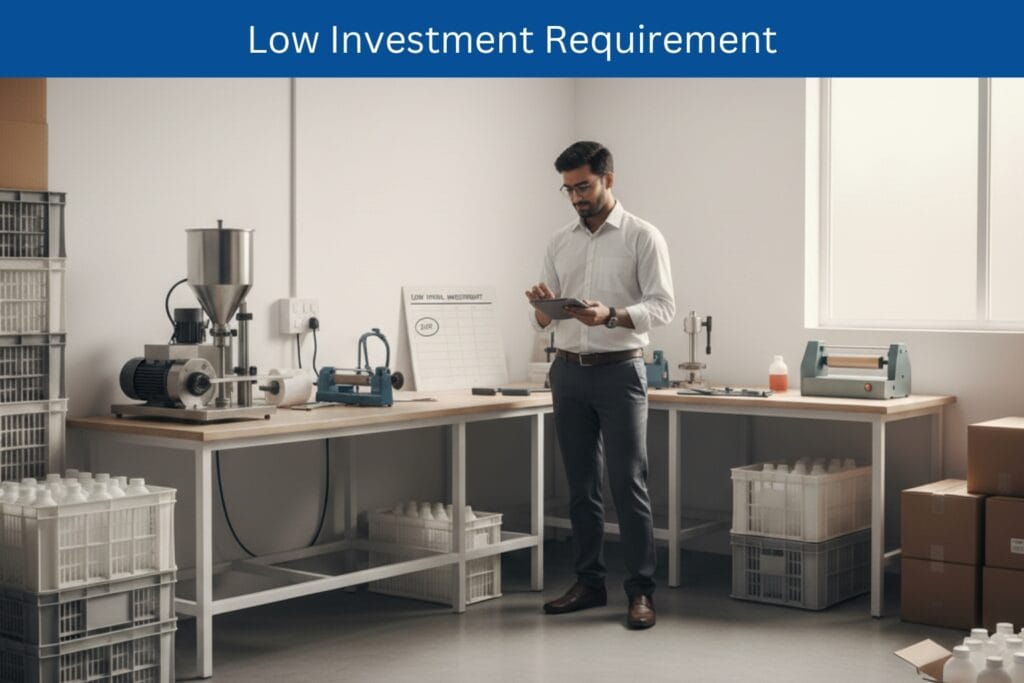
Most people assume that starting a manufacturing unit means tens of millions in capital, heavy machinery, and complex setup. Mineral water shatters that myth. One of the biggest advantages here is the low startup cost compared to many other manufacturing industries.When you study how to build a water bottling plant from scratch, you quickly realize that the infrastructure and machinery requirements are far more affordable than most people think.
A small-scale mineral water plant can be started with an affordable manufacturing setup. You don’t necessarily need a huge industrial shed or extremely expensive imported machines. Depending on your target capacity, you can start with:
- A modest space (rented or owned)
- Basic RO system and filtration setup
- A bottling line suitable for your scale
- Simple labeling and packaging equipment
This makes it a budget-friendly business model, especially for new entrepreneurs or MSMEs. You can begin with a small-scale mineral water plant investment and expand gradually as your sales grow. Compare this with businesses like heavy engineering, chemicals, or automobiles, where you need massive machinery, specialized staff, and extensive safety compliances. Mineral water, in contrast, is simpler, leaner, and more flexible.
Another big plus is that many equipment suppliers provide modular systems. That means you can start at a lower production capacity and upgrade step by step, instead of overspending on a large plant from day one. This reduces financial risk and allows you to match your production capacity with actual sales.
In short, you’re getting entry into the manufacturing world without the typical “entry fee” that scares most people away.
3. Fastest-Growing FMCG Segment with High Market Expansion Rate
Within the FMCG (Fast-Moving Consumer Goods) universe, packaged drinking water is one of the fastest-growing segments. The reasons are obvious: universal usage, low price per unit, and constantly expanding distribution channels. If you’re looking for an FMCG growth story to ride, this is a strong candidate.
The expanding bottled water market has been supported by:
- Rapid urbanization and lifestyle changes
- More eating outside the home (restaurants, food courts, street food)
- Increased travel via road, rail, and air
- Corporate culture and meetings where water bottles are standard
What makes this a profitable FMCG business opportunity is the combination of high volume and repeat purchase. Unlike durable goods that people buy once in a while, bottled water is consumed, finished, and purchased again and again. That creates a rapid industry growth rate where new brands can enter and still find space alongside established players.
The market expansion rate is also boosted by the fact that modern trade, e-commerce, and local retail shops all sell packaged water. Wherever there is a human crowd, there is water demand. Your role as a manufacturer is to consistently supply quality bottles to distributors and retailers who are always in need of stock.
Being in a fast-growing FMCG segment also improves your chances of attracting investors, partners, and even bank funding because the industry’s trajectory is clearly upward.
Read Our Article: Mineral Water Plant Project Cost in India - An Overview
4. High Profit Margin Due to Low Production Cost
Here’s where the numbers start getting interesting. One of the strongest reasons this business is so attractive is the low cost of production compared to the selling price. Water is the core raw material, and in most locations, the input cost of water itself is minimal. The main expenses are purification, bottling, packaging, and logistics.
Because of this, the overall cost-effective mineral water manufacturing model allows you to maintain strong profit margins. For example, the MRP of a bottle might be several times higher than the actual production cost. Even after distributor, retailer margins, and taxes, the manufacturer often enjoys healthy profitability.
Some key points that support high profitability:
- Technology like RO systems and automated bottling reduces wastage and labor cost
- Buying PET bottles or preforms in bulk decreases unit cost
- Power and maintenance costs can be optimized with efficient machinery
- Once fixed costs (plant, machinery) are covered, each extra unit sold adds to profit
High profit margin does not mean you overcharge the market. It simply means the business model is designed in a way that, with proper planning and volume, your high profitability becomes sustainable. Unlike low-margin, high-risk industries where one bad month can cause losses, mineral water provides more cushion in pricing and margins.This unique mix of low production cost and daily demand makes mineral water a classic low risk high profit business for new and experienced entrepreneurs.
When your production is efficient, your wastage is controlled, and your distribution is organized, the money side of this business becomes very attractive very quickly.
5. Wide Market Opportunities Across Multiple Sectors
Another major strength of this business is its wide market opportunities. You’re not dependent on a single type of customer. Packaged drinking water is needed in multiple sectors at the same time, which spreads your risk and opens up huge growth potential.
Some key segments include:
- Hotels and restaurants – Constant hotel and restaurant demand, especially for 1-liter and 500 ml bottles.
- Corporate offices – Regular supply of 20-liter jars and small bottles for meetings and visitors.
- Retail stores and supermarkets – Daily sales of all sizes, from 200 ml to family packs.
- Industrial and commercial units – Water supply for staff, canteens, and visitors.
- Events and functions – Weddings, conferences, religious festivals, sports events, political rallies.
Here’s a simple table to visualize the opportunity:
| Sector | Main Packaging Used | Demand Nature |
| Hotels/Restaurants | 500 ml, 1 L, 200 ml | Daily & consistent |
| Corporate Offices | 20 L jars, 500 ml | Contract-based supply |
| Retail Stores | All sizes | High-volume retail |
| Events & Festivals | 200 ml, 500 ml, 1 L | Bulk seasonal orders |
| Industries | 20 L jars | Regular monthly |
This diversity gives you commercial water supply opportunities in every direction. You can start by focusing on a couple of segments-for example, retail and corporate-and then expand into events, rural markets, or institutional sales.
Because water is such a basic need, once you build relationships with distributors and bulk buyers, your product can quickly become a regular part of their purchase list.
6. Scalable Business Model from Small to Large Units
Not everyone wants to start big from day one, and that’s perfectly fine. The mineral water business supports a scalable business model, which means you can start small and grow steadily without changing your entire setup.This flexible business model for bottled water manufacturing lets you start small and scale as demand grows, without changing the core structure of your plant.
A scalable mineral water plant uses a modular manufacturing system. You might begin with a lower capacity RO system and semi-automatic bottling machine. As your sales increase, you can upgrade to a higher capacity RO system, add more filling heads, or even shift to a fully automatic line.
Some examples of flexible plant size and expansion possibilities:
- Start with 500–1000 liters per hour (LPH) capacity plant
- Upgrade to 2000–5000 LPH as demand grows
- Add new product lines like 20-liter jars or 200 ml bottles later
- Expand distribution to new towns or districts without changing the core technology
This step-by-step approach reduces financial pressure. You’re not forced to “get everything perfect” from day one. Instead, you respond to market demand. When you see consistent orders, you invest in expansion. This scalability is a huge advantage over traditional industries where capacity expansion often requires massive downtime and capital.
In short, this business gives you the freedom to grow at your own pace, without locking you into a rigid structure.
7. Strong Brand Loyalty and Repeat Purchasing Behavior
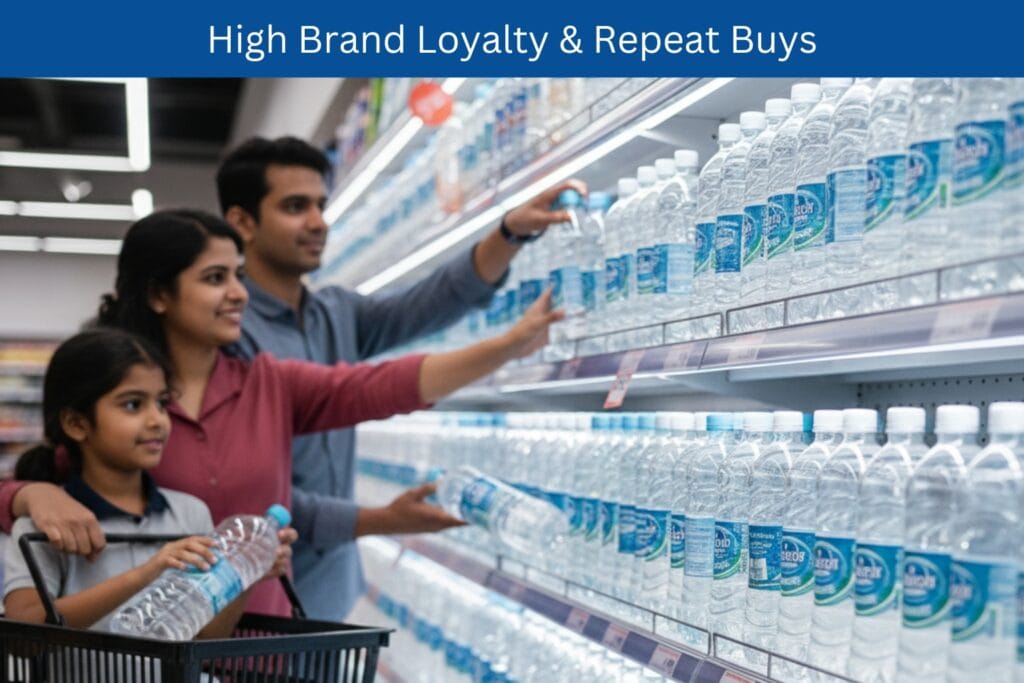
Water may look the same, but consumers don’t treat all water brands as equal. Over time, people develop brand trust for specific packaged drinking water labels. They notice the taste, perceived purity, packaging, and how consistently available the brand is in their area.
This results in:
- Repeat customers who always ask for the same brand
- Strong customer retention when you maintain quality and supply
- Higher chances of premium pricing for reliable packaged drinking water brands
Think about it: when you walk into a store, you probably have a couple of water brands in mind that you trust. You might switch if your preferred brand is unavailable, but if it’s there, you’ll pick it without thinking twice. That’s the power of brand loyalty in such an essential category.
For the manufacturer, this behavior is a goldmine. Once you secure a place in the customer’s mind (and retailer’s shelf), your sales are not purely price-driven. Customers don’t keep comparing every brand daily; they stick with what works for them.
Your job is to:
- Maintain consistent water quality and taste
- Ensure reliable supply to retailers and distributors
- Offer clean, professional packaging and labeling
Do this, and over time your brand becomes the default choice for thousands of customers-leading to stable, repeat revenue.
8. Minimal Skilled Labor Requirement
Many manufacturing businesses require highly skilled technicians, engineers, or specialized operators. That increases payroll cost and makes you dependent on a limited pool of people. Mineral water, on the other hand, has a relatively simple production process and easy plant operation.
You do need trained people, but not necessarily advanced specialists for day-to-day functioning. Most tasks like:
- Operating filling and capping machines
- Handling PET bottles and packaging
- Monitoring RO system parameters
- Loading and unloading products
…can be done by a basic technical workforce with some initial training. This results in low manpower dependency on rare or expensive skill sets.
You also have the option to use semi-automatic or fully automatic machinery that reduces manual intervention further. With regular SOPs (Standard Operating Procedures) and periodic maintenance support from equipment suppliers, running the plant becomes a routine, manageable activity.
This benefits you in multiple ways:
- Lower salary expenses
- Easier hiring from local areas
- Less disruption if a staff member leaves
- Faster training of new workers
Overall, the human resource side of this business is much simpler than many other manufacturing industries, which again makes it suitable for first-time entrepreneurs.
Read Our Article: Top Industries Suitable for 500-1000 LPH Mineral Water Plant
9. Easy Raw Material Availability (Water Source + PET Bottles)
A huge advantage of mineral water manufacturing is the easy raw material availability. The two main inputs are:
- Water source – borewell, municipal, or other approved sources
- Packaging material – PET bottles, preforms, caps, labels, cartons, etc.
In most regions, getting a reliable water source is straightforward, subject to testing and approvals. Once the water passes quality checks, the RO and filtration system ensures it is purified and suitable as packaged drinking water.
On the packaging side, there is a well-established ecosystem of PET bottle manufacturers and suppliers. You can choose to buy:
- Ready-made PET bottles
- Preforms (which you blow into bottles in-house)
- 20-liter jars for bulk supply
Because of this robust supply chain, your production can run smoothly with uninterrupted production. You don’t have to depend on rare or imported raw materials that are vulnerable to international price fluctuation or geopolitical issues.
This abundant raw material availability keeps your procurement process simple and predictable. Plus, with good vendor relationships and bulk ordering, you can lower your per-unit material costs and improve your profit margin.

10. High Demand in Urban and Rural Markets Alike
Many businesses struggle because they work only in either urban or rural markets-not both. Packaged drinking water is different. It enjoys high demand in urban and rural markets alike, though for slightly different reasons.
In urban areas:
- People are more health-conscious and brand-aware
- There is heavy urban packaged water demand due to travel, work, and eating out
- Offices, malls, hotels, and restaurants constantly need stock
In rural and semi-urban areas:
- There is often rural water scarcity and seasonal shortage
- Groundwater may be contaminated or hard
- People increasingly prefer packaged water for functions, events, and daily drinking
This creates expanding rural markets along with the already strong urban demand. For a manufacturer, this means nationwide consumption need and the possibility to grow in multiple directions.
You can design different strategies:
- Premium branding for urban modern trade and hotels
- Value-friendly options for rural and semi-urban areas
- Focus on 20-liter jars for households and offices in smaller towns
This dual-market strength gives mineral water a unique advantage: when one segment slows down slightly, the other can still support your volumes.
11. Long Shelf Life of Packaged Drinking Water
Another big benefit of this business is the long shelf life of packaged drinking water. Unlike perishable food or dairy products that spoil quickly, properly processed and sealed drinking water can be stored for months, depending on regulatory norms and packaging quality.
This extended shelf life gives you several advantages:
- You can produce in bulk without worrying about immediate expiry
- Distributors and retailers are more comfortable stocking your product
- You face reduced wastage due to spoilage or short expiry dates
Because the product has easy storage requirements (no refrigeration needed in most cases), it is also convenient to transport and stock in:
- Godowns and warehouses
- Retail back rooms
- Event venues and marriage halls
Long-term product sustainability means you’re not forced into “panic selling” to clear near-expiry stock. As long as you follow proper hygiene, water testing, and packaging norms, your product remains stable and safe within its defined shelf life.Today, many turnkey vendors for setting up water plant solutions offer complete packages-machinery, installation, training, and even basic layout guidance-making it easier to start.
This stability is a big plus from both an operational and financial point of view, especially compared to highly perishable FMCG products.
12. Supportive Government Policies and Certification Framework
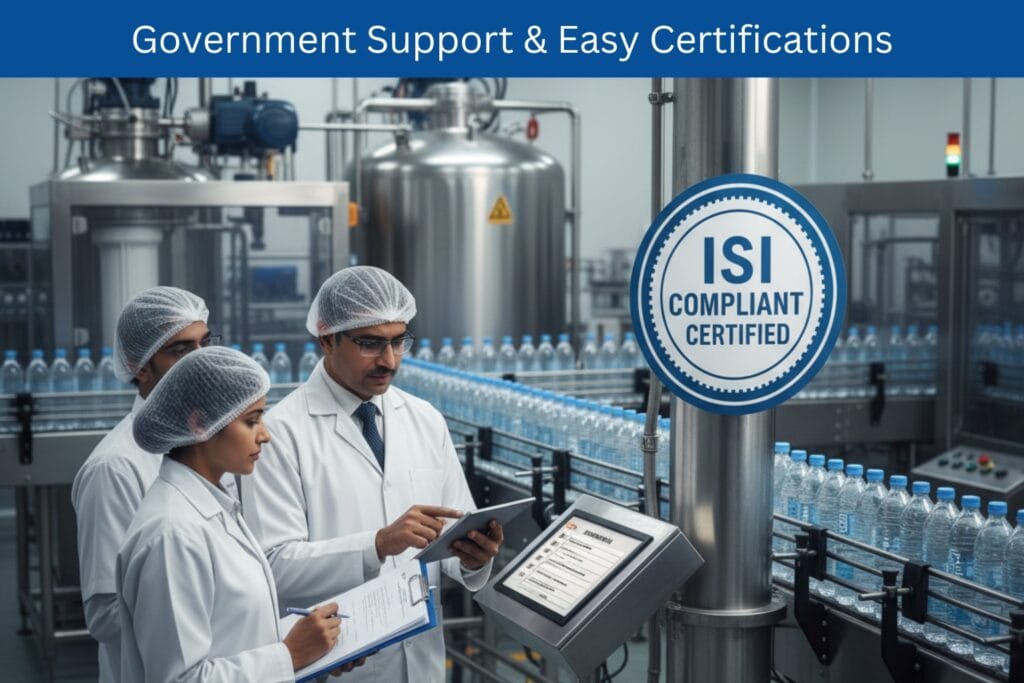
At first glance, government policies and certifications may sound like a headache. But in the case of mineral water, they actually create a supportive framework that helps serious manufacturers stand out from unorganized players.
Key approvals and certifications include:
- BIS certification for packaged drinking water
- FSSAI license for food and beverage safety
- Local water testing approvals and pollution control clearances
These processes ensure that only those who follow proper standards can operate. While it takes some time and documentation, it also means that once you are certified, your brand gains credibility.
Many governments also provide support for MSME units, including:
- Subsidies or lower interest loans for machinery
- Incentives for setting up plants in specific zones
- Guidance through industrial development corporations
Rather than seeing regulations as a barrier, think of them as a filter that removes casual players from the market. If you are serious about building a long-term mineral water brand, a clear certification framework actually protects your business and builds consumer trust.Many entrepreneurs also work with mineral water business consultants who help them with BIS certification, FSSAI licensing, plant layout, and documentation.
13. Availability of Advanced Automation Technologies
Technology has completely changed how modern mineral water plants operate. Today, you can set up a fully automatic mineral water plant with minimal manual handling. Automation covers:
- RO system technology and filtration
- Bottle rinsing, filling, and capping
- Labeling, batch coding, and packing
These automated bottling systems offer multiple benefits:
- Higher production speed
- Consistent quality and filling accuracy
- Lower labor cost
- Better hygiene and less contamination risk
Modern production machinery is designed to be user-friendly, with digital panels, error alerts, and easy maintenance schedules. You don’t have to be a tech genius to run them; suppliers typically provide installation, training, and after-sales support.
Automation also makes it easier to scale. As orders increase, you can add more lines or upgrade machinery without completely redesigning your process. This keeps your operation smooth and predictable, which is crucial for meeting distributor and retailer timelines.
In short, advanced technology has turned what used to be a manual, messy activity into a clean, precise, and efficient manufacturing process.If you’re wondering where to get machinery for mineral water plant setups, Dharmanandan Techno Projects Pvt. Ltd. (DTPPL) is a specialized OEM and turnkey manufacturer and supplier who designs plants based on your budget and capacity.
14. Low Marketing Cost Due to High Essentiality
Most new businesses struggle with one thing: marketing budget. They might have a great product, but making people aware of it costs a lot. With packaged drinking water, you get an advantage because it is an essential commodity.
People already know they need safe water. You don’t have to “create” demand. Your main job is to make your brand visible and available. This leads to:
- Easy brand acceptance if your price and quality are right
- Minimal advertising cost compared to lifestyle or luxury products
- More reliance on direct sales advantage via dealers and distributors
Your core marketing tools are:
- Good packaging and label design
- Consistent product availability
- Relationships with retail shops, hotels, and local distributors
Instead of spending heavily on TV, print, or digital ads, you can focus on in-store branding, point-of-sale boards, and distributor schemes. Word-of-mouth and habitual buying behavior will take care of a big chunk of your brand recall.
Because of its essential nature, packaged water often sells through pull plus push. The market already “pulls” the product category; your distributors and retailers “push” your specific brand.
15. High Return on Investment (ROI) in Short Time
If you’re going to invest your hard-earned money, you want to know one thing: how quickly will it come back? Mineral water plants, when planned correctly, are known for quick ROI and fast business payback compared to many other manufacturing ventures.
Here’s why:
- Initial investment, while not tiny, is still moderate and manageable
- High daily consumption leads to steady, repeat sales
- Decent profit margins per unit add up quickly with volume
- Fixed costs like machinery and setup are recovered over a large production base
Once your brand gains traction and your distribution network is stable, the high revenue potential becomes visible. Because your product is sold daily in high volumes, the cash flow can be very healthy. In many cases, entrepreneurs are able to recover their investment in a relatively short span, then enjoy years of profitable operation.
Of course, this depends on proper planning, realistic pricing, good quality control, and effective distribution. But as a category, mineral water is much more ROI-friendly than many complicated manufacturing projects that take years just to break even.For anyone actively searching for a practical money making business idea, the ROI dynamics of a mineral water plant are especially attractive.
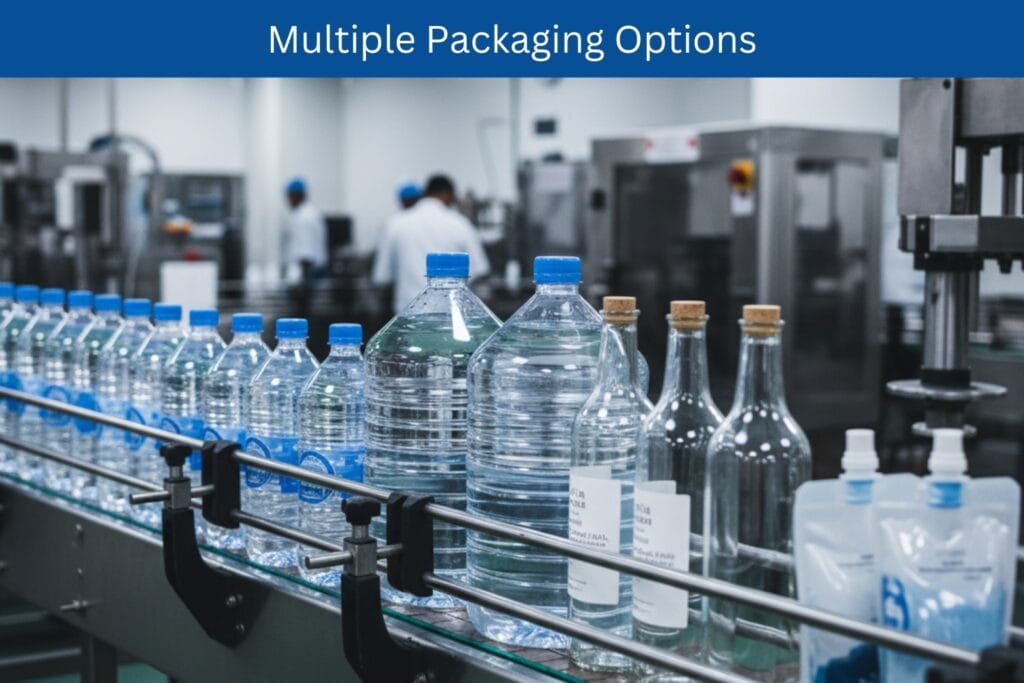
16. Opportunities in Multiple Packaging Formats
One of the smartest things about this business is the flexibility to offer multiple packaging formats. You’re not stuck selling only one size. Instead, you can create a product mix that suits different customer segments.
Common options include:
- 200 ml bottles – Ideal for events, functions, and restaurants
- 500 ml bottles – Popular on-the-go size for travel and daily use
- 1 liter bottles – Family use and table service in hotels
- 20 liter jars – Offices, homes, and commercial spaces
You can also explore custom packaging options like branded labels for events, corporate clients, or premium segments.
Here’s a quick comparison:
| Packaging Size | Typical Use Case | Benefit to Manufacturer |
| 200 ml | Events, weddings, conferences | Bulk orders, branding visibility |
| 500 ml | Travel, retail, daily personal use | High turnover in retail |
| 1 L | Homes, hotels, restaurants | Steady demand, mid-margin |
| 20 L jar | Offices, homes, industries | Regular monthly repeat orders |
This product diversification spreads your risk and lets you tap different revenue streams. During some seasons, 500 ml might dominate; in others, 20-liter jars might lead. Either way, you stay relevant across multiple use cases.
17. Export Potential to Nearby Countries
Once your plant is stable and your brand is established locally, you can explore something bigger: exports. Bottled water export is a growing opportunity, especially for manufacturers located near international borders, ports, or trade hubs.
There is international demand for safe, branded bottled water in regions where:
- Local water quality is inconsistent
- Tourism is high
- Industrial and commercial activities are increasing
With proper certifications and logistics, you can tap cross-border sales opportunities. Neighboring countries often import mineral water from nearby regions due to lower transport costs and similar taste preferences.
The global mineral water market is massive and continuously expanding. Even if you capture a tiny fraction of it through targeted exports, it can significantly boost your revenue and brand value.
Exports also position your brand as more “premium” in local markets. People perceive you as a serious player if your products are not just local but international.
18. Low Business Risk Due to Essential Daily Need Product
Some products are optional-people buy them when they have extra money. Packaged drinking water is not one of them. It falls firmly into the essential daily need product category. This makes the business relatively low-risk compared to many others.
Why?
- People need water regardless of economic ups and downs
- Even in recession, water consumption does not drop dramatically
- Institutions, offices, and households keep purchasing
This is what makes it a kind of recession-proof business. You are not selling luxury; you’re selling daily survival and health. Market demand remains stable, making it a low-risk manufacturing business in terms of basic demand stability.Because clean water is a daily necessity, mineral water easily falls into the category of evergreen business ideas that stay relevant in any market condition.When you combine stable demand with good margins, mineral water manufacturing stands out as a low risk high profit business compared to many other sectors.
Of course, like any business, there are challenges: competition, logistics, maintaining quality, and pricing. But the underlying essential product consumption is not going away. You’re not betting on a trend—you’re investing in a permanent human need.In many ways, packaged drinking water behaves like a recession proof business in India, because families, offices, and institutions cannot simply stop consuming safe water during tough times.

19. High Seasonal Demand Boosts Annual Sales
While demand for packaged water is present year-round, certain periods see a clear spike. This high seasonal demand can significantly boost your annual sales and profits.
Peak demand periods include:
- Summer months – When heat and dehydration risks rise
- Festivals and wedding seasons – High volume events and gatherings
- Outdoor events – Sports meets, fairs, processions, rallies, and campaigns
During these times, peak summer demand and festival consumption can lead to large bulk orders from:
- Event organizers
- Caterers and tent houses
- Religious and community organizers
- Corporate event managers
These seasonal surges add a strong boost to your seasonal revenue growth. If you plan your production and inventory wisely, you can capitalize on these periods without disrupting regular supply.
The beauty is that your fixed costs remain the same, but your sales volume jumps significantly during peak periods, improving your overall profitability for the year.
20. Increasing Awareness About Health, Hygiene & Safe Water
Finally, one of the deepest drivers of this industry’s success is increasing awareness about health, hygiene, and safe water. Modern consumers are far more informed than before. They understand the risks of contaminated water—typhoid, diarrhea, stomach infections, and more.
This leads to:
- Growth in health-conscious consumers
- Stronger safe drinking water awareness in both urban and rural areas
- Higher hygiene priority in homes, offices, and institutions
People are willing to pay a small price for the assurance of purified water demand. This is especially true for children, elderly, and immunocompromised family members. For them, clean water is not a luxury; it is protection.
This social and psychological shift in how people see water—no longer just from a free tap, but as a health product—has transformed packaged drinking water into a powerful market category.
As an entrepreneur, when you start a mineral water plant, you’re not just running a business. You’re also contributing to public health and hygiene, offering a safer alternative to millions who might otherwise rely on doubtful water sources.
Summary: Why Mineral Water Stands Out Among Manufacturing Businesses
Putting everything together, mineral water manufacturing stands out because it combines:
- Strong, consistent demand (daily essential)
- Low to moderate initial investment with scalable growth
- High profit margins due to low production cost
- Multiple market segments—retail, hotels, offices, events, rural and urban
- Supportive technology with automation and modern RO systems
- Government-supported frameworks and clear certification norms
- Flexible product portfolio through various bottle and jar sizes
- Relatively low risk thanks to recession-resistant demand
Few other manufacturing businesses tick so many boxes at once. Whether you’re looking for a small-scale beginning or dreaming of building a large regional or national brand, the mineral water industry provides a practical, profitable pathway.When you compare it with other sectors, mineral water emerges as one of the most profitable manufacturing business to start for new entrepreneurs.
Reverse Osmosis Plant Stainless Steel
Capacity: 1000 LPH to 50,000 LPH
Conclusion
Mineral water manufacturing is not just another “good business idea.” It is a strategic opportunity built on something people cannot live without: safe drinking water. When you align this essential need with a well-planned manufacturing setup, smart distribution, and consistent quality, you create a business that can generate stable income for years.
You’ve seen how factors like rising consumer demand, low startup cost, FMCG growth, strong margins, wide market coverage, automation, government support, and multiple packaging formats all blend together to make this one of the most profitable manufacturing businesses to start today.
Of course, like any serious venture, success doesn’t come from theory alone. It depends on execution—choosing the right location, getting proper certifications, partnering with reliable machinery suppliers, building a strong distributor network, and keeping your quality uncompromised. But the foundation is already in your favor: a product everyone needs, every single day.If you’re searching for evergreen business ideas that combine stability and scale, a mineral water plant should be at the top of your list.
If you’re exploring manufacturing opportunities and want something that is scalable, essential, and comparatively low-risk, a mineral water plant deserves to be right at the top of your shortlist. This isn’t just theory; it’s a solid money making business idea backed by real demand, real margins, and real scalability.
Client Review
“Very good support from company's side, Dharmanandan company have different departments for every need of their customers such as me. So, I've had a very good experience working with these guys. I did not know about ISI Licensing process DTPPL helped me get it in one go therefore I am more than happy with their customer friendly support.”
– Jairaj Ramawat
FAQs About Mineral Water Plant
1. Is mineral water manufacturing suitable for first-time entrepreneurs?
Yes. The business has a relatively simple process, lower initial investment than many manufacturing sectors, and strong demand. With proper guidance, training, and a good machinery supplier, even first-time entrepreneurs can start and run a mineral water plant successfully.
2. How much space is generally required to start a small mineral water plant?
Space requirements depend on your capacity and layout, but a small plant can often start in a modest industrial shed or commercial space. You need room for the RO system, bottling area, storage, and utilities. Many entrepreneurs begin with a few thousand square feet and expand as the business grows.
3. Are government certifications difficult to obtain in mineral water business?
They require proper documentation and compliance, but they are not impossible. You’ll need BIS certification, FSSAI license, and local approvals related to water testing and pollution control. Many consultants and machinery suppliers also guide you through this process, making it smoother and more structured.
4. What is the biggest challenge in this mineral water business?
The main challenges are building a reliable distribution network, ensuring consistent product quality, and managing competition. However, because demand is so large, new brands can still grow if they focus on quality, timely supply, right pricing, and strong relationships with distributors and retailers.
5. Can this mineral water business be run alongside another venture, or does it need full-time focus?
Initially, it’s wise to give it strong attention to set up systems, teams, and distribution. Once the plant is stable and your processes are streamlined, day-to-day operations can be handled by trained staff, allowing you to focus on expansion, new markets, or even parallel ventures if you wish.
Our associates



































About Author

Director – Global Marketing and Sales
Mr. Bhavesh from Dharmanandan Techno Projects Pvt. Ltd. has played a pivotal role in elevating the DTPPL brand to the global stage, leveraging his exceptional expertise in marketing and communications. He is committed to helping clients achieve significant growth while strengthening their own brands. Dharmanandan Techno Projects Pvt. Ltd. is a leading manufacturer and supplier of water purification systems and turnkey solutions for mineral water plants. With years of experience in designing and delivering high-quality water treatment solutions, the company provides end-to-end services, including system design, installation, maintenance, and ongoing support. Specializing in scalable and customizable water plants, DTPPL has successfully served industries worldwide, ensuring clean and safe drinking water across diverse applications.