




Listening Article
Table of Contents
Mineral Water Pricing Strategies and the Influence of Cost-Effective Production
February 13, 2026
In the global beverage market of 2026, mineral water has transcended its status as a simple commodity to become a highly sophisticated industry where pricing is a primary driver of brand equity and market share. As urbanization and health awareness accelerate, companies are increasingly forced to balance the demand for high-quality hydration with the economic necessity of cost-effective water production. This article explores the intricate relationship between pricing models, manufacturing efficiencies, and the evolving consumer landscape.
The Importance of Pricing in the Bottled Water Industry
Pricing is the only element of the marketing mix that generates revenue; all other components represent costs. In the bottled water industry, pricing acts as a silent communicator of quality. A price point that is too low may signal poor filtration or low mineral content, while a price that is too high without a justifiable “story” can alienate the massive middle-class segment.
Consumer behavior in 2026 is increasingly “value-sensitive.” While buyers are willing to pay a premium for safety and health benefits, they are also highly informed about water production costs. Brands that master their pricing strategy can dictate market trends and build long-term loyalty in a crowded marketplace.
 Email Us
Understanding the Different Pricing Models in Bottled Water
Companies employ various pricing models in bottled water to target different demographics and operational realities:
- Cost-Plus Pricing: The most traditional method, where a fixed percentage is added to the total water production costs. While safe, it often ignores competitive dynamics.
- Competitive Pricing: Brands set prices based on their nearest rivals. In the “still water” segment, which accounts for 58% of global volume in 2026, this model is dominant to prevent losing customers to cheaper alternatives.
- Value-Based Pricing: Used by brands that have successfully differentiated their product through superior taste, mineral composition, or status.
- Premium Pricing: Setting a high price to position the product as a luxury item.
Choosing among these pricing strategies in mineral water depends heavily on the brand’s access to unique sources and its technological capabilities.
Read Our Article
Mineral Water Industry in India: Exploring the Economic Impact
Premium Bottled Water Pricing: Factors That Drive Higher Prices
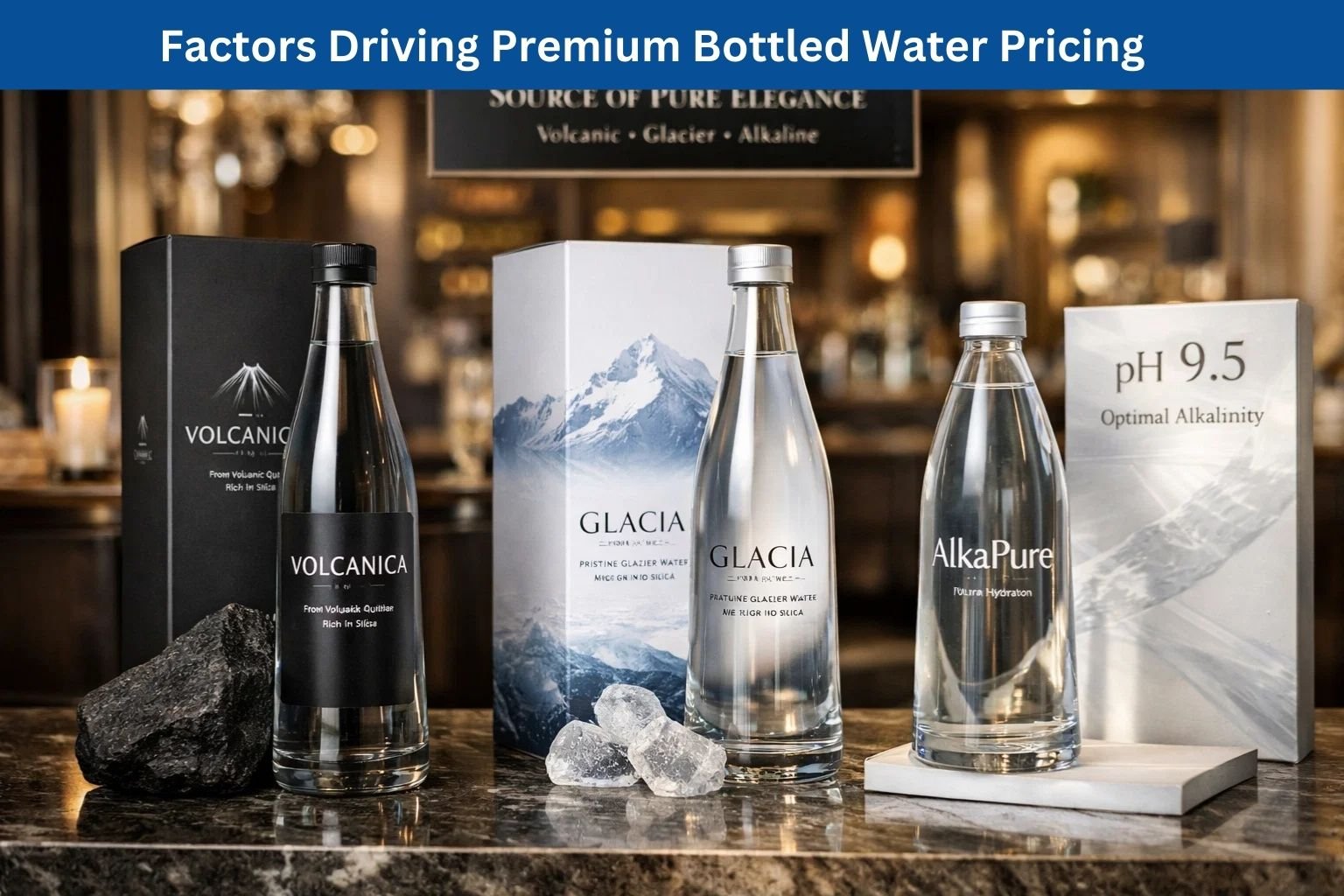
The market for high-end hydration is projected to reach $39.17 billion in 2026. Premium bottled water pricing is rarely about the liquid alone; it is driven by:
- Source Exclusivity: Water from volcanic aquifers, glaciers, or deep-sea sources commands a massive premium.
- Aesthetic Packaging: Moving from PET to glass or high-end recycled materials.
- Health Claims: Alkaline levels (pH 8.5+) or specific silica-rich profiles that aid digestion and skin health.
- Brand Storytelling: Consumers in 2026 buy the “origin” as much as the water.
OUR OTHER PRODUCT
Cost-Effective Water Production: Techniques and Technologies
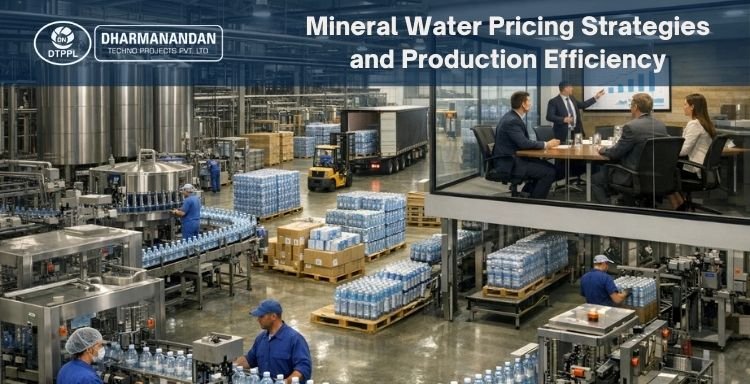
To maintain competitive margins, manufacturers are turning to cost-effective water production through technological innovation.
- Automation: Fully automatic plants reduce labor costs and eliminate human error in the rinsing and capping stages.
- Advanced Filtration: Innovations in low-pressure membrane filtration have significantly lowered the energy required for purification compared to traditional high-pressure Reverse Osmosis systems.
- VFD Pumps: Variable Frequency Drives optimize energy consumption by adjusting pump speeds to real-time production needs, directly reducing water production costs.
Client Review
“Best Machines Manufacturers in India. Loved the way they treat people and help them learn this new business. Also awsome technical team. Best part is they have different departments like marketing and sales, production, R & D, After sales & Service, ISI Department, Installation Team.Best Service - Cheers , Keep up the good work.”
– Tunde Adeyemi
The Influence of Sourcing and Water Quality on Mineral Water Pricing
The type of source is a major determinant of a brand’s pricing models in bottled water.
- Groundwater vs. Surface Water: Groundwater is generally cheaper to treat due to natural filtration through soil layers, whereas surface water requires more intensive (and expensive) chemical treatment and sedimentation.
- Mineral Fortification: Purified water that is “re-mineralized” with specific salts involves an extra manufacturing step, adding to the cost but allowing for a “functional water” price premium.
The Role of Packaging in Mineral Water Pricing
Packaging accounts for a significant portion of the final retail price. While PET bottles remain the leader due to being lightweight and having lower water production costs, the shift toward sustainability is changing the math.
- rPET (Recycled PET): While often more expensive to source than virgin plastic, it allows brands to use bottled water pricing strategies that appeal to eco-conscious consumers.
- Glass and Cans: These materials increase transportation costs due to weight but are essential for premium bottled water pricing and luxury positioning.
Read Our Article
Mineral Water Plant Project Cost in India 2026 – An Overview
Global vs. Local Mineral Water Brands: Pricing Variations
Global giants leverage “economies of scale” to keep prices low in mass markets. However, local brands often hold a 40% market share by using regional sourcing, which eliminates long-distance logistics costs. These local players use pricing strategies in mineral water that focus on “freshness” and “community support” to compete with the marketing budgets of multinationals.
Consumer Perception and the Mineral Water Price-Quality Relationship
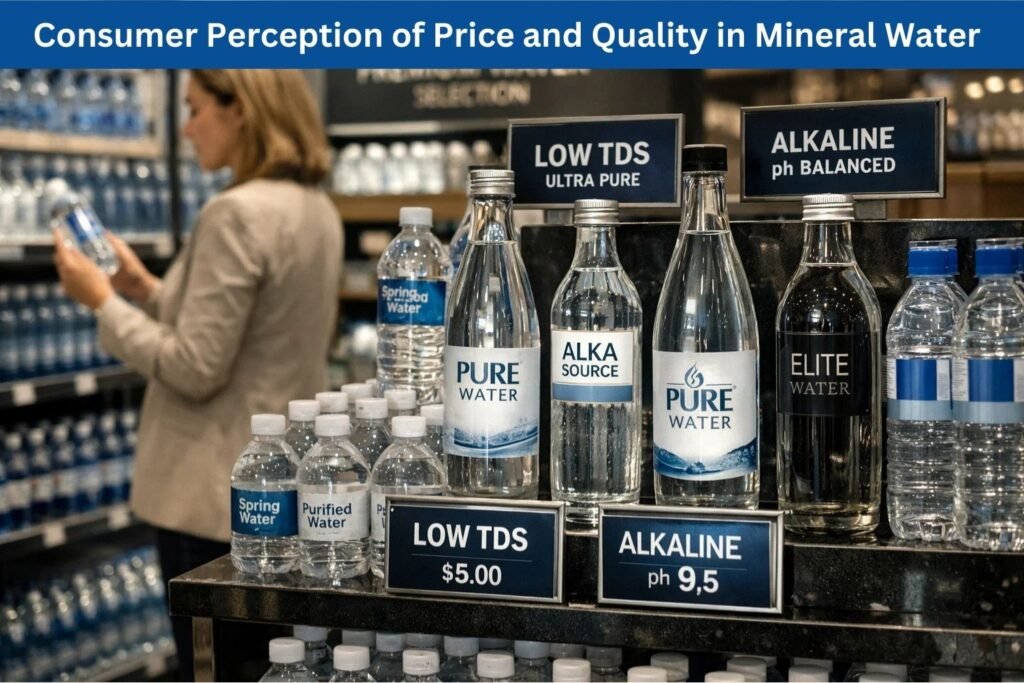
In 2026, the “price-quality heuristic” remains strong. Consumers often assume that a $5 bottle of water is inherently “purer” than a $1 bottle. Brands use premium bottled water pricing to reinforce this perception, even when the actual water production costs differ by only a few cents. Educational marketing regarding “TDS” (Total Dissolved Solids) and “pH levels” is now a standard tool to justify these price gaps.
Mineral Water Pricing for Competitive Advantage
Differentiation through price is a high-stakes game. Some brands use penetration pricing setting a low price to enter a new market—while others use differentiated pricing based on the channel (e.g., higher prices in airports or hotels vs. bulk pricing in supermarkets). Successful brands use these pricing models in bottled water to capture specific “consumption moments.”
Impact of Environmental and Regulatory Factors on Mineral Water Pricing
Regulatory oversight is a growing variable in water production costs.
- Water Rights & Tariffs: Governments are increasingly charging higher “extraction fees” to protect local aquifers.
- Extended Producer Responsibility (EPR): Laws requiring companies to pay for the collection and recycling of their bottles add a new layer to pricing strategies in mineral water.
OUR OTHER PRODUCT
The Role of Mineral Water Distribution Channels
The final price a consumer pays is heavily influenced by how the water gets to them.
- E-commerce & Subscriptions: Growing at 8.9% annually, these channels reduce retail markups but increase “last-mile” delivery costs.
- Direct-to-Consumer (DTC): Brands are using app-based subscriptions to bypass traditional retail, allowing them to offer cost-effective water production savings directly to the user.
Consumer Trends: Health-Conscious and Functional Waters
There is a massive shift toward “functional hydration.” Waters infused with electrolytes, vitamins, or even CBD are priced significantly higher than standard mineral water. These bottled water pricing strategies capitalize on the “food as medicine” trend, where consumers view hydration as an investment in their long-term health.
Mineral Water Plant
Capacity: 500 LPH to 50,000 LPH
(USD 27,500 to USD 16,49,000)
The Future of Mineral Water Pricing: Trends to Watch
Looking toward 2030, we expect to see:
- Dynamic Pricing: Using AI to adjust prices in real-time based on local temperature or demand spikes.
- Sustainable Surcharges: Transparently adding a small fee that goes directly toward ocean cleanup or carbon offsetting.
- Hyper-Local Micro-Plants: Reducing water production costs by bottling water at the point of sale in high-traffic urban centers.
Conclusion: Balancing Cost with Competition
The mineral water industry of 2026 is a balancing act. To remain profitable, companies must invest in cost-effective water production technologies like automation and energy-efficient filtration while simultaneously mastering complex pricing strategies in mineral water. As the market splits between “commodity hydration” and “lifestyle wellness,” the ability to align price with perceived value will be the ultimate factor in determining which brands dominate the next decade of the global water market.
Frequently Asked Questions (FAQs)
What is the most common pricing model for bottled water?
Most mass-market brands use competitive pricing to stay aligned with rivals. However, as the market matures, value-based pricing—where the price is set based on perceived health benefits or brand prestige—is becoming the preferred model for growth.
How much does it actually cost to produce one bottle of mineral water?
In 2026, the direct manufacturing cost for a standard 1-liter PET bottle typically ranges from ₹3.50 to ₹4.50 ($0.04 to $0.05). This includes the preform, cap, label, and electricity but excludes logistics and marketing, which often account for the bulk of the retail price.
Why is "premium" water so much more expensive than regular water?
Premium bottled water pricing is driven by high “fixed costs” like sourcing from rare aquifers (glaciers/volcanic springs), high-end glass packaging, and safety certifications. Consumers pay more for the “origin story” and the specific mineral composition.
Can technology really reduce the final mineral water price for consumers?
Yes. Cost-effective water production through AI-optimized pumping and automated filling lines reduces waste and labor costs. While this doesn’t always lower the price, it helps brands keep prices stable despite rising inflation and raw material costs.
How does the water source (spring vs. purified) affect the price?
Natural spring water usually carries a higher price because it is limited by geography and requires strict protection of the source. Purified water is often cheaper to produce because it can be sourced from municipal lines and treated anywhere, though re-mineralization adds a small cost.
Does eco-friendly packaging make bottled water more expensive?
In the short term, yes. Using 100% recycled PET (rPET) or biodegradable materials currently adds a 5-10% premium to production costs. However, as supply chains scale and plastic taxes increase, eco-friendly packaging will become the more cost-effective choice.
How do distribution channels influence the price I pay?
Retailers often add a 20-40% markup. Buying through a direct-to-consumer (DTC) subscription or in bulk (20L jars) is the most cost-effective way for consumers to access mineral water by cutting out the retail middleman.
Is there a real difference in quality between cheap and expensive mineral water?
While all bottled water must meet safety standards, expensive brands often have a higher Total Dissolved Solids (TDS) count, representing naturally occurring minerals like magnesium and calcium, which can affect taste and health benefits.
What role do government regulations play in mineral water pricing?
Governments influence pricing through extraction taxes (fees for taking water from the ground) and tariffs on imported luxury brands. Stricter environmental laws also require companies to invest more in waste management, which is reflected in the retail price.
What is "Functional Water," and why is it priced differently?
Functional water is water “with a purpose”—such as alkaline water for acidity or electrolyte water for athletes. Because these are marketed as health supplements rather than just beverages, they command significantly higher margins and use specialized pricing strategies.
Our associates






































Director – Global Marketing and Sales
Mr. Bhavesh from Dharmanandan Techno Projects Pvt. Ltd. has played a pivotal role in elevating the DTPPL brand to the global stage, leveraging his exceptional expertise in marketing and communications. He is committed to helping clients achieve significant growth while strengthening their own brands. Dharmanandan Techno Projects Pvt. Ltd. is a leading manufacturer and supplier of water purification systems and turnkey solutions for mineral water plants. With years of experience in designing and delivering high-quality water treatment solutions, the company provides end-to-end services, including system design, installation, maintenance, and ongoing support. Specializing in scalable and customizable water plants, DTPPL has successfully served industries worldwide, ensuring clean and safe drinking water across diverse applications.