



Listening Article
Table of Contents
Haryana’s Gurugram: RO & Packaged Water Plants Demand
August 6, 2026
AI Summary
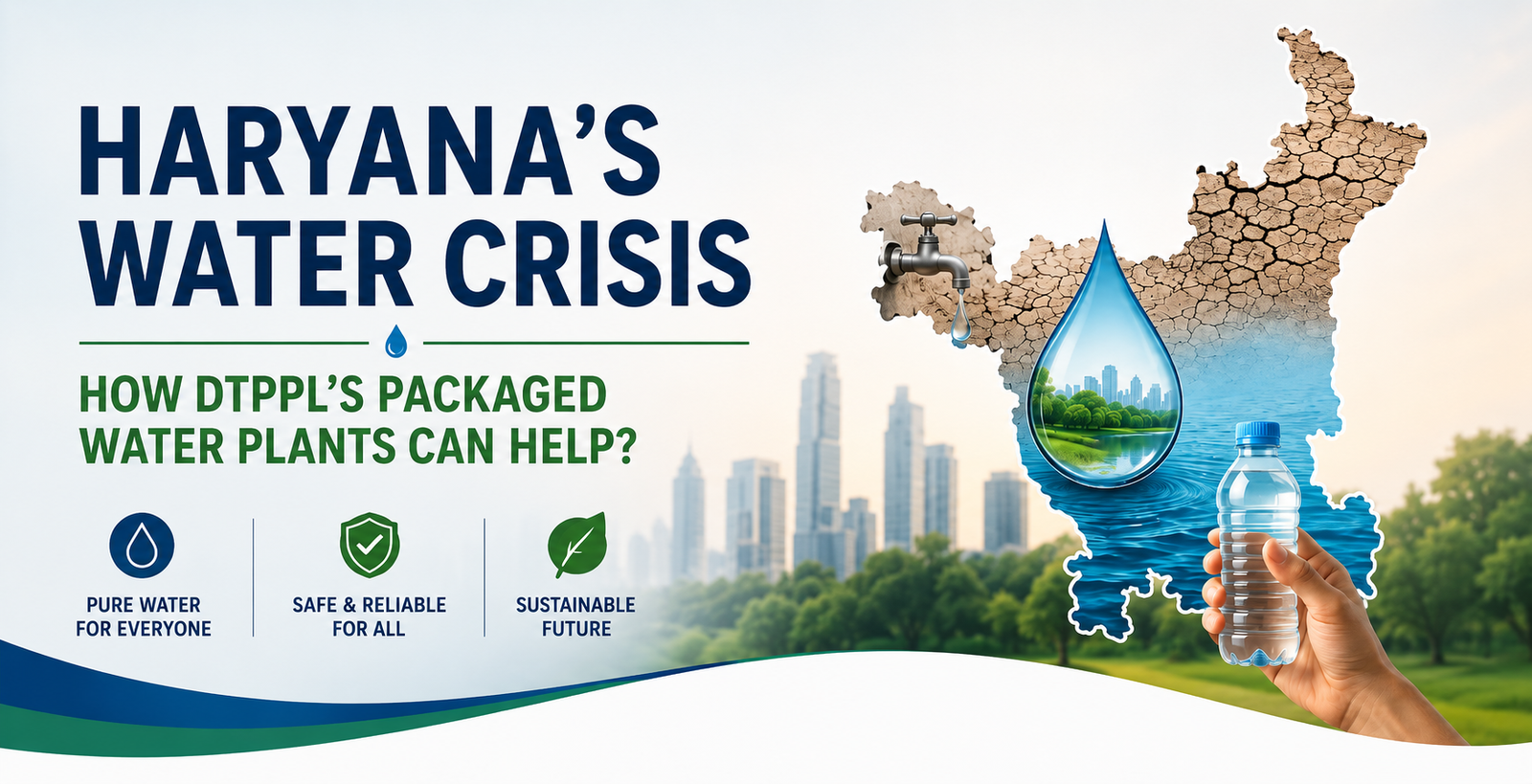
Haryana is one of India’s most groundwater stressed states, with government data placing over 60% of its assessed blocks in the over exploited category, and Gurugram district alone recording an extraction rate above 200% of annual recharge according to Central Ground Water Board figures. This structural scarcity is colliding head on with Gurugram’s status as one of India’s largest corporate and private label water markets, home to hundreds of multinational campuses, IT parks and a fast growing hospitality and banquet economy. The result is a genuine and growing opportunity for new commercial RO plant, packaged drinking water plant and soft drink plant capacity across Gurugram, Faridabad, Panipat and the wider National Capital Region belt of Haryana, both to serve corporate and institutional buyers directly and to convert increasingly saline, over drawn groundwater into usable, certified drinking water. This article examines Haryana’s groundwater data, Gurugram’s corporate and wedding driven consumption pattern, and how a turnkey partner such as Dharmanandan Techno Projects Pvt. Ltd. (DTPPL) can help entrepreneurs set up compliant water treatment capacity in the state.
Introduction
Haryana presents an unusual combination for a state driving so much of India’s corporate real estate growth: it is simultaneously one of the country’s most water stressed states and home to Gurugram, a city whose office towers, IT parks and residential high rises consume packaged and purified water at a scale that few other Indian cities can match. Government groundwater assessments have tracked this stress for over a decade, and the pattern has only deepened as Gurugram’s population and built up area have expanded. For entrepreneurs and manufacturers evaluating new water treatment capacity, Haryana therefore represents a market where the case for investment rests on hard hydrological data rather than assumption.
Haryana’s Groundwater Numbers Tell a Stark Story
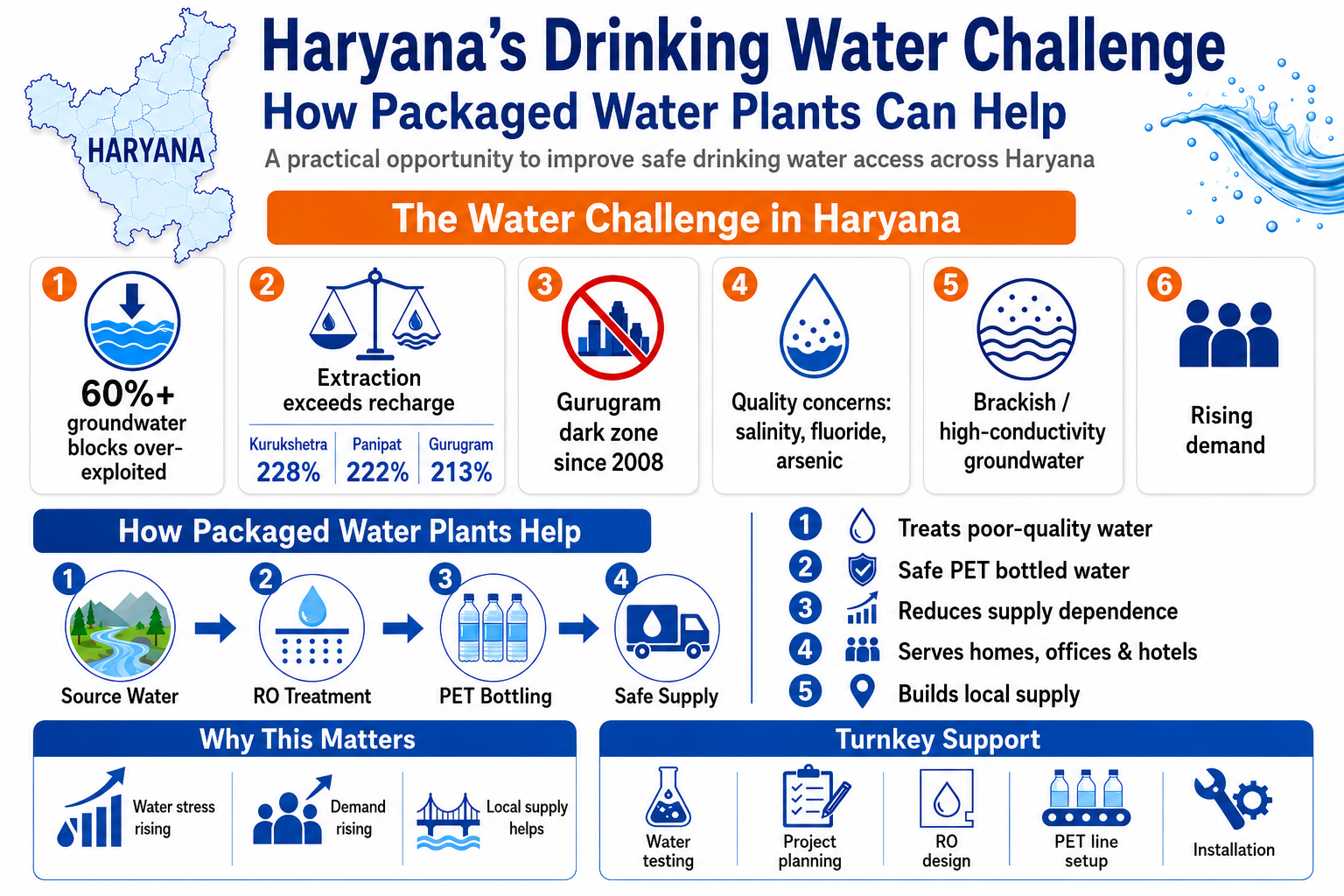
A recent Central Ground Water Authority assessment placed Haryana’s over exploited groundwater units at just over 60%, second in the country only to Punjab and ahead of Delhi. District wise extraction data compiled by the Central Ground Water Board shows Kurukshetra extracting water at 228% of its annual recharge, Panipat at 222% and Gurugram itself at close to 213%, meaning these districts are drawing down groundwater at more than double the rate nature is replacing it. Gurugram was first declared a dark zone by the Central Ground Water Authority in 2008, and its water table has since dropped by roughly 82% according to recent reporting, prompting a National Green Tribunal order in early 2026 directing stricter enforcement against unauthorised tubewells and mandatory rainwater harvesting across the city.
Water Quality Is Deteriorating Alongside Quantity
The Haryana government has separately acknowledged in the state legislature that groundwater quality is worsening even where quantity holds up. Officials have cited elevated electrical conductivity across six districts including Gurugram, and a 2024 Central Ground Water Board report noted uranium, arsenic, chloride and fluoride levels beyond permissible limits in parts of the state, with brackish groundwater and rising salinity reported in southern districts such as Nuh. For any facility drawing on local groundwater, whether for a residential society, a corporate campus or a manufacturing unit, this combination of depletion and contamination makes a dependable reverse osmosis plant and water softening plant close to essential rather than optional.
Client Review
“DTPPL is the finnest & No. 1 leading brand in Mineral Water Plant Machinery Manufacturing Industries. Customer services are outstanding. Anytime they are on standby mode for their beloved customer. They believe in customer satisfaction first. Moreover Reliable & Reasonable. Keep It up Guys.”
– Ronak Lunagariya
Gurugram’s Corporate Economy Runs on Packaged and Purified Water
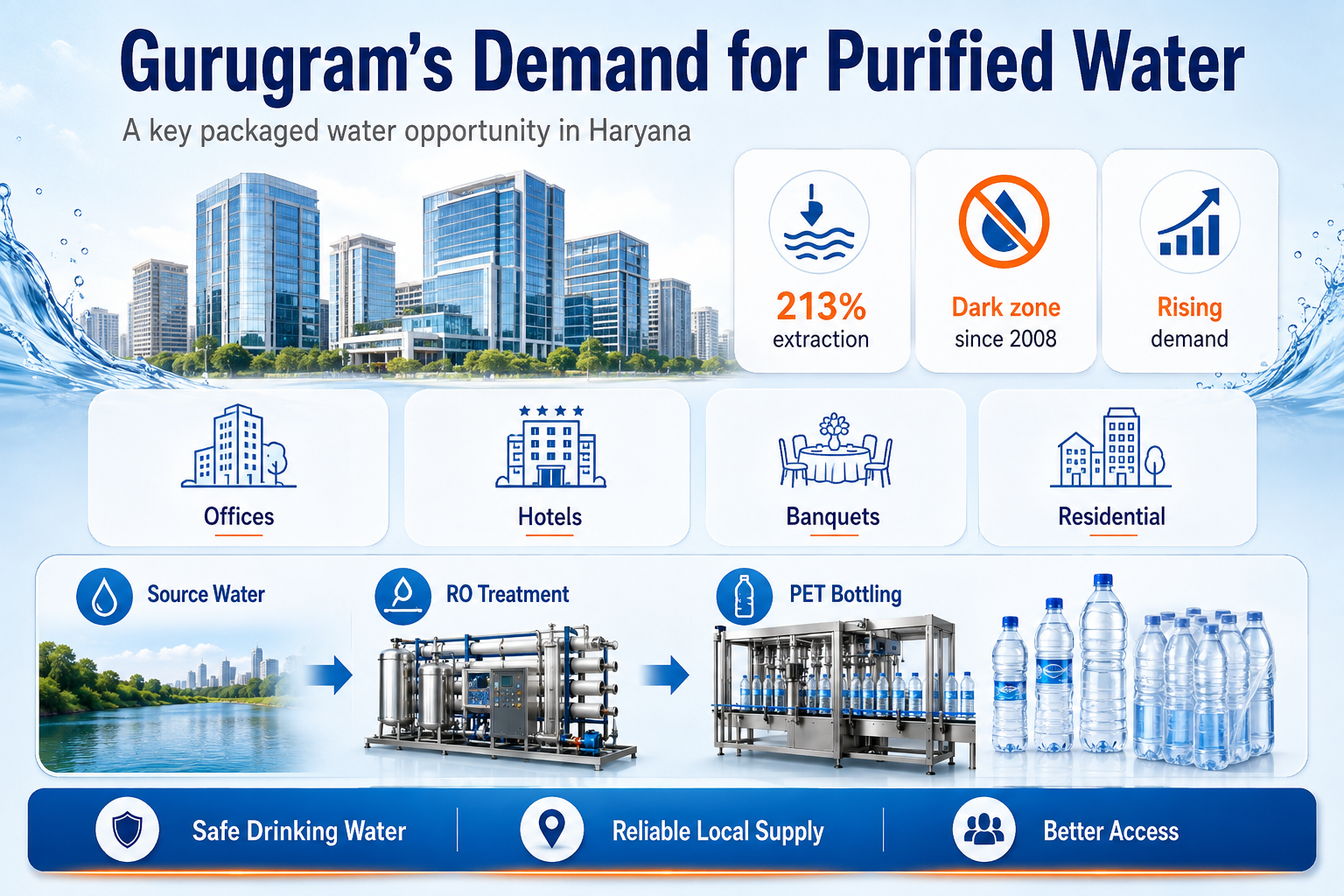
Gurugram hosts one of India’s densest concentrations of multinational corporate campuses, IT parks and global capability centres, alongside a fast expanding hotel, banquet hall and residential high rise market. Every one of these segments depends on a steady supply of purified drinking water, whether through bulk 20 litre jars for office pantries, branded and private label bottled water for meeting rooms and client hospitality, or commercial RO capacity feeding entire residential towers. Because Gurugram’s own groundwater is both scarce and increasingly saline, much of this demand today is met through water tankered or trucked in from outside the city, an inherently fragile and costly supply chain that a locally sited packaged water plant or commercial RO plant can directly improve upon.
OUR OTHER PRODUCT
From Boardrooms to Baraats: The Wedding and Banquet Angle
Haryana, and the National Capital Region more broadly, is also home to one of India’s largest wedding and banquet economies, with Gurugram and Faridabad hosting a dense concentration of banquet halls, farmhouses and event venues that operate through a concentrated wedding season each year. Large weddings and corporate events routinely require bulk supply of both packaged drinking water and soft drinks over a short, intense window, a demand pattern that rewards a nearby, flexible soft drink plant and bottling operation over water or beverages trucked in from farther afield. Positioning a combined water and soft drink production facility to serve this dual corporate and event market gives a new entrant two distinct, complementary revenue streams from the same core infrastructure.
Comparing Haryana’s Key Demand Centres
City or Belt | Groundwater Situation | Core Demand Driver | Strongest Opportunity |
Gurugram | Dark zone since 2008, over 200% extraction rate | Corporate campuses, IT parks, private label water | Commercial RO plant and private label packaged drinking water |
Faridabad | Over 180% extraction rate | Industrial units, banquet and event venues | Soft drink plant and bulk packaged water supply |
Panipat and Karnal | Among the highest extraction rates in the state | Textile and agro industrial base | Industrial RO plant and water softening plant |
Southern Haryana (Nuh, Mahendragarh) | Brackish, saline groundwater reported by state authorities | Rural and semi urban drinking water access | RO based desalination scale packaged water plants |
Government Standards and Policy Context
- FSSAI licensing is mandatory for any soft drink or packaged drinking water manufacturing unit in Haryana.
- BIS certification under IS 14543 for packaged drinking water or IS 13428 for packaged natural mineral water applies uniformly across the state.
- The Central Ground Water Authority regulates new groundwater extraction in Haryana’s notified over exploited and critical blocks, an important factor when siting a new plant.
- The state’s ongoing rainwater harvesting and dark zone enforcement drive, reinforced by the February 2026 National Green Tribunal order, is likely to push more residential and commercial buyers toward recycled and treated water sources over time.
Read Our Article
Why Our Mineral Water Plant Quality is Better Than the Competition
How Dharmanandan Techno Projects Pvt. Ltd. (DTPPL) Can Help in Haryana
Given Haryana’s combination of groundwater scarcity, rising salinity and a dense corporate consumption base, DTPPL supports entrepreneurs and institutional buyers across Gurugram, Faridabad and the wider state with turnkey design, supply and installation of commercial and industrial RO plants, water softening plants, packaged mineral water plants and soft drink plant lines, including bottle filling, capping, labeling and shrink wrapping equipment. DTPPL can help right size a plant for either a straightforward corporate and institutional packaged water contract or a combined water and soft drink facility built to serve Haryana’s wedding and banquet season, guiding entrepreneurs through water testing, plant capacity planning and machinery selection through to installation and commissioning.
 Call Now!
How to Set Up a Water Treatment Plant in Haryana: Step by Step
- Test the source water for total dissolved solids, salinity and hardness, since Haryana’s groundwater quality varies sharply across districts.
- Confirm groundwater extraction permissions with the Central Ground Water Authority if the site falls within a notified over exploited or critical block.
- Select the treatment configuration, typically an RO system paired with softening for brackish or hard source water.
- Register the business and obtain FSSAI licensing and BIS certification under IS 14543 or IS 13428 as applicable.
- Install bottling and, where relevant, soft drink filling infrastructure sized to both steady corporate demand and seasonal wedding and event spikes.
- Build supply agreements with corporate campuses, banquet halls, hotels and residential welfare associations across the target city.
OUR OTHER PRODUCT
Frequently Asked Questions
Why is Gurugram considered a dark zone for groundwater?
The Central Ground Water Authority first declared Gurugram a dark zone in 2008 because groundwater extraction far exceeded natural recharge. Recent data shows the district drawing water at more than double its safe rate, and the water table has dropped by roughly 82% since the declaration.
What are the licensing requirements for a new water bottling business in Haryana?
A new packaged drinking water unit needs FSSAI licensing, BIS certification under IS 14543 or IS 13428, and, where applicable, groundwater extraction clearance from the Central Ground Water Authority for sites in notified over exploited blocks.
How can a soft drink plant business benefit from Haryana's wedding season?
Haryana and the wider National Capital Region host a dense concentration of banquet halls and event venues that require large, short notice volumes of packaged water and soft drinks during wedding season, a demand pattern well suited to a nearby, flexible bottling facility rather than supply trucked in from a distant plant.
Is groundwater in southern Haryana safe for a packaged water plant without treatment?
State assessments have reported brackish and saline groundwater in districts such as Nuh, along with elevated conductivity in several others, so sites in these areas typically require a properly sized RO system rather than basic filtration alone.
How can DTPPL help set up a commercial RO plant in Gurugram?
Dharmanandan Techno Projects Pvt. Ltd. provides end to end support, from water testing and capacity planning through machinery supply and installation, for commercial RO plants, packaged water plants and soft drink lines designed for Gurugram’s corporate and institutional buyers.
Mineral Water Plant
Capacity: 500 LPH to 50,000 LPH
(USD 27,500 to USD 16,49,000)
Conclusion
Haryana’s groundwater data leaves little room for ambiguity: Gurugram and several of its neighbouring districts are extracting water at rates that far exceed safe recharge levels, and quality is deteriorating alongside quantity. At the same time, Gurugram’s corporate campuses, IT parks and wedding and banquet economy sustain some of India’s most concentrated demand for packaged drinking water and soft drinks. For entrepreneurs and investors, this is not a market that needs to be argued for on aspiration alone, the case is written directly into Haryana’s own groundwater reports, and a well sited commercial RO plant, packaged water plant or soft drink plant built with an experienced partner such as DTPPL can serve that demand while easing pressure on the state’s most stressed aquifers.
Our associates





































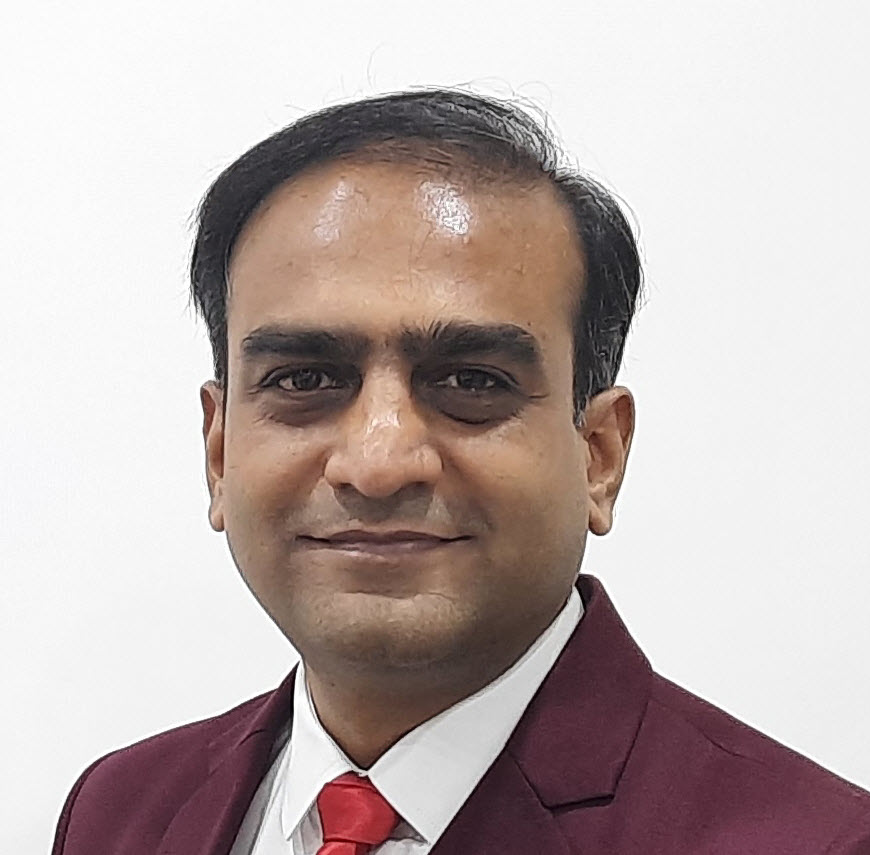
Director – Global Marketing and Sales
Mr. Bhavesh from Dharmanandan Techno Projects Pvt. Ltd. has played a pivotal role in elevating the DTPPL brand to the global stage, leveraging his exceptional expertise in marketing and communications. He is committed to helping clients achieve significant growth while strengthening their own brands. Dharmanandan Techno Projects Pvt. Ltd. is a leading manufacturer and supplier of water purification systems and turnkey solutions for mineral water plants. With years of experience in designing and delivering high-quality water treatment solutions, the company provides end-to-end services, including system design, installation, maintenance, and ongoing support. Specializing in scalable and customizable water plants, DTPPL has successfully served industries worldwide, ensuring clean and safe drinking water across diverse applications.