




Listening Article
Table of Contents
Why Indore & Madhya Pradesh Need More Soft Drink & Juice Plants
August 10, 2026
AI Summary
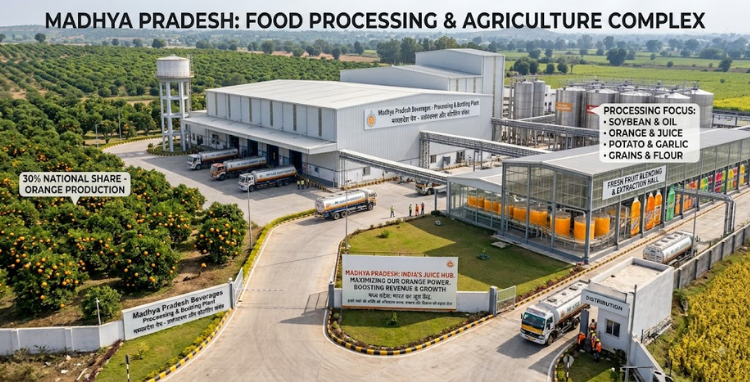
Madhya Pradesh is the heartland of Central India’s food processing economy, the country’s largest soybean growing state by area and its leading orange producer with close to a 30% national share concentrated around Chhindwara, alongside government recognised food parks built specifically around soybean, orange, garlic and potato processing. Indore anchors this ecosystem as the state’s largest food processing and namkeen manufacturing hub, while Ujjain is preparing for the Simhastha Kumbh Mela 2028, an event state officials expect to draw around 40 crore devotees over 30 days, one of the largest planned gatherings anywhere in the world and a genuinely distinct demand spike from any pilgrimage covered elsewhere. Together these two forces, a deep agro processing raw material base and an enormous, time bound pilgrim surge, create a strong and unusual case for new soft drink plant and juice manufacturing plant capacity across Indore, Bhopal and Ujjain. This article examines Madhya Pradesh’s food processing data, the Simhastha 2028 opportunity, and how Dharmanandan Techno Projects Pvt. Ltd. (DTPPL) can support new beverage plant investment in the state.
Indore’s Food Processing Boom and MP’s Soybean Belt: Why Central India Needs More Soft Drink and Juice Manufacturing Capacity
Madhya Pradesh is often described as the heart of India for its central geography, but its agricultural output backs up the label in more concrete terms. The state grows more soybean by area than any other in the country, tops national production of oranges, garlic, ginger and coriander, and has built a network of government supported food parks specifically designed around these crops. Indore, Bhopal, Gwalior and Jabalpur anchor a genuinely well established industrial base, and Ujjain is now the centre of one of the largest planned religious gatherings in the world. For beverage manufacturers, this combination of raw material depth and event scale demand is unusual enough to deserve its own examination, distinct from the industrial or tourism stories told about other Indian states.
Madhya Pradesh’s Agricultural Base Feeds a Genuine Beverage Opportunity
Madhya Pradesh has the largest area under soybean cultivation of any Indian state, with major producing districts including Ujjain, Dewas, Shajapur, Sehore, Mandsaur, Dhar, Chhindwara, Vidisha and Indore. Alongside soybean, the state is India’s largest orange producer, accounting for close to 30% of national output, with the Chhindwara belt in particular growing export quality Nagpur Mandarin variety oranges. State horticulture officials confirm Madhya Pradesh also tops the country in spices, garlic, ginger and coriander production, and ranks second in pea, onion and chilli output. Under the central One District One Product scheme, the state has identified orange and citrus, mango, guava, banana and other horticultural crops as priority products for value addition.
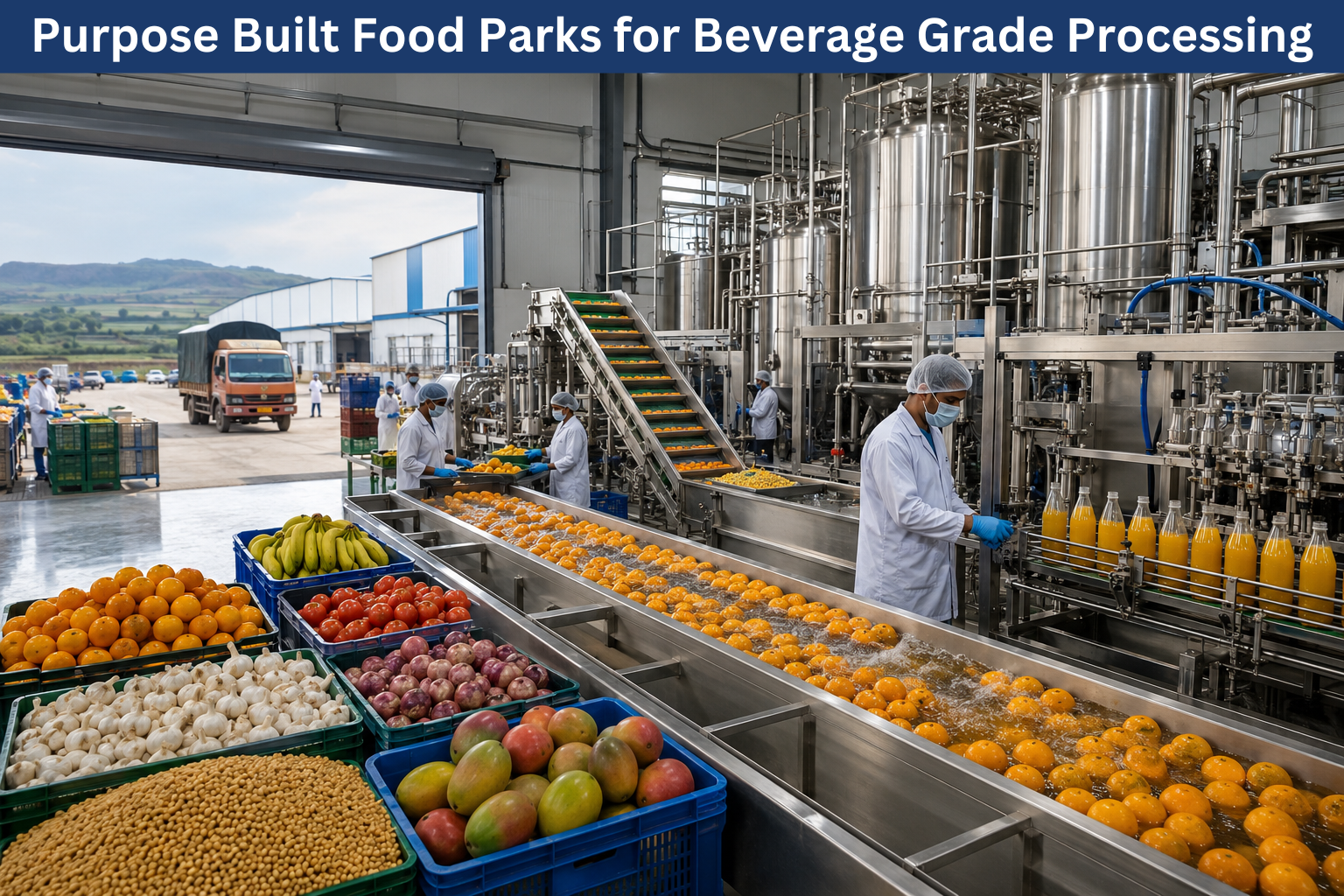
Purpose Built Food Parks Already Support Beverage Grade Processing
Madhya Pradesh has developed dedicated food parks around its major crops, including facilities at Nimrani near Indore, built specifically for value added processing of garlic, onion, tomato, soybean, orange and banana, and at Borgaon in Chhindwara district, which already hosts units producing pickles and other processed foods with capacity earmarked for mango and soybean value addition. This existing infrastructure meaningfully lowers the barrier for a new soft drink plant or juice manufacturing plant looking to source citrus and other fruit inputs locally rather than transporting them from further afield.
OUR OTHER PRODUCT
Ujjain’s Simhastha Kumbh 2028: A Demand Spike Unlike Any Other
Ujjain, home to the Mahakaleshwar Jyotirlinga temple, will host the Simhastha Kumbh Mela from 2028, a Hindu pilgrimage held once every twelve years on the banks of the Shipra river. Madhya Pradesh’s chief minister has publicly stated the state is preparing for around 40 crore devotees across the month long event, backed by more than Rs 25,000 crore in infrastructure spending across Ujjain and surrounding districts, including new and widened ghats designed to allow nearly four crore devotees to take a holy dip within a single 24 hour window on peak bathing days. Even more conservative independent estimates place total footfall at 10 crore or more, still an extraordinary, geographically concentrated demand spike for drinking water, food and beverages compressed into a fixed 30 day window.
 Email Us Now!
Why This Differs From Other Pilgrimage Driven Water Demand
Unlike a year round pilgrimage destination, Simhastha’s demand is compressed into a single, precisely dated 30 day period once every twelve years, with several single day peaks that state authorities expect could see between 1.5 and 2.5 crore devotees arrive in a 24 hour window. This creates a very specific opportunity for temporary and semi permanent packaged drinking water plant and soft drink plant capacity built to scale up sharply for the event and continue serving Ujjain’s steady pilgrim traffic in between Kumbh cycles, rather than a plant sized purely for daily local demand.
Comparing Madhya Pradesh’s Key Opportunity Centres
| City or Belt | Core Strength | Demand Pattern | Strongest Opportunity |
| Indore | Largest food processing and namkeen hub in the state | Steady, broad based industrial and urban demand | Soft drink plant and juice manufacturing plant tied to food parks |
| Chhindwara belt | India’s leading orange growing district | Seasonal citrus harvest, existing processing units | Juice and concentrate manufacturing using local oranges |
| Ujjain | Site of Simhastha Kumbh 2028, tens of crores of pilgrims | Extreme, time bound event demand plus steady pilgrim traffic | Scalable packaged water and soft drink plant capacity |
| Bhopal | State capital, growing industrial and institutional base | Consistent government and corporate demand | Commercial RO plant and packaged drinking water supply |
Government Standards and Support Relevant to Madhya Pradesh
- FSSAI licensing and BIS certification under IS 14543 or IS 13428 apply to all packaged water production in Madhya Pradesh, alongside food safety licensing for juice and soft drink manufacturing.
- The Madhya Pradesh Trade Promotion Council and the state’s One District One Product scheme actively support investment in food and beverage processing tied to identified priority crops such as orange, soybean and garlic.
- Madhya Pradesh Pollution Control Board consent to establish and operate is required before commissioning any new water or beverage processing plant.
- State and central infrastructure spending ahead of Simhastha 2028, including new roads, ghats and water supply works, is likely to ease logistics for any new plant supplying the Ujjain corridor.
How Dharmanandan Techno Projects Pvt. Ltd. (DTPPL) Can Help in Madhya Pradesh
DTPPL supports entrepreneurs and food processing businesses across Indore, Bhopal, Chhindwara and Ujjain with turnkey design, supply and installation of soft drink plants, juice manufacturing plants, commercial RO plants and packaged mineral water plants, including bottle filling, blow moulding, labeling, shrink wrapping and batch coding equipment. Given Madhya Pradesh’s dual opportunity, steady food processing demand around Indore and Chhindwara alongside the extraordinary, time bound Simhastha 2028 pilgrim surge in Ujjain, DTPPL works with entrepreneurs to design plants that can either run at consistent year round capacity or scale flexibly for major event driven demand, supporting the full project lifecycle from water testing through commissioning.
Client Review
“Excellent quality and reliable performance from DTPPL. The installation was smooth, and their team provided very good technical support.”
– Ramesh Gowda
 Call Now
How to Set Up a Beverage or Water Plant in Madhya Pradesh: Step by Step
- Decide on a raw material and demand strategy, sourcing citrus or soybean locally around Chhindwara and Indore, or building scalable capacity aimed at Ujjain’s pilgrim seasons.
- Test source water and, for a juice or soft drink plant, confirm fruit or raw material supply agreements with local growers or food park units.
- Select equipment sized to your target capacity, including RO, softening, filling, labeling and shrink wrapping lines.
- Register the business and obtain FSSAI licensing, BIS certification where applicable, and Madhya Pradesh Pollution Control Board consent.
- If targeting Ujjain, plan capacity and logistics around the Simhastha 2028 calendar, including its peak bathing days, alongside steady year round demand.
- Build distribution relationships with local food parks, temple trusts, hotels and institutional buyers appropriate to your chosen city.
OUR OTHER PRODUCT
Frequently Asked Questions
Why is Madhya Pradesh a strong location for a soft drink or juice manufacturing plant?
Madhya Pradesh has the largest soybean growing area in India and is the country’s leading orange producer with close to a 30% national share, backed by dedicated food parks in Indore and Chhindwara built for processing these very crops.
How many devotees are expected at Ujjain's Simhastha Kumbh 2028?
Madhya Pradesh’s chief minister has stated the state is preparing for around 40 crore devotees over the 30 day event, while independent estimates place the more conservative figure at 10 crore or more, still an extraordinary concentrated demand spike.
What are the typical setup costs for a packaged drinking water facility in Indore?
Costs vary with capacity, automation level and machinery configuration, and entrepreneurs are best served by getting a project specific estimate from an experienced turnkey supplier such as DTPPL after confirming source water quality and target volume.
Can a single plant in Madhya Pradesh serve both juice and soft drink production?
Yes. Many manufacturers design modular facilities with shared RO treatment and filling infrastructure that can be configured across packaged water, soft drinks and fruit juices, which is particularly useful in Madhya Pradesh given the seasonal nature of citrus harvests.
How can DTPPL help set up a plant near Ujjain ahead of Simhastha 2028?
DTPPL can help design a scalable packaged water and soft drink facility sized to handle both Ujjain’s steady pilgrim traffic and the extreme peak demand expected during Simhastha 2028’s bathing days, supporting the project from initial planning through installation.
Mineral Water Plant
Capacity: 500 LPH to 50,000 LPH
(USD 27,500 to USD 16,49,000)
Conclusion
Madhya Pradesh offers a genuinely distinctive combination for beverage manufacturers: a deep, government supported agricultural processing base built around soybean, orange, garlic and other crops, centred on Indore and Chhindwara, and one of the largest planned religious gatherings in the world converging on Ujjain in 2028. Few other Indian states pair a steady, raw material rich food processing economy with an event of Simhastha’s scale, and entrepreneurs who plan for both the everyday demand of Central India’s food processing corridor and the extraordinary spike of Ujjain’s Kumbh calendar, working with an experienced partner such as DTPPL, stand to capture a genuinely unique opportunity.
Our associates








































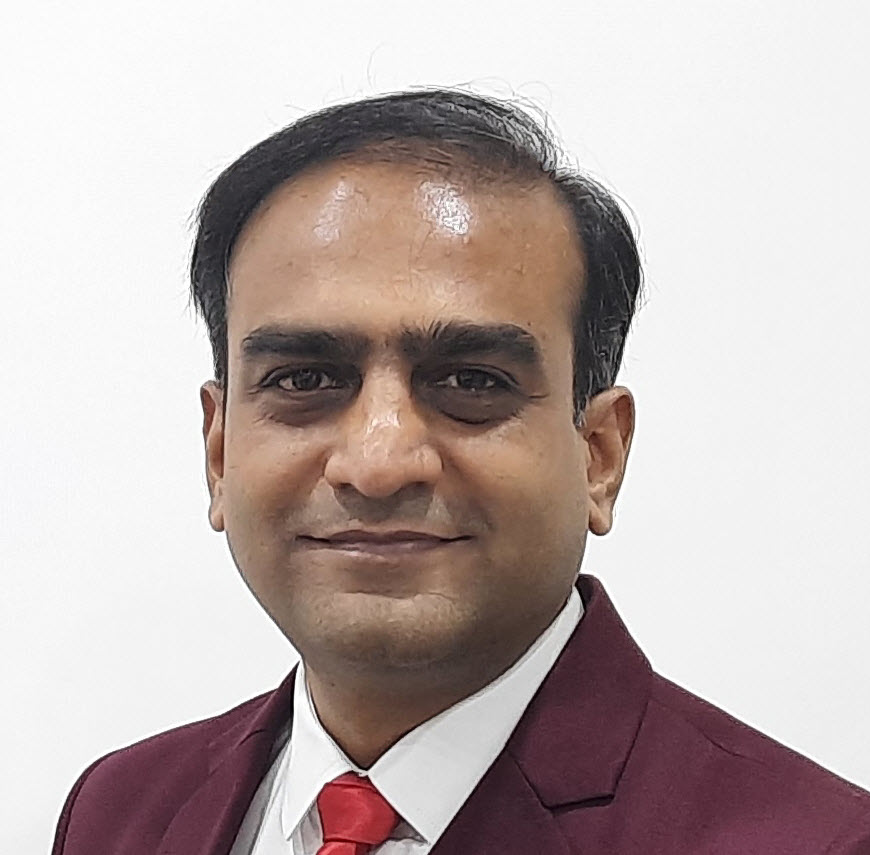
Director – Global Marketing and Sales
Mr. Bhavesh from Dharmanandan Techno Projects Pvt. Ltd. has played a pivotal role in elevating the DTPPL brand to the global stage, leveraging his exceptional expertise in marketing and communications. He is committed to helping clients achieve significant growth while strengthening their own brands. Dharmanandan Techno Projects Pvt. Ltd. is a leading manufacturer and supplier of water purification systems and turnkey solutions for mineral water plants. With years of experience in designing and delivering high-quality water treatment solutions, the company provides end-to-end services, including system design, installation, maintenance, and ongoing support. Specializing in scalable and customizable water plants, DTPPL has successfully served industries worldwide, ensuring clean and safe drinking water across diverse applications.