



Listening Article
Table of Contents
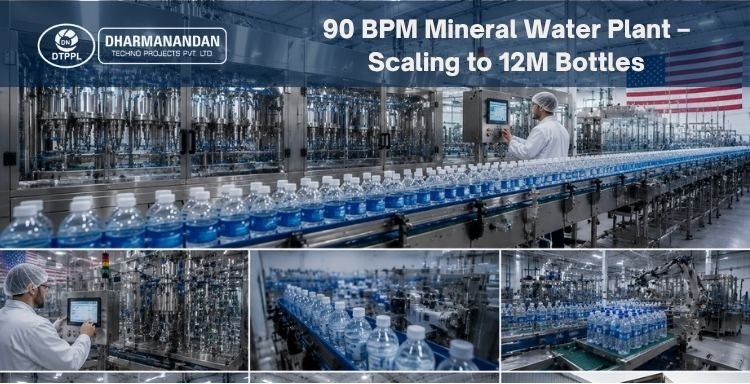
90 BPM Fully Automatic Mineral Water Plant: How a US-Based Healthcare Water Supplier Scaled to 12 Million Bottles Annually with DTPPL
May 12, 2026
AI Summary
This case study documents how Denise Marie Williams, an Alabama-based entrepreneur supplying high-standard distilled water to healthcare providers and medical laboratories, partnered with Dharmanandan Techno Projects Pvt. Ltd. (DTPPL) to transition from third-party contract manufacturing to fully autonomous in-house production. Facing strategic procurement challenges amid volatile US-China trade policies, she chose DTPPL’s 90 BPM Fully Automatic Mineral Water Plant – a decision driven by India’s stable trade relationship with the US, DTPPL’s consistent after-sales responsiveness and their willingness to accommodate international time zones. The result: a production capacity of 12 million bottles annually with an open and wide US market and a client who is “so far very happy” with the service.
Project Installation Overview
Detail | Information |
Client Name | Denise Marie Williams |
Location | Alabama, USA |
Business Type | Specialized water purification enterprise |
End Customers | Healthcare providers and medical laboratories |
Project Ordered | Mineral Water Plant |
Plant Capacity | 90 BPM Fully Automatic Mineral Water Plant |
Production Output | 12 million bottles annually |
Market | Open and wide (USA) |
Client Satisfaction | So far very happy with service |
 WhatsApp
The Challenge: Building a Scalable, Reliable Water Supply for Critical Healthcare Markets
Denise Marie Williams manages a specialized water purification enterprise in Alabama that supplies high-standard distilled water to a demanding, sensitive customer base – healthcare providers and medical laboratories. In these industries, water purity is not a preference; it is a regulatory and clinical necessity. Any compromise in production quality or operational uptime can directly impact patient safety and laboratory accuracy.
For years, Denise had relied on third-party contract manufacturing to meet her supply commitments. While this outsourced model allowed her to establish market presence, it came with inherent limitations: limited control over quality consistency, dependence on external production schedules and no ability to scale output on her own terms. As her business grew to command a substantial market share, the need for an in-house production facility became undeniable.
Her goal was clear – invest in her own distillation plant, move from an outsourced model to full operational autonomy and build a production capacity that could sustain and grow her open, wide US market.
Read Our Article
The Problem: Navigating Equipment Procurement in a Trade-Volatile Environment
The transition to in-house production introduced a complex procurement challenge. Denise had to decide where to source her manufacturing equipment and in 2026, that decision was anything but straightforward.
The China vs. India Dilemma
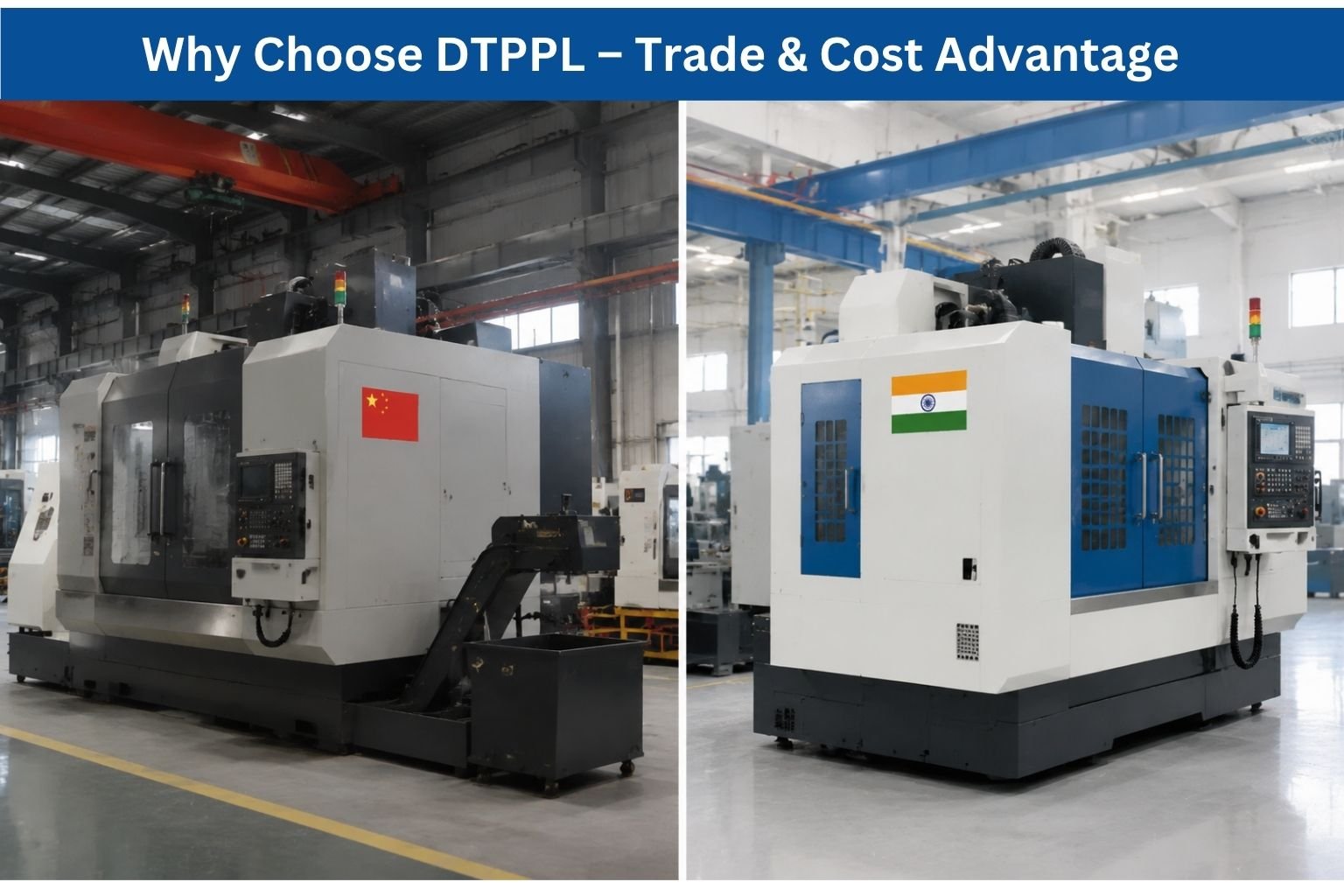
The most cost-competitive option on paper was Chinese machinery. However, for a US-based business in 2026, importing from China carries significant financial risk. Effective tariff rates on Chinese goods have risen to approximately 200%, making the apparent cost savings illusory once duties are factored in. Beyond cost, the geopolitical volatility surrounding US-China trade policy introduced a long-term uncertainty that could affect spare parts availability, future upgrades and ongoing technical support.
Indian machinery, by contrast, benefits from a considerably more stable trade relationship with the United States – with effective tariff rates around 15%. This not only reduced upfront procurement costs but also offered a more predictable and resilient supply chain over the operational lifespan of the plant.
The Operational Uptime Imperative
Beyond tariffs, there was a practical operational concern. A mineral water plant manufacturer supplying healthcare facilities cannot afford extended downtime. Equipment failures without accessible technical support can cascade quickly into missed supply commitments and potential harm to her clients’ operations. Any supplier Denise chose needed to demonstrate not just engineering quality, but a genuine commitment to post-sale responsiveness – regardless of time zones.
OUR OTHER PRODUCT
Balancing Capital Expenditure and Long-Term Reliability
The business case also required balancing low upfront capital expenditure against the need for durable, low-maintenance equipment. A cheaper machine that required frequent repairs or replacement parts would negate the cost advantage of in-house production. The goal was a plant that delivered consistent, high-volume output with minimal operational disruption over many years.
The Solution: DTPPL’s 90 BPM Fully Automatic Mineral Water Plant
After evaluating her options, Denise selected DTPPL’s 90 BPM Fully Automatic Mineral Water Plant – a high-capacity, end-to-end solution designed for demanding production environments.
This configuration delivers fully automated bottle filling plant, capping and packaging with minimal manual intervention, making it ideal for a lean operation targeting healthcare-grade output at commercial scale. The plant is engineered for consistent performance, with low maintenance requirements – addressing both the quality standards required by Denise’s end customers and the operational reliability her business model demands.
The 90 BPM (Bottles Per Minute) capacity aligns precisely with her production target of 12 million bottles annually, providing sufficient throughput to meet current demand while offering headroom to scale as her market position grows.
Why DTPPL? – The Deciding Factors
Denise’s decision to choose DTPPL over other suppliers – including Chinese alternatives – came down to several interconnected factors.
Trade Stability and Cost Predictability
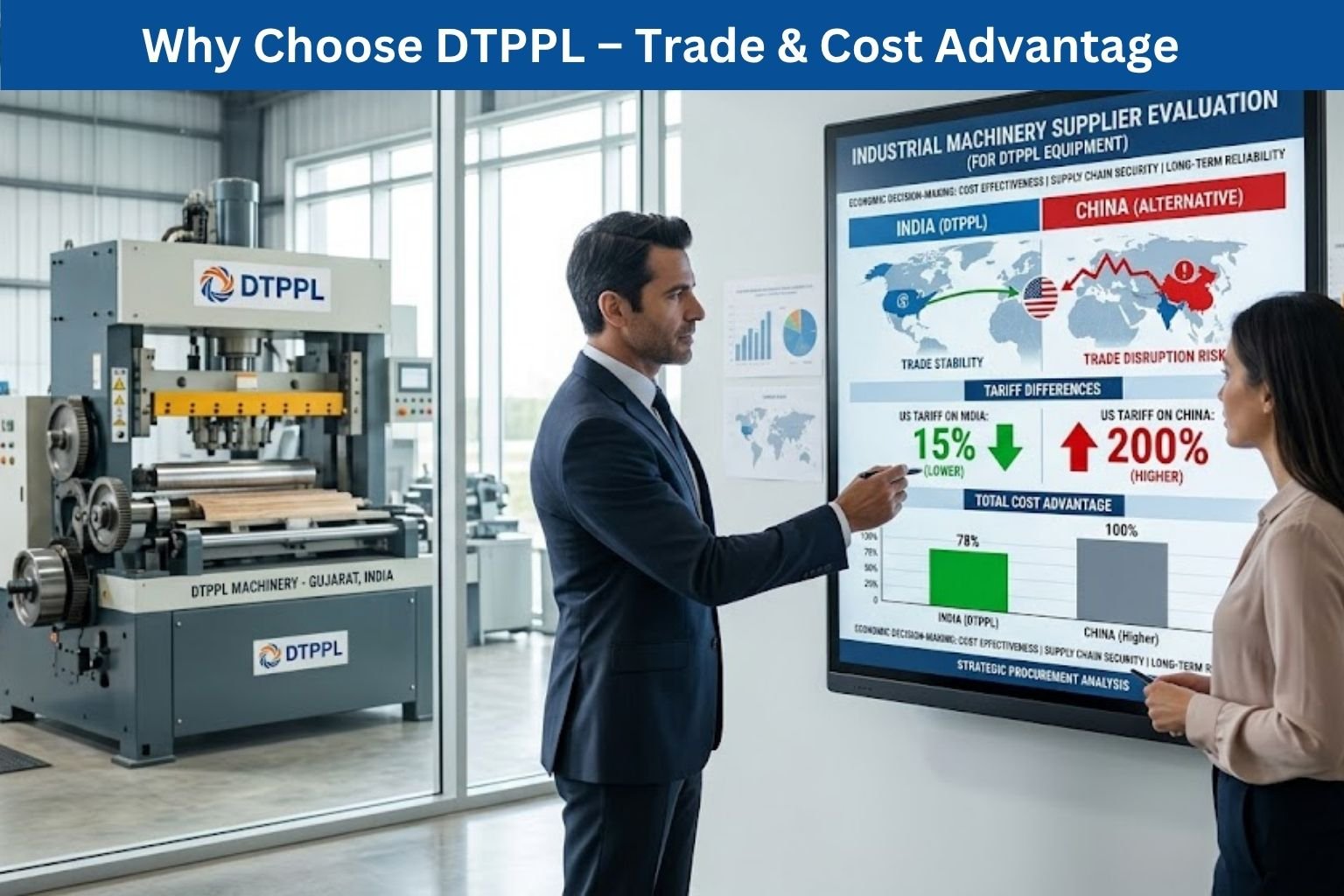
The US-India trade relationship offered Denise a significant cost and risk advantage over Chinese suppliers. With Indian machinery attracting approximately 15% effective tariffs versus 200% on Chinese equipment, DTPPL was not just the more reliable choice – it was the more economical one when total landed cost was considered.
Consistent Follow-Up and Relationship-Building
DTPPL’s sales and support team demonstrated a level of proactive engagement that stood out. Their consistent follow-up throughout the evaluation process gave Denise confidence that the relationship would not end at the point of sale.
Mineral Water Plant
Capacity: 500 LPH to 50,000 LPH
(USD 27,500 to USD 16,49,000)
Willingness to Accommodate International Operations
Running a business from Alabama while sourcing from India means navigating significant time zone differences. DTPPL’s willingness to hold late-night meetings and respond promptly despite the distance was a material differentiator. For a business that cannot afford supply chain disruptions, knowing that technical support would be accessible and responsive – even across hemispheres – was a decisive factor.
Client Review
“DTPPL’s PET Bottle Manufacturing Machine exceeded our expectations. It’s fast, precise, and reliable, helping us streamline production with minimal downtime. A great investment!”
– Diya Nair
Responsiveness Despite Challenges
Throughout the procurement and installation process, DTPPL demonstrated a responsiveness that Denise found impressive. Their commitment and support throughout the journey left a strong impression and the client feedback confirms: “So far very happy with our service.”
Results: Operational Autonomy and a Path to Growth
The installation of DTPPL’s Packaged drinking water business has positioned Denise Marie Williams for the next phase of growth. Key outcomes include:
- Full in-house production of 12 million bottles annually, eliminating dependency on third-party contract manufacturers
- Operational autonomy with full control over production quality, scheduling and output standards
- Supply chain resilience built on a stable India-US trade relationship with predictable tariff exposure
- Healthcare-grade reliability through a fully automated plant designed for consistent, high-standard output
- Satisfied client – the customer has expressed strong satisfaction with both the equipment and DTPPL’s ongoing service
 Email Now
About DTPPL
Dharmanandan Techno Projects Pvt. Ltd. (DTPPL), founded in 2011 and headquartered in Surat, Gujarat, India, is a leading ISO 9001:2015 certified manufacturer, supplier and exporter of mineral water treatment plant, carbonated soft drink plants, juice production lines, reverse osmosis systems, blow moulding machines, labelling machines and more. With a presence in 20+ countries and a team of 55+ qualified professionals, DTPPL delivers end-to-end solutions – from plant design and installation to ISI/FSSAI licensing consultancy – all under one roof. Backed by an in-house R&D department, state-of-the-art manufacturing facilities and a commitment to round-the-clock customer service, the company has built a strong global reputation for reliability, quality and low-maintenance engineering across the water and beverage industry.
FAQs
What is a Fully Automatic Mineral Water Plant and how is it different from a semi-automatic one?
A Fully Automatic Mineral Water Plant handles the entire production process – from water treatment and bottle blowing to filling, capping, labelling and shrink wrapping – with minimal human intervention. A semi-automatic plant requires manual operation at one or more stages. For high-volume, healthcare-grade production like Denise’s, the fully automatic model ensures consistency, reduces contamination risk and maximises throughput efficiency.
Why did Denise choose Indian machinery over Chinese alternatives?
The primary reasons were trade policy and total cost of ownership. In the current US trade environment, Chinese machinery effectively attracts tariffs of around 200%, while Indian equipment benefits from a far more stable trade relationship with the US at approximately 15%. Beyond cost, DTPPL also offered superior after-sales responsiveness and the kind of ongoing technical support essential for a healthcare-sector supply business.
What does 90 BPM mean and is it sufficient for 12 million bottles per year?
BPM stands for Bottles Per Minute. At 90 BPM, operating on a standard production schedule, the plant can comfortably produce 12 million or more bottles annually – well suited to Denise’s current market demand with room for growth.
Can DTPPL support customers based outside India, including in the USA?
Yes. DTPPL has an established international client base across 20+ countries. As demonstrated in this case study, DTPPL accommodates time zone differences through late-night meetings and consistent follow-up, ensuring that international clients receive the same level of service as domestic customers.
What industries is the DTPPL Mineral Water Plant suitable for?
While designed primarily for packaged drinking water businesses, DTPPL’s mineral water plants are also well-suited to industries requiring ultra-pure water supply – including healthcare, pharmaceuticals, food and beverage production and laboratories. The plants can be customised to meet specific output, purity and compliance requirements.
What after-sales support does DTPPL provide?
DTPPL provides comprehensive after-sales support including installation guidance, operator training, technical troubleshooting and access to spare parts. Their team is known for proactive follow-up and round-the-clock availability – a key reason international clients like Denise choose and continue to recommend DTPPL.
How long does it take from order placement to plant installation?
Lead times vary based on plant configuration and destination. DTPPL coordinates directly with clients on production timelines, shipping logistics and on-site installation. Prospective buyers are encouraged to contact DTPPL directly for a customised project timeline.
Our associates









































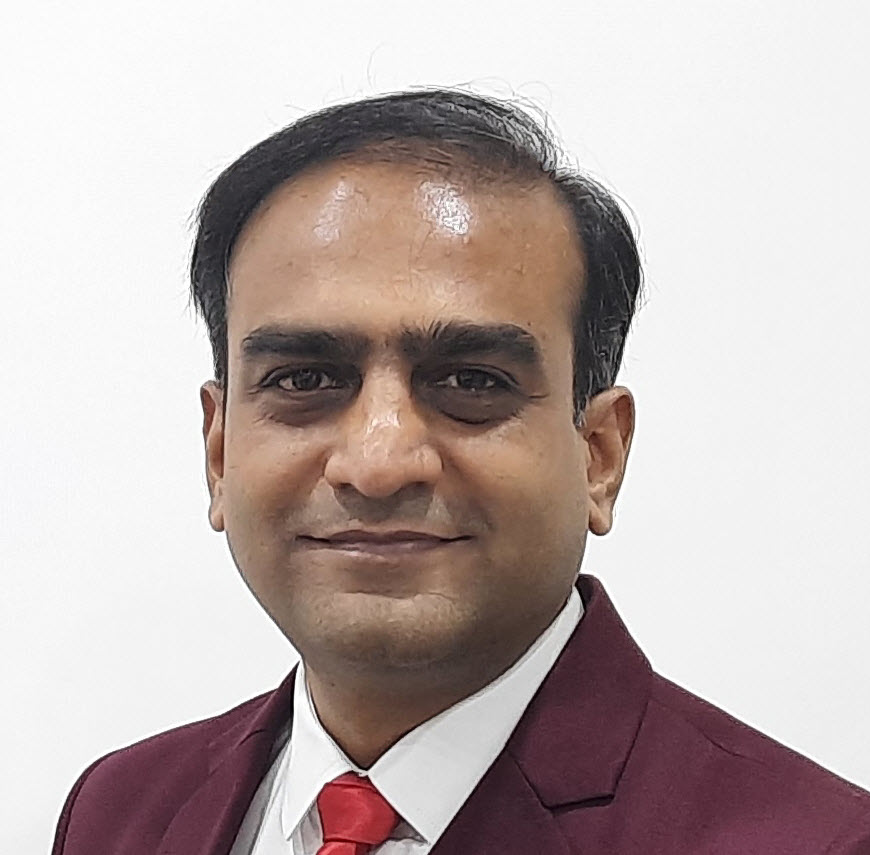
Director – Global Marketing and Sales
Mr. Bhavesh from Dharmanandan Techno Projects Pvt. Ltd. has played a pivotal role in elevating the DTPPL brand to the global stage, leveraging his exceptional expertise in marketing and communications. He is committed to helping clients achieve significant growth while strengthening their own brands. Dharmanandan Techno Projects Pvt. Ltd. is a leading manufacturer and supplier of water purification systems and turnkey solutions for mineral water plants. With years of experience in designing and delivering high-quality water treatment solutions, the company provides end-to-end services, including system design, installation, maintenance, and ongoing support. Specializing in scalable and customizable water plants, DTPPL has successfully served industries worldwide, ensuring clean and safe drinking water across diverse applications.