



Listening Article
Table of Contents
Water Treatment Plants Ensuring Purity, Taste, and Compliance
July 23, 2025
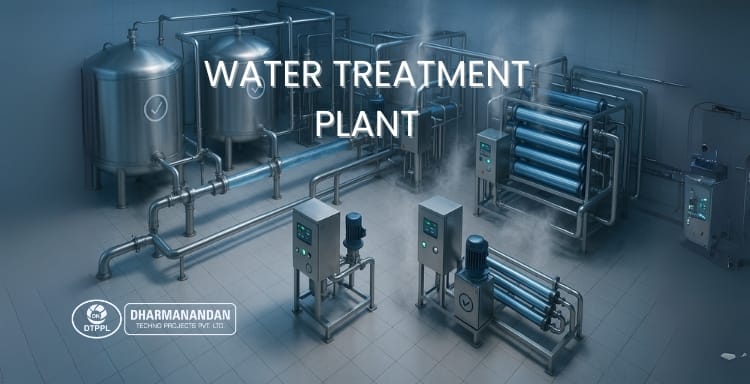
In the competitive beverage industry, water quality is everything. Whether it’s packaged mineral water or flavored cold drinks, the base ingredient-water-must meet stringent standards of purity, taste, and safety. Water treatment plants designed for mineral water bottling units and soft drink manufacturing facilities are engineered to deliver precisely this. This article explores the end-to-end water treatment process, essential equipment, and regulatory considerations for beverage-grade water production.
Why is water treatment essential for mineral water and soft drink industries?
Raw water from borewells, rivers, or municipal supply often contains impurities such as:
- Physical contaminants (sand, silt, turbidity)
- Chemical compounds (chlorine, fluoride, nitrates)
- Biological hazards (bacteria, viruses)
Treating water ensures:
- Consistency in taste and quality
- Compliance with FSSAI, BIS, and WHO standards
- Product shelf stability and safety
What are the key stages in a water treatment plant for beverage production?
The typical process includes:
- Raw water storage and feed pump
- Pre-filtration (sand filter, activated carbon filter)
- Water softening or iron removal (if needed)
- Reverse Osmosis (RO) for dissolved salts
- UV sterilization and ozonation for microbial control
- Mineral dosing for bottled mineral water
- Polishing filter and storage tank
Each stage plays a specific role in purifying and conditioning water for end use.

How does the water treatment process differ between mineral water and soft drink production?
- Mineral water plants require re-mineralization (adding essential minerals like calcium, magnesium) post-RO.
- Cold/soft drink plants emphasize exact pH, conductivity, and carbonation readiness.
Thus, soft drink production may also include dechlorination and CO₂ compatibility testing.
Which equipment is commonly used in beverage-grade water treatment plants?
Key machinery includes:
- Multi-grade Sand Filter (MGF) for turbidity
- Activated Carbon Filter (ACF) for color, odor, and chlorine
- Micron Cartridge Filters (5–1 micron) for fine filtration
- Reverse Osmosis System
- UV Disinfection System
- Ozonator for final sanitization
- SS Storage Tanks with Float Valves
All piping and contact parts are preferably made from SS 304/316 to prevent contamination.
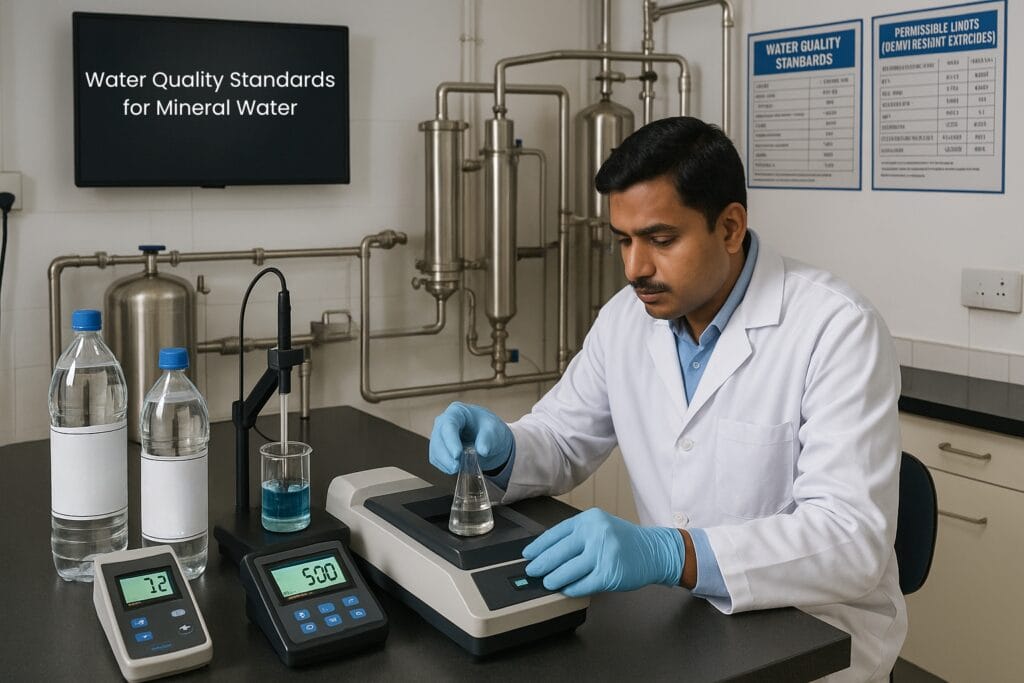
What are the water quality standards for mineral water in India?
As per IS:14543 for packaged drinking water and IS:13428 for natural mineral water:
- TDS: < 500 mg/L (Packaged)
- pH: 6.5–8.5
- No E. coli, Salmonella, or coliforms
- Heavy metals and pesticide levels below permissible limits
RO+UV+Ozonation systems help companies meet these parameters consistently.
How does reverse osmosis help in beverage water treatment?
RO membranes remove:
- Dissolved salts
- Heavy metals (arsenic, lead, etc.)
- Microorganisms and viruses
RO ensures consistent TDS and taste profile-a critical factor for cold drinks that undergo flavor mixing and carbonation.
What is the role of UV and ozonation in disinfection?
- UV Disinfection: Instant microbial inactivation using ultraviolet rays (254 nm)
- Ozonation: Oxidizes bacteria, viruses, and organic compounds
These are final-barrier treatments ensuring zero microbial load in the bottled product.
How do mineral water plants maintain taste while ensuring safety?
After RO strips water of all minerals, controlled re-mineralization restores palatability and nutritional value. This involves dosing:
- Calcium carbonate
- Magnesium sulfate
- Potassium salts
Advanced plants use online dosing pumps with digital flow controls for precision.
Are Indian-made water treatment plants suitable for global beverage operations?
Yes. Several Indian manufacturers offer:
- GMP-compliant, CE-certified water treatment systems
- Custom solutions for Coca-Cola, Pepsi, local bottlers, and private labels
- Remote monitoring, SCADA-based automation, and online quality tracking
India is emerging as a global supplier of cost-effective and reliable beverage water treatment systems.
What should beverage brands look for in a water treatment plant supplier?
- Proven experience in mineral water and cold drink projects
- Complete documentation (IQ/OQ/PQ, SOPs)
- After-sales support, AMC options
- Regulatory support for FSSAI, BIS, ISO 22000 approvals
Choosing a trusted partner ensures smoother operations, lower downtime, and easier expansion.
What is the ideal production capacity to start with for a small-scale mineral water plant?
A portable unit with 2,000–5,000 bottles per hour is ideal for small startups. Scale up based on market demand and distribution reach.
What are the common bottling types available (PET, glass, cans)?
PET is most popular due to being lightweight and recyclable. Glass is premium but more costly. Cans are less common in India but used for carbonated drinks abroad.
How much land is required for a mineral water or soft drink plant?
A compact plant can operate in 1,000–2,000 square feet. For larger, high-volume operations, 10,000+ sq ft is needed, including storage, utilities, and office space.
Read Our Article: Mineral Water Plant Project Cost in India - An Overview
What is the typical investment required to set up a mineral water plant in India?
For a plant with a capacity of 10,000 l/hour, expect investment between ₹30–50 lakhs for equipment, land lease, and installation. Costs vary widely based on location and automation level.
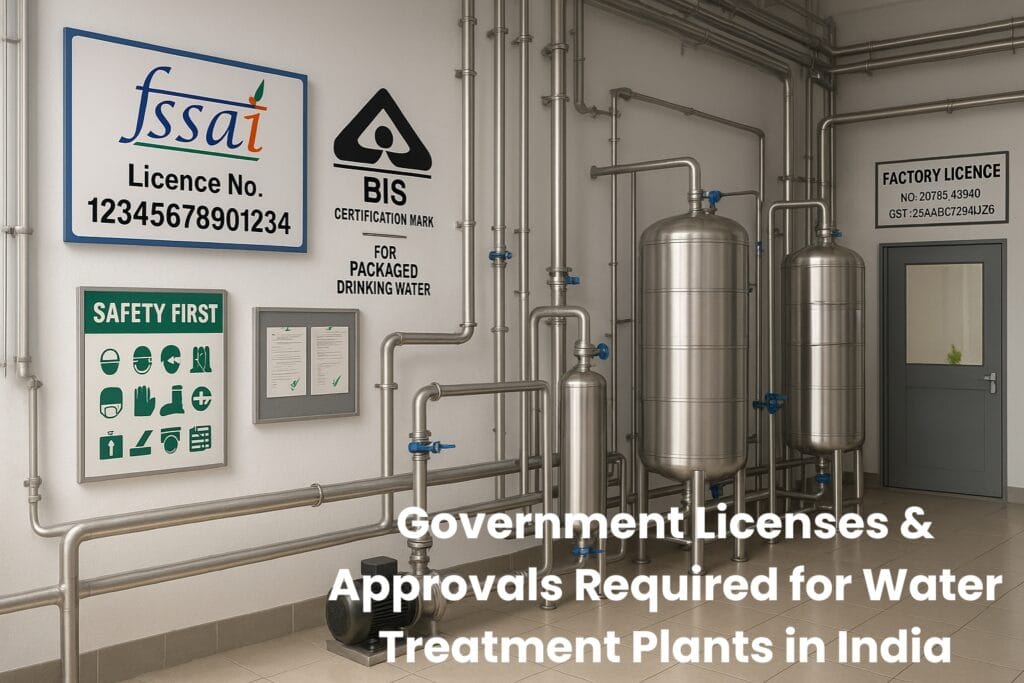
What government licenses and approvals are needed in India?
Key requirements:
- FSSAI license
- BIS certification (for packaged drinking water)
- Factory license and GST registration
Local pollution and municipal permits may also be necessary.
Can a start-up bottle both mineral water and carbonated soft drinks?
Yes-if you invest in additional equipment like carbonators, sugar-dosing stations, and flavor mixers, your facility can handle both product lines.
What is the average ROI for a soft drink plant?
Return on investment typically ranges from 18–24 months, assuming efficient marketing, cost control, and consistent product quality.
How energy-intensive are water treatment and bottling operations?
RO systems, compressors, UV lamps, and chillers consume most power. Expect monthly electricity costs around ₹50,000–1,00,000 for small to mid-size plants.
How do I ensure hygienic standards during bottling?
Good Manufacturing Practices (GMP) protocols include:
- Staff training
- Hygienic shift clothing
- Daily CIP (Clean-In-Place) of tanks and pipes
- Microbial testing of water daily
How do I establish a reliable raw water source?
Options include:
- Borewell or groundwater
- Municipal supply
- Surface water (river/lake)
Water testing is essential. High mineral content or contamination increases treatment complexity and costs.
Read Our Article: How To Start Mineral Water Plant Business In India?
What are the best packaging sizes to start with?
Most startups begin with 500 ml and 1 liter PET bottles. Expansion to 200 ml, 750 ml, and 2 liter packaging comes once distribution stabilizes.
Do I need to trademark my brand or design bottles?
Yes. Trademarks, ISBN codes, packaging artwork-these establish brand identity and legal protection. Also, plan for barcode registration and labeling compliance.
What are minimum order quantities (MOQs) for consumables?
Suppliers often set MOQs for caps, labels, cartons, and flavor concentrates-usually between 10,000-20,000 units per SKU depending on supplier.
Is contract manufacturing an option?
Absolutely. Many startups begin with contract manufacturers for bulk bottling. Once demand grows, they transition to owning their plant.
How do I ensure quality consistency across batches?
Leverage:
- Online quality monitoring (TDS, turbidity, pH)
- Regular microbial and chemical testing
- SOPs and batch records
Automation tools like SCADA are increasingly common.
What maintenance schedule does a plant need?
Critical systems like RO membranes, UV lamps, and pumps require monthly inspections. Sand/activated carbon filters need replacement every 6-12 months.
How do I manage water discharge and wastewater?
Install an ETP (Effluent Treatment Plant) or use zero-liquid-discharge systems. You must comply with state pollution board regulations to avoid penalties.
Should I include mineral fortification in my bottled water?
Yes, if marketing as “mineral water.” Health authorities often require minimum levels of Calcium, Magnesium, or Potassium. Ensure accuracy during dosing.
What automation levels are recommended for startups?
Semi-automatic plants are cost-effective initially. As volume grows, consider automating filling, labeling, and capping to improve throughput and consistency.
How can I optimize logistics and distribution?
Partner with local FMCG distributors, retail chains, and dairy/ice-cream suppliers who can deliver your product alongside their regular routes.
Are certifications like ISO or HACCP necessary?
While not mandatory, ISO 22000, HACCP, and FSSC 22000 significantly enhance trust-especially if you plan to scale or enter international markets.
What is the best water quality monitoring frequency?
Check TDS, pH, and turbidity in real-time. Conduct bacterial and chemical tests weekly or monthly, depending on product type and regulations.
How do I choose the right equipment supplier?
Evaluate vendors based on:
- Proven track record in beverage sectors
- On-site commissioning support
- Spare parts, AMC, and training offerings
How much working capital is needed for initial operations?
Factor in raw materials (PET, caps, filters), utility costs, packaging, manpower, and 2–3 months of sales coverage-usually ₹20-40 lakhs for small plants.
What are trending special flavors or premium offerings?
CBD/Herbal-infused waters, vitamin-fortified waters, and flavored sodas are emerging trends-great for product differentiation, but require extra dosing and testing capabilities.
How can I position my water treatment plant as environmentally friendly?
Use:
- Recyclable or biodegradable packaging
- Solar or wind energy
- Wastewater recycling
These are strong selling points for customers and regulators alike.
What digital tools support plant operations?
Tools like Plant Master, Water Man, and cloud-based SCADA allow remote monitoring of flow rates, pump status, and water quality-ideal for multi-location setups.
How do I handle seasonal demand fluctuations?
Plan for 30–50% higher volumes in summer. Ensure buffer stock of bottles and flavor concentrates during peak seasons and adjust production shifts accordingly.
How can I test market acceptance before full-scale launch?
Start with:
- Local marts or dairy delivery
- Online sales (e-commerce)
- Sampling campaigns
This helps validate products and pricing before capital investment.

Where can I find government subsidies or incentives?
Check with:
- MSME schemes
- Dairy, Agri & Food Processing Ministry
Some state governments offer subsidies for packaging units under ‘Make in India’ initiatives.
Conclusion:
Whether you’re launching a mineral water brand or scaling up soft drink production, a robust water treatment system is the cornerstone of your quality promise. Indian manufacturers now offer advanced, automated, and compliance-ready water treatment plants tailored for beverage industries. Investing in the right technology not only ensures product purity but also builds long-term brand trust in a health-conscious, regulation-driven market.
About Author
Director – Global Marketing and Sales
Mr. Bhavesh from Dharmanandan Techno Projects Pvt. Ltd. has played a pivotal role in elevating the DTPPL brand to the global stage, leveraging his exceptional expertise in marketing and communications. He is committed to helping clients achieve significant growth while strengthening their own brands. Dharmanandan Techno Projects Pvt. Ltd. is a leading manufacturer and supplier of water purification systems and turnkey solutions for mineral water plants. With years of experience in designing and delivering high-quality water treatment solutions, the company provides end-to-end services, including system design, installation, maintenance, and ongoing support. Specializing in scalable and customizable water plants, DTPPL has successfully served industries worldwide, ensuring clean and safe drinking water across diverse applications.