




Listening Article
Table of Contents
Water Softening Plants in Asia and the Middle East – The Growing Needs
March 16, 2026
Introduction
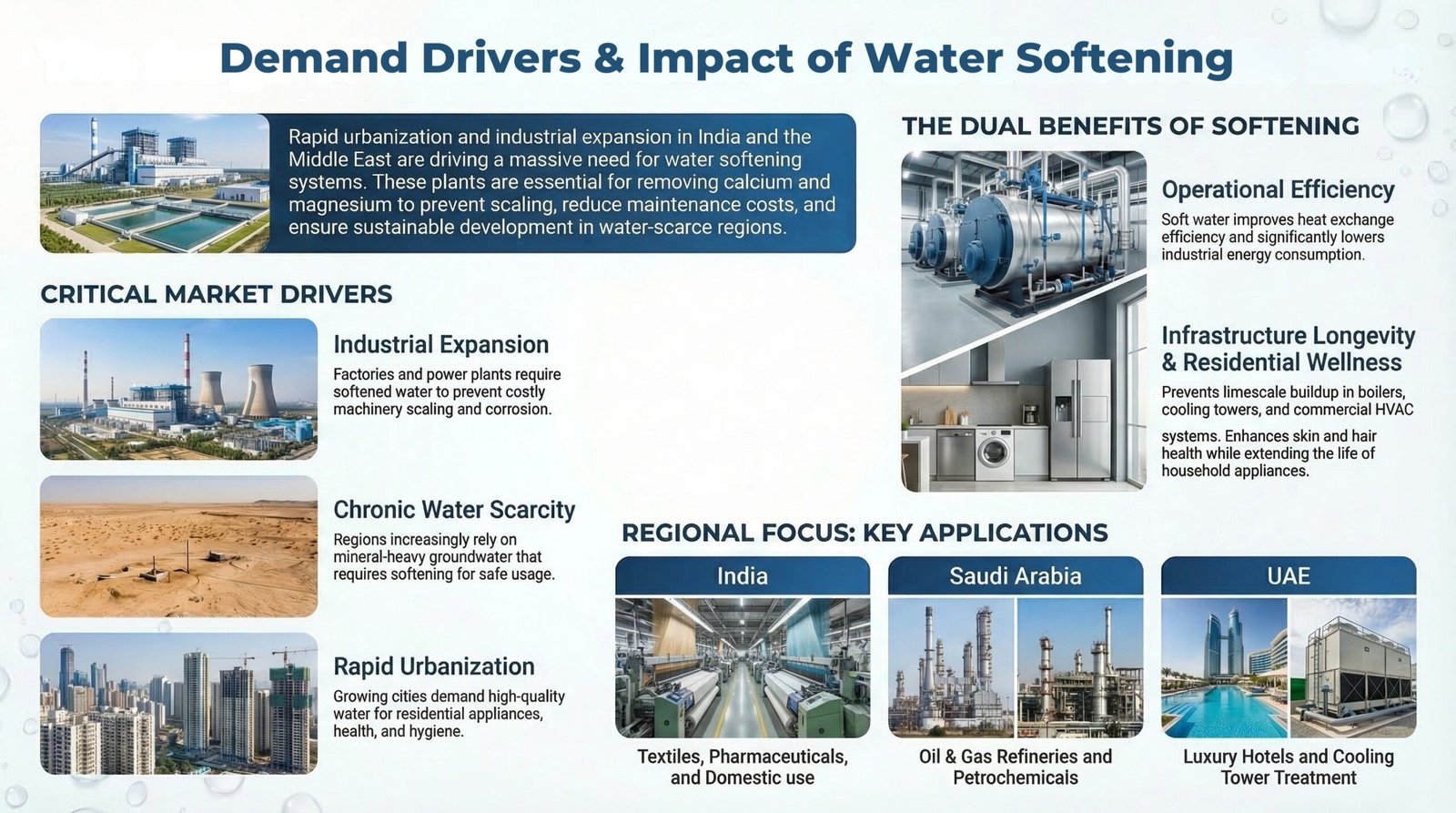
In recent years, the demand for clean, soft water has surged across Asia and the Middle East due to rapid urbanization, industrial expansion, water scarcity, and increasing awareness of water quality’s impact on health and infrastructure. Countries like India, Saudi Arabia, and the United Arab Emirates (UAE) are leading this wave, investing heavily in water treatment infrastructure – especially water softening plants – to ensure reliable access to high-quality water for industrial, commercial, and residential use.
This article explores the key drivers behind this growing demand, highlights specific country scenarios, and explains how water softening plants are becoming essential for sustainable development in these regions.
What Is Water Softening and Why It Matters
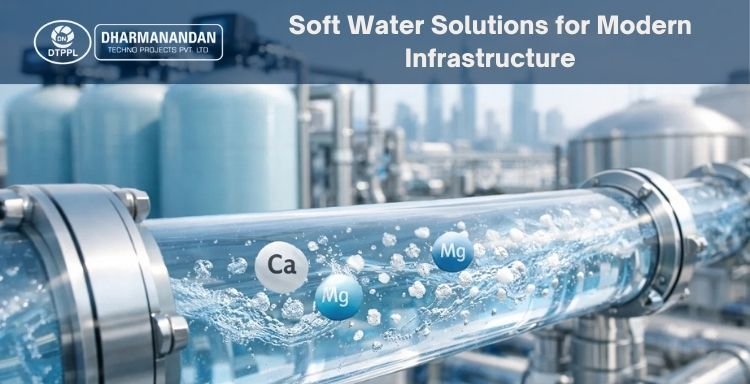
Water softening is the process of removing hardness causing minerals – mainly calcium and magnesium – from water. Hard water can cause a series of problems, including:
- Scaling in pipelines, boilers, and heat exchangers
- Reduced efficiency of industrial machinery and cooling systems
- Higher energy costs due to scale formation
- Frequent maintenance and replacements
- Poor lathering of soaps and detergents in households
By installing water softening plants, communities and industries can dramatically improve water quality, reduce costs, extend equipment lifespan, and enhance overall operational efficiency.
 Start a Chat on WhatsApp!
Key Drivers of Demand in Asia and the Middle East
Several factors are fueling the rising need for water softening plants across these regions:
Rapid Industrial Growth
Asia and the Middle East are home to expanding manufacturing, energy, and petrochemical industries – all of which require high-quality process water.
- Power plants, textile mills, and food processing units rely on softened water to prevent scaling and corrosion.
- Cooling systems in industrial setups operate more efficiently with soft water, leading to energy savings and fewer breakdowns.
Read Our Article
Water Scarcity and Quality Challenges
Many parts of Asia and the Middle East experience water scarcity or dependence on groundwater with high mineral content.
- Pakistan, India, and Saudi Arabia face chronic water shortages compounded by poor water quality.
- Groundwater hardness levels in certain regions exceed safe limits, making softening essential before use.
Urbanization and Population Growth
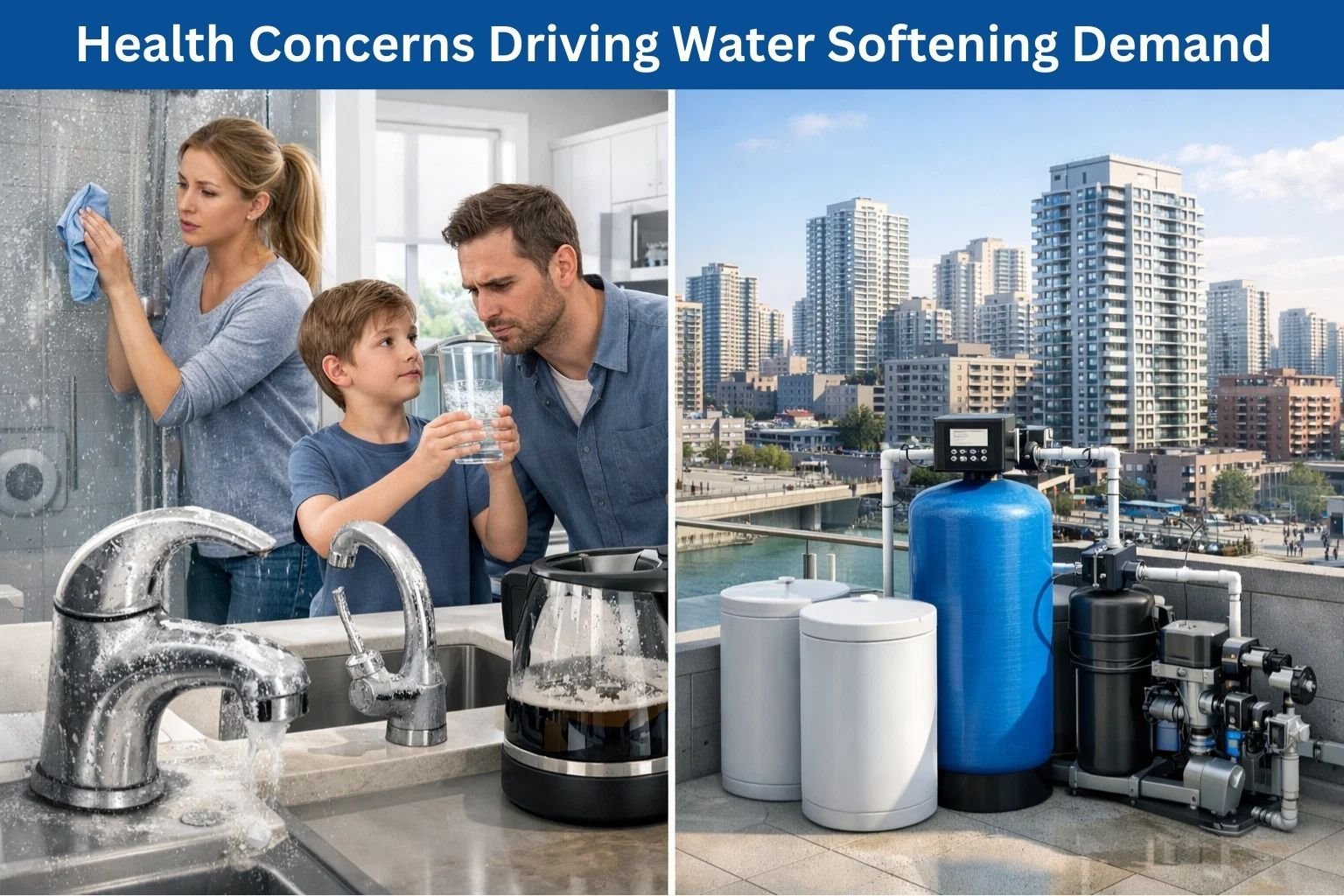
Growing cities mean more households depend on municipal water supplies. With hard water being a common issue, water softening becomes crucial for daily living – from bathing and cooking to laundry and dishwashing.
Awareness and Health Concerns
Consumers and businesses are becoming more aware of the long-term effects of hard water, driving demand for residential and commercial water softening solutions.
Country – Wise Overview
India
India’s water challenges include uneven distribution, iron and hardness contamination, and massive agricultural demand.
- Urban areas like Delhi, Mumbai, Bengaluru, and Chennai have high hardness levels ranging from moderate to severe.
- Indian industries – power generation, pharmaceuticals, steel, chemicals – require softened water for efficient operations.
- Residential demand has increased with rising middle class awareness of hard water issues affecting skin, hair, and appliances.
OUR OTHER PRODUCT
Role of Water Softening Plants in India:
- Prevents scale formation in boilers and cooling towers.
- Reduces detergent usage in households.
- Extends life of piped infrastructure in commercial complexes.
- Supports agricultural irrigation by reducing salt accumulation in soil.
Saudi Arabia
As a desert nation, Saudi Arabia faces acute water scarcity, relying heavily on desalination for potable water. However, desalinated water can still contain hardness, and industries require additional softening.
- Desalination plants in Saudi Arabia treat seawater to potable standards but post treatment softening is often needed for industrial use.
- Petrochemical and oil refineries – key contributors to the Saudi economy – demand extreme water quality standards.
Role of Water Softening Plants in Saudi Arabia:
- Ensures desalinated water meets stringent industrial purity norms.
- Supports O&G refineries, power plants, and process industries in minimizing corrosion and scaling.
- Assists in cooling tower treatment to enhance operational reliability.
Client Review
“Reliable performance and excellent customer support, Working with Dharmanandan has been a smooth experience. Their team is well-organized with dedicated departments that handle every requirement efficiently. The Water Softening Plant delivered consistent results and improved our water quality significantly. They also guided us properly throughout the setup and compliance process, making everything hassle-free. Truly satisfied with their professional and customer-focused approach.”
– Karen Wazen Bakhazi
United Arab Emirates (UAE)
Like Saudi Arabia, the UAE relies on desalination for water supply. With rapid economic diversification into manufacturing, tourism, and real estate, demand for softened water has expanded across sectors.
- Sharjah, Dubai, and Abu Dhabi have seen increasing adoption of water softening at commercial buildings, hospitals, hotels, and large residential communities.
- The UAE’s hot climate increases the need for water based cooling systems – making scale prevention through softening a priority.
Role of Water Softening Plants in the UAE:
- Improves longevity and efficiency of HVAC systems.
- Helps luxury hotels and residential complexes maintain high water quality standards.
- Reduces maintenance costs for infrastructure exposed to hard or saline water.
Benefits of Water Softening Plants
Across households and industries, installing water softening plants delivers clear advantages:
For Households
- Better soap effectiveness and reduced detergent usage
- Softer skin and hair
- Reduced appliance damage (e.g., washing machines, geysers)
- Lesser limescale in bathrooms and kitchen fixtures
For Industries
- Extended equipment life and reduced maintenance cost
- Improved heat exchange efficiency
- Lower energy consumption
- Compliance with regulatory water quality standards
Technology Trends and Innovations
Modern water softening solutions leverage advanced techniques to enhance performance, save energy, and reduce operational expense:
- Ion Exchange Systems – Most common and cost – effective for large and small applications
- Automatic Regeneration Softening Units – Minimizes manual intervention
- Smart Softener Systems – IoT – enabled monitoring and predictive maintenance
- Eco – friendly Resin Media – Reduces chemical usage in regeneration
OUR OTHER PRODUCT
Challenges and Considerations
While demand is rising, several challenges remain:
- Initial capital cost for large industrial softening systems
- Waste brine disposal concerns
- Need for technical expertise in operation and maintenance
Governments and private players must work together to adopt sustainable practices and regulatory frameworks for optimal outcomes.
Water Softening Plant (Water Softener)
Capacity: 500 LPH to 10,000 LPH
(USD 4,200 to USD 49,500)
Conclusion
The growing need for water softening plants in Asia and the Middle East is driven by industrial expansion, water quality issues, and rising consumer awareness. Countries such as India, Saudi Arabia, and the UAE are at the forefront of adopting these technologies – improving water reliability, reducing operational costs, and ensuring better quality of life.
As urbanization continues and industries expand, the water softening market is poised for significant growth, presenting opportunities for technology providers, infrastructure developers, and environmental advocates alike.
FAQs on Water Softening Plants
What is water softening, and why is it necessary?
Water softening is the process of removing hardness-causing minerals like calcium and magnesium from water. It’s necessary because hard water can lead to scale formation in pipes, boilers, and machinery, reduce efficiency, increase maintenance costs, and impact the overall quality of water used in households and industries.
Which countries in Asia and the Middle East have the highest demand for water softening plants?
Countries like India, Saudi Arabia, and the UAE have the highest demand for water softening plants. These regions face water scarcity, industrial expansion, and significant challenges with hard water, making water softening essential for both residential and industrial applications.
How do water softening plants benefit industrial sectors in these regions?
Water softening plants help industries by preventing scaling and corrosion in machinery, improving the efficiency of cooling systems, extending equipment lifespan, and reducing maintenance and energy costs, especially in power plants, refineries, and manufacturing units.
What are the primary applications of water softening plants in India?
In India, water softening plants are widely used in industries like textiles, pharmaceuticals, power generation, and agriculture. They are essential for improving the quality of water in manufacturing processes, irrigation systems, and household water supplies.
How does water softening benefit residential households?
For residential households, water softening improves water quality by reducing scaling in pipes and appliances like washing machines, dishwashers, and water heaters. It also enhances soap and detergent efficiency, leading to lower consumption, and helps improve skin and hair health.
Why is water softening critical for Saudi Arabia and the UAE?
Both Saudi Arabia and the UAE rely heavily on desalinated water, which can still contain high levels of hardness. Water softening is crucial for making this water suitable for industrial processes and household use, as well as ensuring that water-based systems like cooling towers and HVAC systems run efficiently.
What are the environmental challenges associated with water softening plants?
One of the main environmental challenges is the disposal of brine waste, a by-product of the water softening process. Proper disposal methods and technologies that minimize environmental impact are crucial for sustainable operation.
How does the water softening process work?
Water softening typically works through ion exchange, where hard minerals like calcium and magnesium are replaced with sodium or potassium ions. This process occurs in resin-based tanks, where water passes through and becomes “softened.”
What are the most common types of water softening systems used in Asia and the Middle East?
The most common types of water softening systems include:
- Ion Exchange Systems: Widely used for both residential and industrial applications.
- Reverse Osmosis Systems: Often used for more advanced water purification and softening.
- Electrochemical Systems: A newer technology using electrolysis for mineral removal.
How do water softening plants contribute to energy savings in industrial sectors?
Water softening plants help industries save energy by preventing scale buildup in machinery and cooling systems. Softened water ensures better heat exchange, reducing the need for excess energy to maintain optimal operating temperatures in machines and boilers.
Our associates



































About Author

Director – Global Marketing and Sales
Mr. Bhavesh from Dharmanandan Techno Projects Pvt. Ltd. has played a pivotal role in elevating the DTPPL brand to the global stage, leveraging his exceptional expertise in marketing and communications. He is committed to helping clients achieve significant growth while strengthening their own brands. Dharmanandan Techno Projects Pvt. Ltd. is a leading manufacturer and supplier of water purification systems and turnkey solutions for mineral water plants. With years of experience in designing and delivering high-quality water treatment solutions, the company provides end-to-end services, including system design, installation, maintenance, and ongoing support. Specializing in scalable and customizable water plants, DTPPL has successfully served industries worldwide, ensuring clean and safe drinking water across diverse applications.