
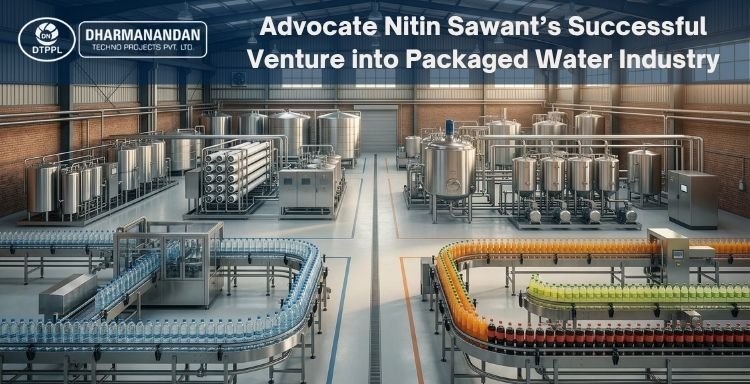




Listening Article
Table of Contents
Mineral Water & Soft Drink Plant Setup in Maharashtra – A Happy Customer Success Story
March 19, 2026
AI Summary
This case study documents the journey of Advocate Nitin Sawant, who made the decision to diversify from his legal practice into the packaged drinking water business. After an extensive evaluation process spanning six months and multiple manufacturer visits, he chose DTPPL as his plant supplier – a decision made not on price alone, but on the quality of information, transparency of business modelling, and depth of technical guidance he received throughout the process.
Dharmanandan Techno Projects Pvt. Ltd. (DTPPL), headquartered in Surat, Gujarat, has built its reputation over more than a decade as one of India’s most trusted manufacturers of mineral water plants, carbonated soft drink plants, juice processing lines, and beverage packaging systems. Certified to ISO 9001:2015 standards and operating across 20+ countries since 2011, the company occupies a rare position in the market — a manufacturer that combines high-precision engineering with the business consulting depth required to guide first-time entrepreneurs from concept to commercial production.
The Decision That Changes Everything
Most entrepreneurs who enter the packaged drinking water industry do so with ambition and very little else. No technical background, no industry contacts, no template for success — just a belief that clean water is a business worth building. The difference between those who thrive and those who stall almost always comes down to one pivotal choice: who they partner with when buying their first plant.
For Advocate Nitin Sawant, a legal professional from Shipper in Maharashtra’s Ratnagiri District, that choice took six months of research, two trips across 600 kilometres, and multiple conversations with competing manufacturers. What he found at the end of that journey was not just a machine — it was a manufacturing partner with the expertise, transparency, and long-term commitment to make his new venture viable.
 WhatsApp
The Market Opportunity: Why Maharashtra Makes Sense
Is there still room to enter the packaged drinking water market in India? The data says not just yes — but urgently so. India’s packaged water industry is currently valued at over Rs. 30,000 crore and is growing at a compound annual growth rate of approximately 20 percent. Demand is being driven by three converging forces: deteriorating municipal water quality in smaller towns and districts, a sharp rise in health-conscious consumer behaviour, and the rapid expansion of hospitality, retail, and institutional buyers seeking reliable local suppliers.
Maharashtra presents a particularly compelling geography for new entrants. As one of India’s most commercially active states, it combines dense urban demand with a vast and underserved semi-urban and coastal belt. Ratnagiri District — a coastal region known for its agrarian economy and domestic tourism — sees seasonal surges in water demand driven by visitors, fishing industry workers, and a growing retail infrastructure. For an entrepreneur planting roots here, the local competitive landscape is far less saturated than major metros, giving early movers a durable advantage.
Industry projections estimate that well-run mineral water plants can generate between Rs. 30 lakh and Rs. 60 lakh in annual profit — and that is considered the baseline for operations that combine quality production with consistent distribution. Entrepreneurs who enter this market in the next two to three years, backed by the right technology and compliance infrastructure, are positioned to capture a disproportionate share of regional demand before the window narrows.
Client Profile: The Advocate Who Saw a Different Future
Advocate Nitin Sawant is not the typical manufacturer’s customer. By profession, he is a legal practitioner — accustomed to precision, detail, and the discipline of evaluating evidence before reaching conclusions. It is perhaps that professional rigour that made his approach to entering the mineral water business so methodical, and ultimately so sound.
Sawant’s introduction to the industry came through online research. While exploring investment opportunities, he encountered DTPPL’s digital presence — the machinery, the product range, and the company’s visible market reputation caught his attention. His first instinct was measured scepticism: a manufacturer 600 kilometres away in Surat was not the most obvious choice for someone in coastal Maharashtra. But his professional training told him to investigate before deciding.
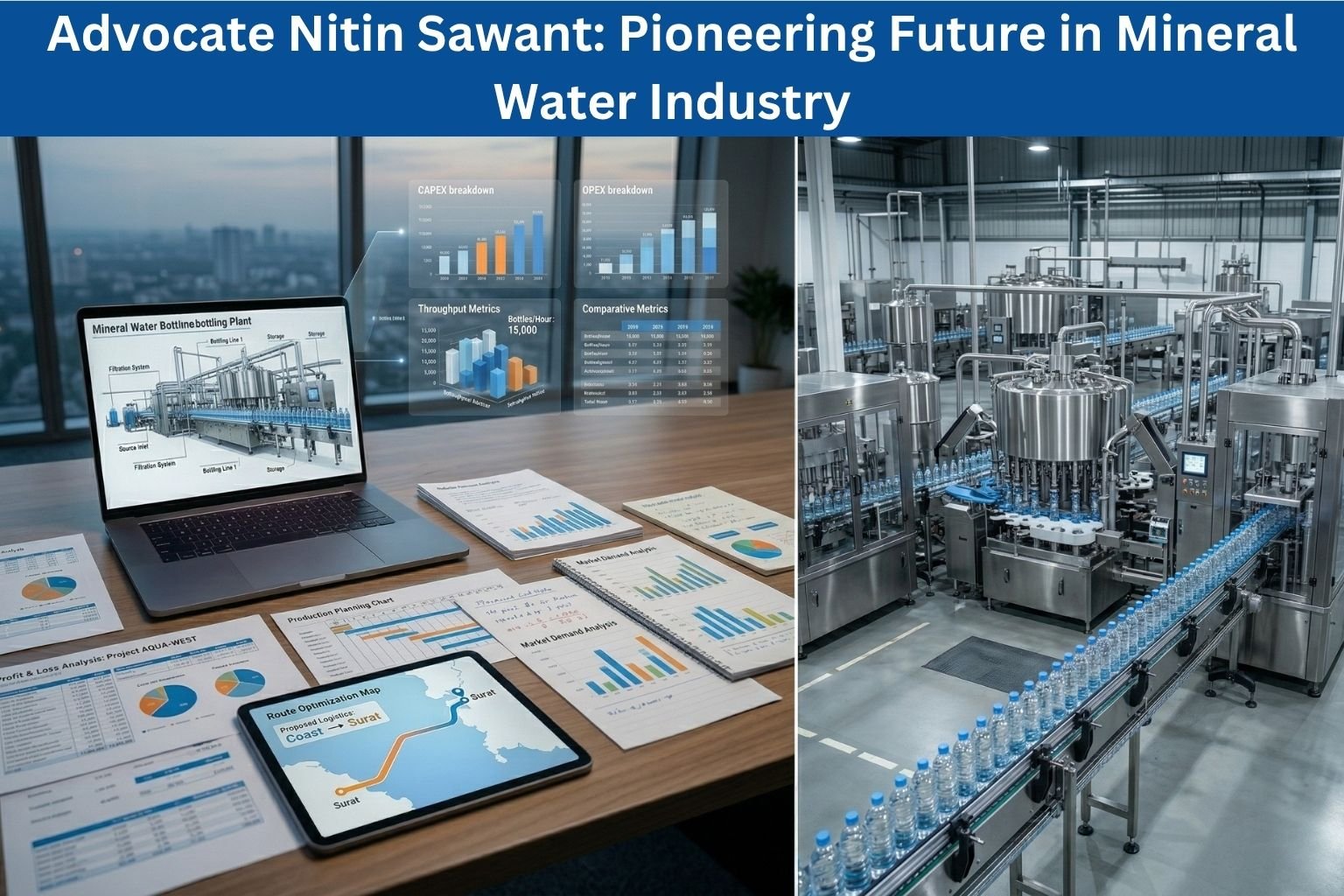
He initiated contact over the phone. What followed was a conversation that, by his own account, was unlike anything he experienced with other manufacturers. DTPPL’s senior team — specifically Umesh Sir and Alpesh Sir — did not pitch a machine. They walked him through a complete business picture: profit and loss modelling, machinery cost structures, production feasibility assessments, competitive benchmarking, and granular operational details about how specific equipment configurations would affect his cost per unit and daily throughput.
Reflecting on those conversations, Sawant described the experience plainly: “I didn’t have any knowledge about it. But Umesh Sir and Alpesh Sir gave me the details well — the profit and loss statement, machinery cost, machine feasibility, and production benefits. They also explained about competitors, and the small details like how production will become easier and how costs will be cut.”
Over six months, he visited Surat twice, compared alternatives across the market, and consistently returned to the same conclusion: no other manufacturer combined the machine quality and business depth that DTPPL offered. His purchase decision was the product of one of the most thorough vendor evaluations in the company’s recent client history.
Read Our Article
Why India’s Top Corporate Leaders Trust Our Mineral Water Plants
Challenges Faced: What Every First-Time Water Plant Owner Confronts
Zero Industry Knowledge at the Starting Line
Sawant entered the mineral water business without a manufacturing background. He had no prior exposure to water treatment processes, plant machinery, production line configurations, or regulatory requirements. This knowledge gap — common among professionals diversifying from unrelated sectors — creates immediate vulnerability. Without expert guidance, first-time buyers risk selecting the wrong equipment capacity, overpaying for specifications they do not need, or cutting corners that will cost them later in operational failures.
Client Review
“Very satisfied with the complete plant setup and guidance, Dharmanandan Techno Projects Pvt. Ltd. helped me at every stage, from understanding the business to final installation. I had no prior knowledge about mineral water production, but their team explained everything clearly — including machine selection, production capacity, and cost management. The plant is running smoothly and delivering consistent output. Their after-sales support has been prompt and reliable, which gives me confidence for long-term operations. Overall, it has been a professional and trustworthy experience.”
– Marques Brownlee
Evaluating Competing Manufacturers Without an Objective Framework
When Sawant began approaching manufacturers, he had no reliable framework for comparison. Price, sales pitch quality, and the visual appeal of machinery were the only initial metrics available to him — none of which reliably predict performance or longevity. He spoke to multiple suppliers across the market. The challenge was not a shortage of options; it was the inability to distinguish genuine quality and post-sale commitment from polished marketing.
The Distance and Cost of Proper Due Diligence
Conducting thorough due diligence on a manufacturer located 600 kilometres from his home base required significant investment of time and resources. Two separate trips to Surat, coordinated around his legal practice commitments, represented a meaningful personal commitment — one that many aspiring entrepreneurs in smaller towns choose not to make. Sawant made it anyway, because he understood that a poor decision at this stage would cost far more than two return journeys.

Understanding the True Economics of the Business
The mineral water business appears straightforward on the surface. The actual economics — equipment depreciation, raw material costs, energy consumption per litre, packaging costs, distribution margins, and regulatory compliance expenditure — are considerably more complex. Without a clear profit and loss projection built on real operational data, a new entrepreneur cannot make a rational investment decision or secure financing with confidence.
Securing a Credible Long-Term Support Commitment
Buying a plant is not a transaction — it is the beginning of a relationship. Machinery requires installation expertise, commissioning support, periodic maintenance, and responsive service when problems arise. For a plant owner in Ratnagiri District, the prospect of being left without technical support after the sale — a common complaint in the Indian machinery market — represents a genuine business risk. Sawant needed a manufacturer whose post-sale support was as credible as its pre-sale promises.
DTPPL’s Solutions: Turning Uncertainty into a Profitable Water Business Plan
Structured Knowledge Transfer from Day One
Where Sawant arrived with no industry knowledge, DTPPL’s team ensured he left every interaction better informed than when he arrived. Rather than leading with a product catalogue, Umesh Sir and Alpesh Sir began with education — explaining water treatment technology fundamentals, plant configuration options, and the operational implications of each choice. By the time Sawant was ready to evaluate machinery, he had built enough foundational knowledge to ask the right questions and assess the answers critically.
OUR OTHER PRODUCT
Transparent Competitive Benchmarking
Rather than dismissing competitor products, DTPPL’s team offered Sawant a structured comparison — laying out how their machinery compared to alternatives across key metrics including build quality, component specifications, automation levels, energy efficiency, and total cost of ownership. This transparency, unusual in a market where manufacturers typically avoid direct competitor discussions, gave Sawant the evaluative framework he lacked and allowed him to reach his decision through evidence rather than persuasion.
Mineral Water Machinery Factory Visits That Deliver Genuine Confidence
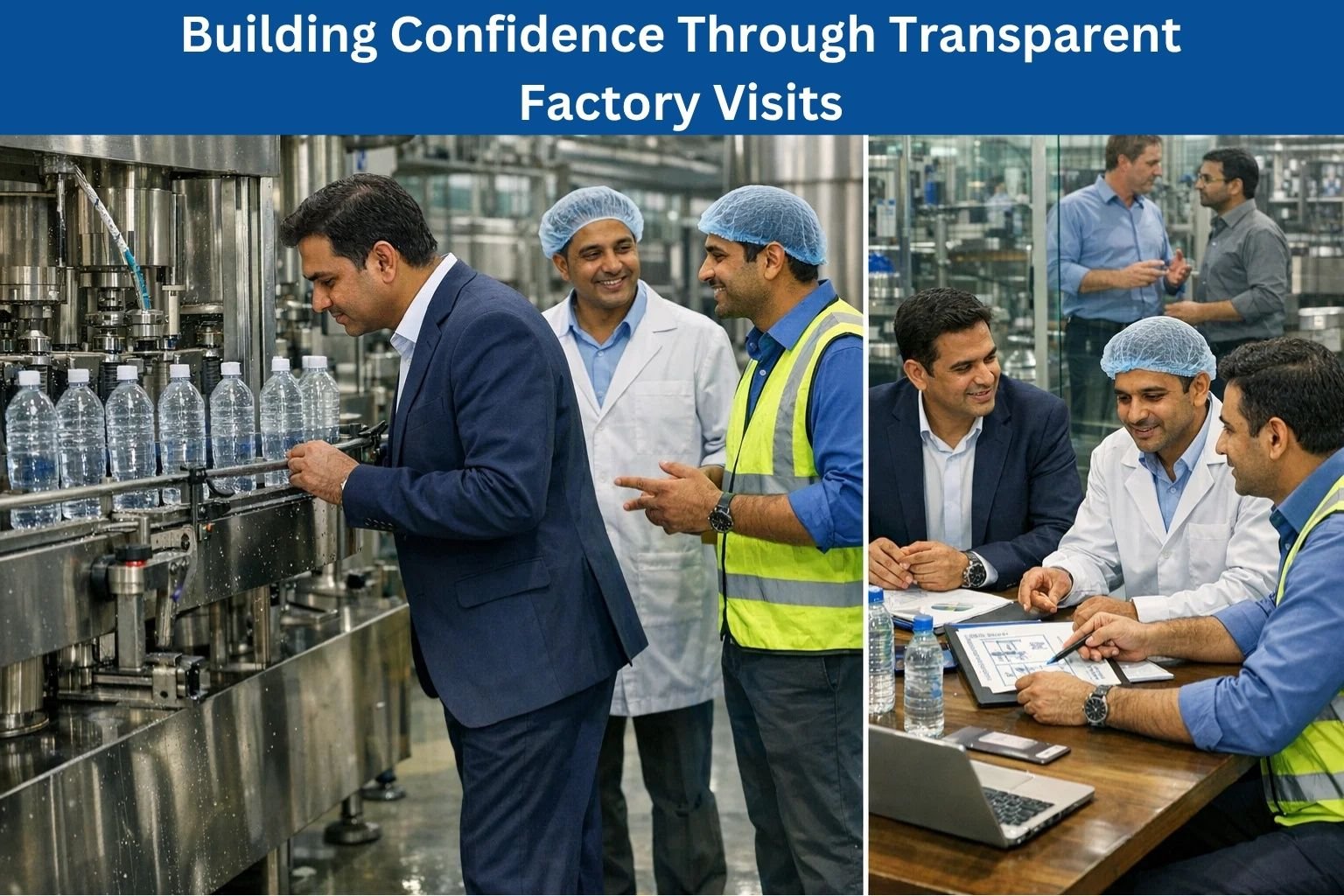
DTPPL supported and encouraged Sawant’s two factory visits to Surat as an active part of the decision-making process, not as a formality. The visits gave him direct access to the manufacturing environment, the quality of machinery in production, and the professionalism of the team he would be working with long after the sale. A manufacturer willing to invest in an extended, multi-visit relationship with a prospective client who has not yet committed is a manufacturer confident in what it is selling.
Full Mineral Water Business Feasibility Modelling
One of the most significant services DTPPL provided was a detailed profit and loss analysis tailored to Sawant’s specific market context in Ratnagiri. This included projected revenue based on realistic production output, cost modelling across machinery, packaging, labour, and utilities, and a break-even timeline built on local market pricing data. This was not a generic document — it was a business case constructed for his geography, his budget, and his production ambitions.
A Formal Mineral Water Machine’s Post-Sale Support Commitment
At the time of purchase, DTPPL made a formal commitment to continuing the same quality of support it had provided throughout the pre-sale process. For Sawant, this was not a minor detail — it was a determining factor. The promise of ongoing technical assistance, installation support, and responsive service infrastructure directly addresses the greatest operational risk for a plant owner far from the manufacturer’s base. DTPPL’s active installation footprint across India and internationally supports the credibility of that promise.
Read Our Article
Why Our Mineral Water Plant Quality is Better Than the Competition
Results and Outcomes: The Measure of a Good Decision
At the time this article was written, Sawant had just completed his purchase and was present at the DTPPL facility to oversee the loading of his plant onto transport vehicles — a moment that marks the beginning of a new chapter in both his professional life and the clean water landscape of his home district.
The outcomes at this stage are qualitative but meaningful. Six months of rigorous due diligence concluded with a purchase decision made with full information and high confidence. Sawant’s own words capture the moment clearly: he arrived at the factory feeling certain the machinery would perform, and left with a clear understanding of the support structure available to him going forward.
From a business readiness standpoint, Sawant enters the operational phase better prepared than the vast majority of first-time plant owners. He carries a financial model, a technical understanding of his equipment, an established relationship with the DTPPL team, and a manufacturer’s commitment to his long-term success. These are the inputs that separate ventures that scale from those that stall in their first year.
WhatsApp
Why DTPPL: A Business Ecosystem, Not a Transaction
The mineral water and beverage plant manufacturing market in India is not short of vendors. What it is short of is partners — manufacturers willing to invest in a client’s success before, during, and after the sale. DTPPL has built its business model around exactly this distinction, and the Sawant case study illustrates the approach in concrete, verifiable terms.
Several structural factors underpin DTPPL’s position as a category leader:
- ISO 9001:2015 certification ensuring consistent quality management across all production lines and client interactions
- A 25,000 sq. ft. state-of-the-art manufacturing facility in Surat with in-house R&D capability for continuous product improvement
- A product portfolio spanning mineral water plants, carbonated soft drink lines, juice processing systems, blow moulding machines, labelling machines, and jar washing equipment
- Active installations across 20+ countries, with operational capacity to manage 25+ domestic and 10+ international projects simultaneously
- A senior advisory team with the expertise to function as genuine business consultants, not just sales representatives
For entrepreneurs who have spoken to multiple manufacturers and found the interactions transactional and thin on substance, the DTPPL experience — as Sawant’s six-month account makes clear — is a measurably different proposition.
OUR OTHER PRODUCT
Global Vision in Mineral Water Business: From Ratnagiri to the World
Advocate Nitin Sawant’s mineral water plant will serve a coastal Maharashtra district. The model that produced his success, however, is the same model DTPPL is deploying in markets far beyond India’s borders — and far beyond India’s challenges.
In Sub-Saharan Africa, where access to safe drinking water remains a critical public health issue, DTPPL’s turnkey plant solutions are enabling local entrepreneurs to build packaged water businesses that serve populations previously dependent on unsafe sources. In Southeast Asia, where the bottled water market is growing faster than almost any other food and beverage category, DTPPL’s high-output, energy-efficient plants are becoming regional production backbones. In South America, where regulatory frameworks for packaged water are tightening and consumer expectations are rising, DTPPL’s compliance-ready systems are helping manufacturers meet certification requirements without costly retrofits.
The common thread across all of these markets is the same one that brought Sawant from Ratnagiri to Surat twice: the belief that choosing the right manufacturing partner is the single most consequential decision a beverage entrepreneur will make. DTPPL’s global vision — targeting a turnover of Rs. 2,000 crore by 2035 — is built on the conviction that this belief, once experienced, creates clients for life.
 Email Us Today!
From Doubt to Decision of Mineral Water Business: Your Turn
Advocate Nitin Sawant walked into the mineral water industry as a complete outsider. He had no technical knowledge, no industry relationships, and no guarantee that his investment would pay off. What he had was the discipline to research thoroughly, the conviction to travel 600 kilometres twice in pursuit of the right answer, and the wisdom to recognise genuine expertise when he encountered it.
Six months later, he stood at a factory in Surat watching his mineral water plant being loaded, confident in both the machinery and the people behind it. That confidence was not manufactured by a sales pitch. It was earned through transparency, detailed business modelling, competitive honesty, and a demonstrated commitment to long-term partnership.
If you are an entrepreneur considering entry into the mineral water, carbonated soft drink, or juice manufacturing space — in India or internationally — the question is not whether the market opportunity is real. It is. The question is whether you are building your venture on a foundation that will hold when the market tests it.
DTPPL has guided hundreds of entrepreneurs through exactly the journey that Sawant has just begun. Their technical team is available, their factory is open for visits, and their business advisory process is ready to work for you. Reach out, ask the hard questions, and take the first step toward building a water business built to last.
Mineral Water Plant
Capacity: 500 LPH to 50,000 LPH
(USD 27,500 to USD 16,49,000)
FAQs About Mineral Water & Soft Drink Plant Setup
What factors should be considered when choosing a mineral water plant manufacturer?
Choosing a mineral water plant manufacturer with strong technical expertise, transparent guidance, and reliable after-sales support helps ensure long-term business success.
What support does DTPPL provide to first-time mineral water business entrepreneurs?
DTPPL assists with plant design, machinery selection, business modelling, installation, and ongoing technical support.
What is the market opportunity for packaged drinking water in India?
India’s packaged water industry is valued at over ₹30,000 crore and continues to grow due to rising health awareness and demand for safe drinking water.
How does DTPPL help clients evaluate their investment?
The company provides detailed profit and loss projections, cost analysis, and production feasibility studies to support informed decisions.
Does DTPPL supply beverage plants internationally?
Yes, DTPPL exports and installs mineral water and beverage plants in 20+ countries worldwide.
Our associates









































About Author
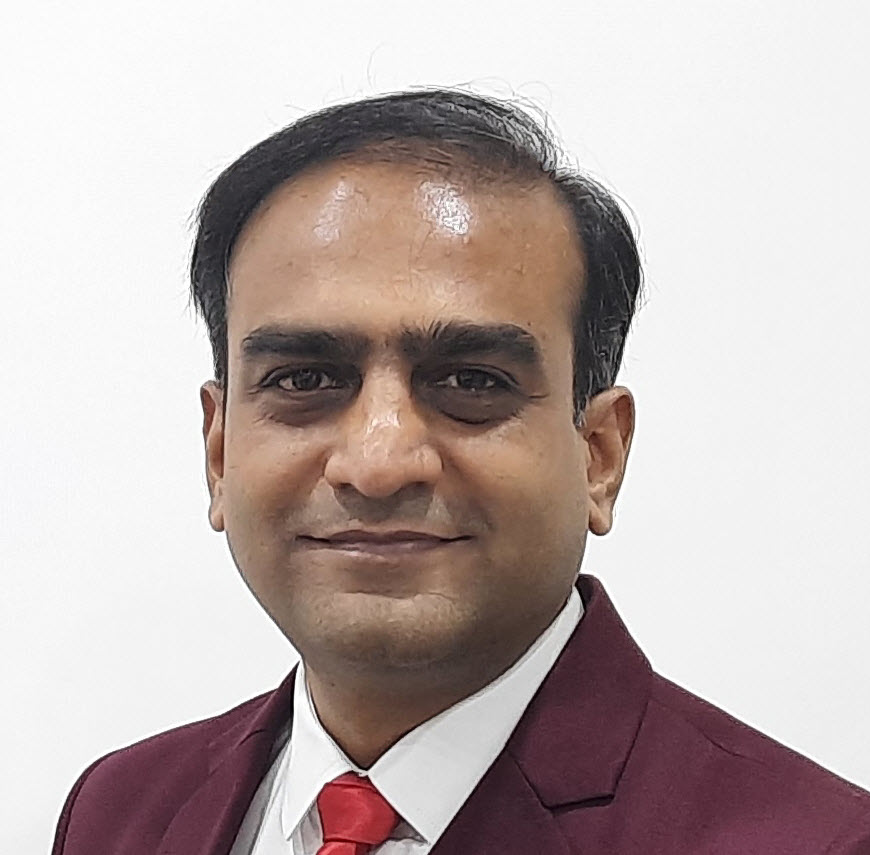
Director – Global Marketing and Sales
Mr. Bhavesh from Dharmanandan Techno Projects Pvt. Ltd. has played a pivotal role in elevating the DTPPL brand to the global stage, leveraging his exceptional expertise in marketing and communications. He is committed to helping clients achieve significant growth while strengthening their own brands. Dharmanandan Techno Projects Pvt. Ltd. is a leading manufacturer and supplier of water purification systems and turnkey solutions for mineral water plants. With years of experience in designing and delivering high-quality water treatment solutions, the company provides end-to-end services, including system design, installation, maintenance, and ongoing support. Specializing in scalable and customizable water plants, DTPPL has successfully served industries worldwide, ensuring clean and safe drinking water across diverse applications.