



Listening Article
Table of Contents
Reverse Osmosis Terminology FAQs: RO Water Purification
August 21, 2026
AI Summary
Water purification has become a necessity across Indian households, offices, and industrial facilities, and Reverse Osmosis remains one of the most widely trusted technologies available. Many buyers encounter unfamiliar terms such as membrane pore size, contaminant rejection rate, or brine discharge, and struggle to find clear, factual explanations. This FAQ style guide answers the questions people most often ask about RO systems, structured for quick scanning and easy reference. Manufacturers such as DTPPL build reverse osmosis plants and treatment equipment for drinking water, mineral water, and industrial applications, and a solid grasp of these fundamentals helps buyers specify the right system for their needs.
Understanding Reverse Osmosis Basics
What is Reverse Osmosis (RO)?
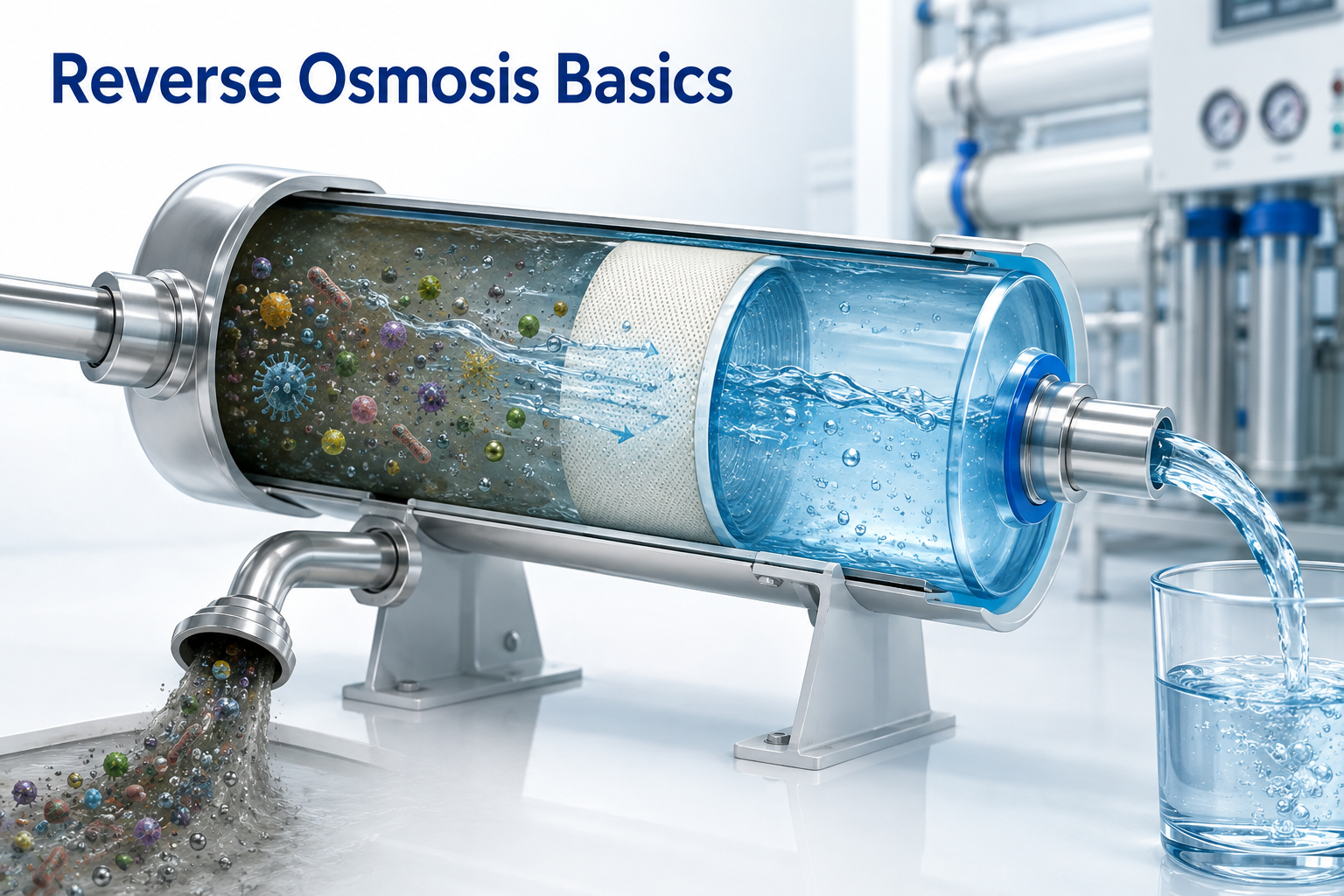
Reverse Osmosis is a highly effective water purification technology that removes contaminants by forcing water through a semipermeable membrane under pressure. The membrane allows water molecules to pass while blocking dissolved salts, heavy metals, and microorganisms, producing purified water on one side and a concentrated reject stream on the other.
How does Reverse Osmosis work?
The complete process involves several coordinated stages: pre filtration to remove larger particles and chlorine, pressure driven membrane filtration to separate dissolved contaminants, contaminant rejection where impurities are carried away in a waste stream, post filtration to polish the taste of the purified water, and wastewater drainage to discharge the concentrated reject.
The RO Purification Process Explained
What happens during the pre filtration stage of an RO system?
Water first passes through sediment and carbon filters that remove dirt, chlorine, and substances responsible for bad tastes and odors, protecting the delicate RO membrane downstream from premature fouling.
What is the pore size of an RO membrane?
An RO membrane has a pore size of around 0.0001 microns, a scale fine enough to block dissolved salts, heavy metals, and even many viruses while still allowing water molecules to pass through.
How does the RO membrane remove contaminants?
High pressure forces water through the microscopic semipermeable membrane, which physically blocks contaminants that are larger than water molecules, allowing only purified water to pass to the clean side of the system.
Client Review
“DTPPL provided excellent guidance in selecting the right RO water purification system for our requirement. Their technical team explained every stage of filtration, membrane technology, and water quality parameters clearly. The plant performance has been consistent and reliable.”
– Rajesh Patel
How effective is an RO membrane at removing contaminants?
A properly functioning RO membrane blocks up to 99 percent of dissolved solids, heavy metals, and bacteria, making it one of the most thorough purification methods available for both residential and industrial water treatment.
What happens after water passes through the RO membrane?
Purified water flows into a storage tank and then passes through a final carbon filter immediately before it reaches the tap, which further refines taste and clarity just before use.
What happens to the contaminants rejected by an RO system?
The contaminants and impurities rejected by the membrane are washed away down the drain as brine, a concentrated waste stream that carries the dissolved solids and other impurities out of the system.
Contaminants Removed by RO Systems
What heavy metals can RO systems remove?
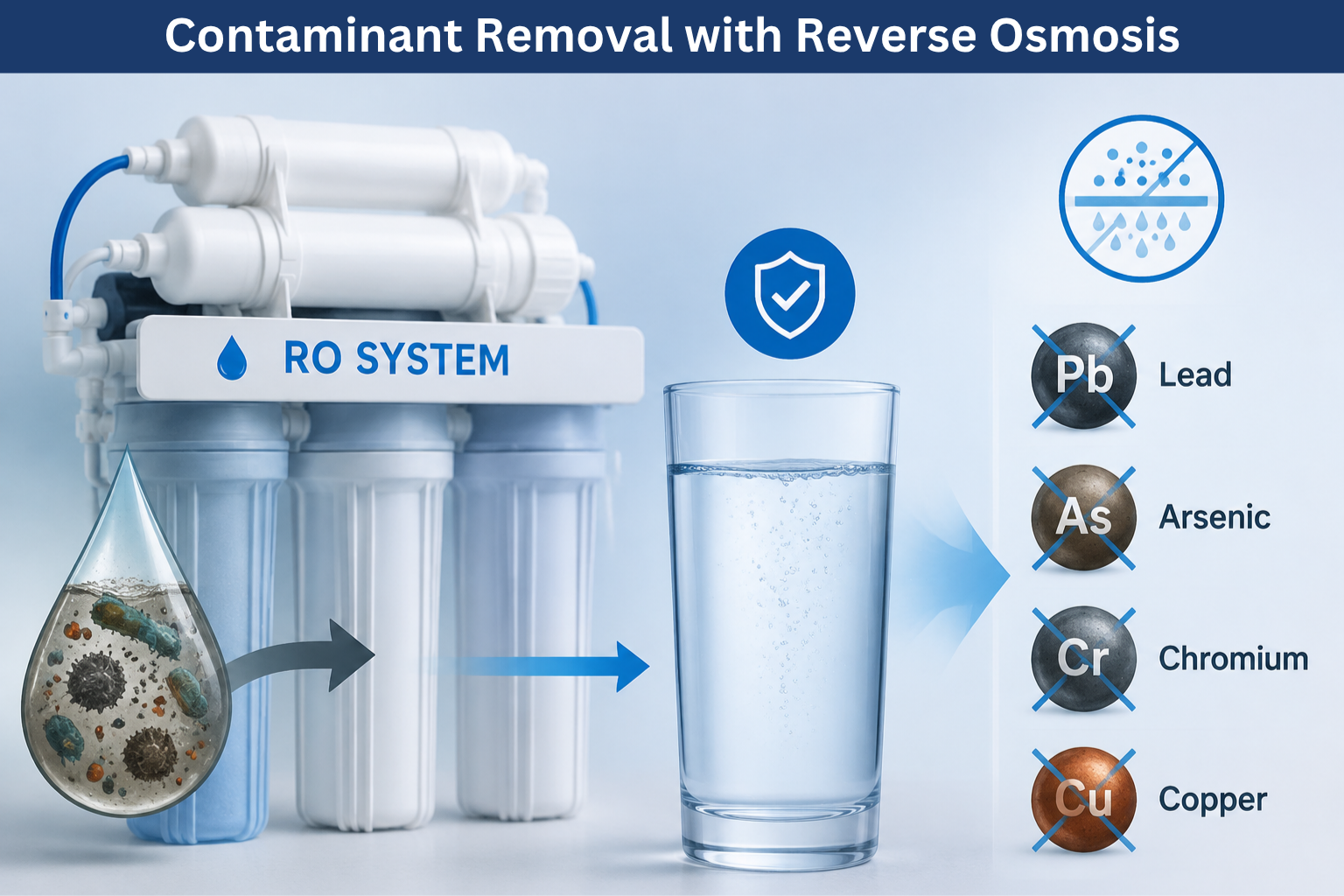
RO systems are effective at removing heavy metals including lead, arsenic, chromium, and copper, which are otherwise difficult to eliminate through conventional filtration alone.
What dissolved salts can RO systems remove?
RO systems remove a wide range of dissolved salts, including sodium, chloride, sulfates, and calcium, which contribute to high total dissolved solids readings in untreated water.
What chemicals can RO systems remove?
Common chemical contaminants removed by RO systems include fluoride, chlorine, pesticides, and industrial solvents, many of which enter water supplies through agricultural runoff or municipal treatment processes.
 Email !
What microorganisms can RO systems remove?
RO membranes are capable of removing microorganisms such as Cryptosporidium, Giardia, bacteria, and viruses, offering an added layer of biological safety beyond standard filtration.
What emerging pollutants can RO systems remove?
Reverse Osmosis technology also addresses emerging pollutants such as microplastics and PFAS, often referred to as forever chemicals, which have become a growing concern in water quality discussions worldwide.
Contaminant Categories Removed by RO Systems
| Category | Examples | Typical Source |
| Heavy Metals | Lead, arsenic, chromium, copper | Corroded pipes, industrial discharge |
| Dissolved Salts | Sodium, chloride, sulfates, calcium | Groundwater, geological minerals |
| Chemicals | Fluoride, chlorine, pesticides, solvents | Agricultural runoff, municipal treatment |
| Microorganisms | Cryptosporidium, Giardia, bacteria, viruses | Contaminated surface water sources |
| Emerging Pollutants | Microplastics, PFAS | Packaging waste, industrial byproducts |
Advantages and Limitations of Reverse Osmosis
What is a major advantage of Reverse Osmosis?
The major advantage of Reverse Osmosis is its exceptional purification power, consistently removing a broad spectrum of dissolved solids, chemicals, and microorganisms that many other treatment methods cannot fully address.
Does Reverse Osmosis improve water taste and clarity?
Yes, Reverse Osmosis significantly improves water taste and clarity by eliminating dissolved salts, chlorine, and other substances responsible for off flavors and cloudiness.
Is Reverse Osmosis cost effective compared with buying bottled water?
Yes, Reverse Osmosis is cost effective compared to buying bottled water, since a household or facility RO system produces purified water on demand at a fraction of the ongoing cost of bottled alternatives.
What is a disadvantage of Reverse Osmosis related to water usage?
A notable disadvantage is that RO generates wastewater during the filtration process, since a portion of the input water is used to carry rejected contaminants away as brine rather than being converted into purified output.
 Call Now
Does Reverse Osmosis remove beneficial minerals?
Yes, Reverse Osmosis removes beneficial minerals such as calcium and magnesium along with harmful contaminants, which is why some systems include a remineralization stage to restore a portion of these minerals after filtration.
How does Reverse Osmosis affect water pH?
Reverse Osmosis tends to lower water pH, making the purified water slightly acidic, since the mineral content that helps buffer pH is largely removed during the filtration process.
Types of RO Systems
What are the main types of RO systems?
The three main types of RO systems are under sink systems, countertop systems, and whole house systems, each designed for a different scale of use and installation requirement.
What is an under sink RO system?
An under sink RO system connects directly to household plumbing and uses a dedicated faucet along with a storage tank, making it a popular choice for kitchens that need a steady supply of purified drinking water.
What is a countertop RO system?
A countertop RO system is a plug and play unit that requires zero installation, making it ideal for renters or anyone who wants purified water without modifying existing plumbing.
What is a whole house RO system?
A whole house RO system is a large scale setup that purifies water at the main entry point of a home or facility, ensuring that every tap, including those used for bathing and laundry, receives treated water.
Comparing RO System Types
| System Type | Installation | Best Suited For |
| Under Sink System | Connects to kitchen plumbing with dedicated faucet | Homes needing dedicated drinking water point |
| Countertop System | Plug and play, no installation required | Renters and temporary or shared housing |
| Whole House System | Installed at main water entry point | Facilities needing treated water at every outlet |
How a Reverse Osmosis System Works: Step by Step
The following steps outline the complete purification sequence inside a typical RO system, from raw water intake to purified output at the tap.
- Pre filtration: raw water passes through sediment and carbon filters that remove dirt, chlorine, and substances causing bad taste or odor.
- Pressure application: a pump increases water pressure so it can be driven through the extremely fine semipermeable membrane.
- Membrane filtration: water passes through the membrane while dissolved solids, heavy metals, chemicals, and microorganisms are blocked.
- Contaminant rejection: blocked impurities are carried away as a concentrated brine stream and discharged to the drain.
- Storage and post filtration: purified water collects in a storage tank and passes through a final carbon filter for taste refinement before reaching the tap.
Regional Water Quality Snapshot
Water hardness and total dissolved solids vary widely across Indian regions, which is part of why RO adoption differs by state. The table below offers a general reference based on commonly reported groundwater characteristics.
| Region | Common Water Quality Concern | Relevance to RO |
| Western India (e.g. Gujarat, Maharashtra) | High TDS, industrial contamination in pockets | RO widely used for both drinking and industrial process water |
| Northern India (e.g. Uttar Pradesh, Haryana) | Fluoride and geogenic contamination | RO effective for fluoride and heavy metal removal |
| Southern India (e.g. Karnataka, Telangana) | Hardness and salinity in groundwater | RO reduces hardness causing salts effectively |
| Eastern India (e.g. West Bengal, Jharkhand) | Arsenic in groundwater in certain belts | RO membranes address arsenic removal reliably |
Conclusion
Reverse Osmosis remains one of the most dependable water purification technologies available, capable of addressing dissolved salts, heavy metals, chemicals, microorganisms, and emerging pollutants in a single integrated process. Understanding the terminology behind membrane pore size, contaminant rejection, and system types helps buyers choose a solution suited to their household, office, or industrial requirement. DTPPL manufactures reverse osmosis plants and related purification equipment for drinking water, packaged water, and industrial applications, supporting buyers across India who need reliable, research backed purification systems.
Our associates







































Director – Global Marketing and Sales
Mr. Bhavesh from Dharmanandan Techno Projects Pvt. Ltd. has played a pivotal role in elevating the DTPPL brand to the global stage, leveraging his exceptional expertise in marketing and communications. He is committed to helping clients achieve significant growth while strengthening their own brands. Dharmanandan Techno Projects Pvt. Ltd. is a leading manufacturer and supplier of water purification systems and turnkey solutions for mineral water plants. With years of experience in designing and delivering high-quality water treatment solutions, the company provides end-to-end services, including system design, installation, maintenance, and ongoing support. Specializing in scalable and customizable water plants, DTPPL has successfully served industries worldwide, ensuring clean and safe drinking water across diverse applications.