



Listening Article
Table of Contents
Propak West Africa 2026 Lagos, Nigeria: A Global Gateway to Packaging, Food Processing, Plastics, Labelling and Print Growth
July 24, 2026
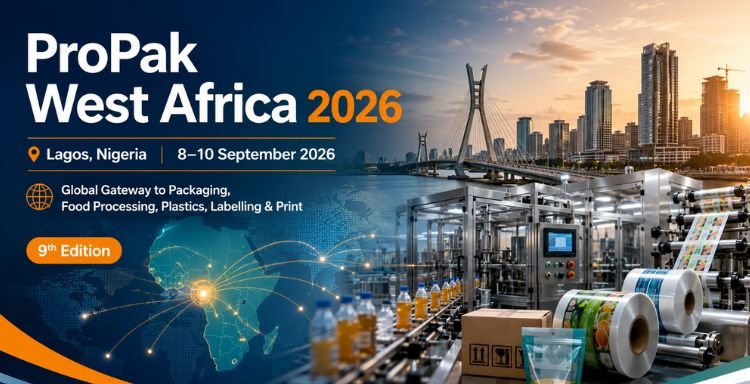
Event: Propak West Africa – 9th Edition
Dates: Tuesday, 08 September – Thursday, 10 September 2026
Location: Lagos, Nigeria
Focus Areas: Tradeshow | Packing & Packaging | Circular Economy
AI Summary
Propak West Africa 2026, now in its 9th edition, is set to take place in Lagos, Nigeria, from 8–10 September 2026. Billed as the largest packaging, food processing, plastics, labelling and print exhibition in West Africa, the event brings together manufacturers, machinery suppliers, packaging converters, food and beverage processors, and circular economy innovators from across the region and beyond. For Dharmanandan Techno Projects Pvt. Ltd. (DTPPL) – a manufacturer of mineral water plants, carbonated soft drink (CSD) plants, juice plants, and packaging machinery – this exhibition sits squarely at the intersection of everything the company builds. West Africa’s packaged drinking water and beverage sector is expanding rapidly on the back of urbanization, water scarcity concerns, and rising consumer demand for safe, packaged beverages. This article examines the exhibition’s significance for water treatment and beverage packaging manufacturers, the global demand drivers pulling investment toward West Africa’s bottling and processing sector, country-specific trends and opportunities across Africa, Asia, Europe, and the Americas, and why turnkey water treatment and packaging solutions are becoming central to international trade at events like this one.
Why Propak West Africa Matters for Water Treatment & Beverage Packaging Manufacturers
For nine editions now, Propak West Africa has grown from a regional trade gathering into a genuine barometer of packaging and processing demand across the continent. Lagos, Nigeria – Africa’s largest city and one of its most dynamic commercial hubs – provides the ideal backdrop. Nigeria alone represents a market of over 220 million people, a rapidly expanding middle class, and persistent gaps in municipal water infrastructure that have made packaged drinking water one of the fastest-growing consumer categories on the continent. That same population growth is driving parallel demand for carbonated soft drinks, juices, and other packaged beverages – precisely the segments where DTPPL has built its manufacturing expertise.
What makes Propak West Africa particularly compelling from DTPPL’s perspective is its positioning at the intersection of four converging industries: packaging, food processing, plastics, and labelling/print – with water treatment and beverage bottling running as a common thread through nearly all of them. Few exhibitions bring these verticals together under one roof, and fewer still do so in a region where demand for reliable, affordable mineral water plants, CSD lines, juice plants, and packaging machinery is outpacing local supply capacity. Established manufacturers – from Indian water treatment specialists to European machinery builders and Asian plastics producers – increasingly view West Africa not as a peripheral market, but as a frontier market with strong, sustained growth potential.
The inclusion of “Circular Economy” as a headline theme for the 2026 edition is also significant for a water and beverage plant manufacturer like DTPPL. It signals that West Africa’s bottling and packaging industry is not simply chasing volume growth, but is being shaped, from the outset, by sustainability expectations around water resource management, recyclable PET and packaging materials, and energy-efficient plant design – expectations that mirror those already reshaping the industry in India, the EU, and other mature markets DTPPL already serves.
Global Demand Drivers Behind West Africa’s Water Treatment & Beverage Packaging Boom
Several macro trends are converging to make West Africa – and Nigeria in particular – an increasingly attractive destination for water treatment plants, beverage bottling lines, and packaging machinery investment:
- Water Scarcity and Trust Gaps in Municipal Supply: Inconsistent municipal water infrastructure across much of West Africa has made packaged and sachet drinking water a daily necessity rather than a luxury, fueling sustained demand for mineral water plant capacity.
- Urbanization and Rising Consumption: West Africa’s urban population is expanding faster than almost any other region globally, driving demand for packaged water, carbonated soft drinks, juices, and other consumer beverages.
- Local Manufacturing Push: Governments across the region are prioritizing local beverage and food processing capacity to reduce import dependence, creating strong demand for turnkey water treatment, CSD, and juice plant installations rather than imported finished goods.
- Retail Formalization and Brand Growth: As modern retail and regional beverage brands expand across West Africa, demand for standardized, export-grade bottling and packaging machinery is rising sharply.
- Regulatory Push Toward Sustainable Packaging: Plastic waste regulation, extended producer responsibility (EPR) frameworks, and circular economy policies are beginning to influence procurement decisions in the bottling sector, mirroring global regulatory trends already familiar to DTPPL’s international client base.
- Export Market Access: Compliance with international quality, labelling, and traceability standards is increasingly a prerequisite for African beverage producers seeking to export to the EU, US, Middle East, and Asian markets.
These drivers collectively explain why Propak West Africa functions as more than a trade show – it is a strategic node connecting proven water treatment and packaging machinery manufacturers like Dharmanandan Techno Projects Pvt. Ltd (DTPPL) with an emerging, high-growth demand base of bottlers, food processors, and beverage entrepreneurs.
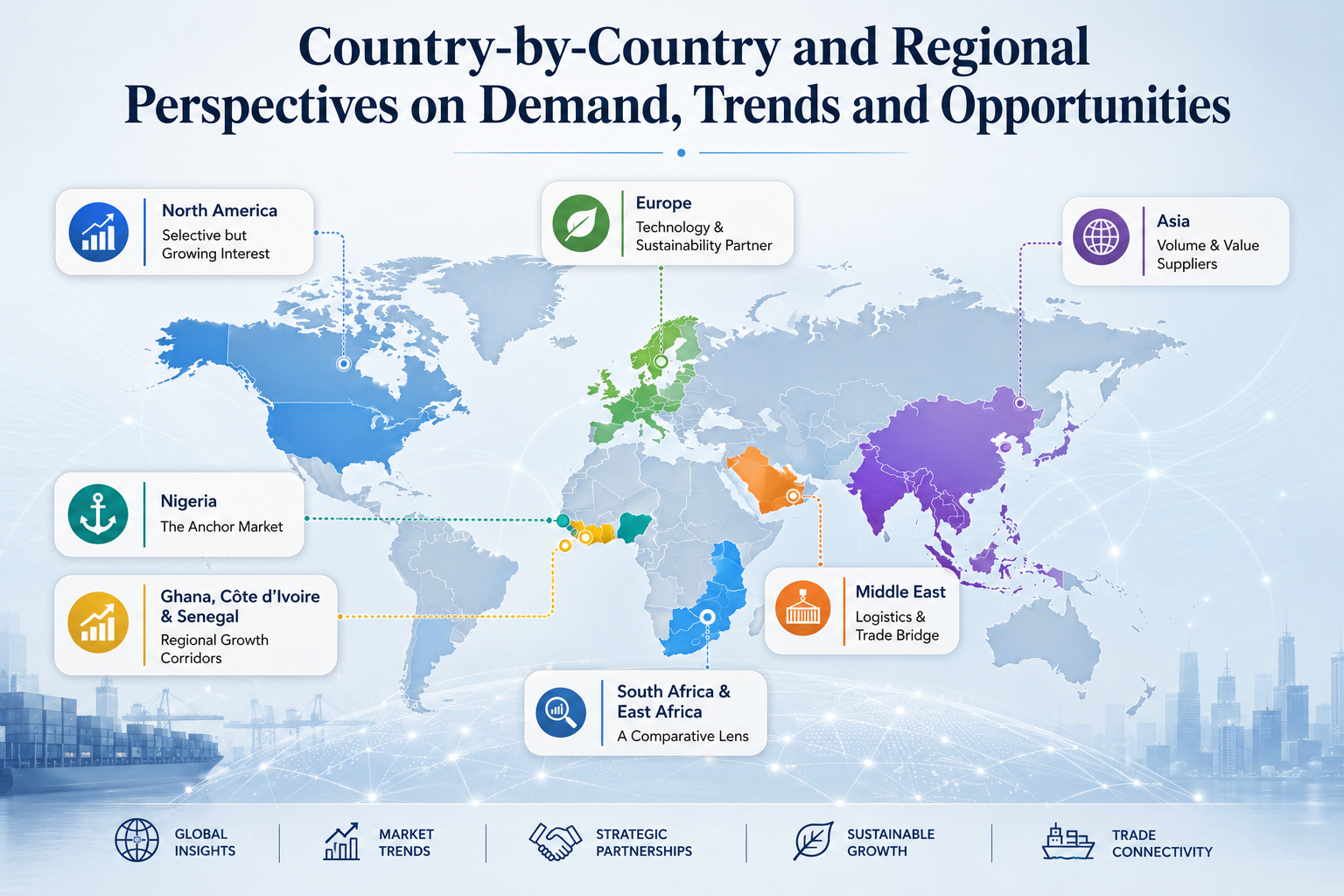
Country-by-Country and Regional Perspectives on Demand, Trends and Opportunities
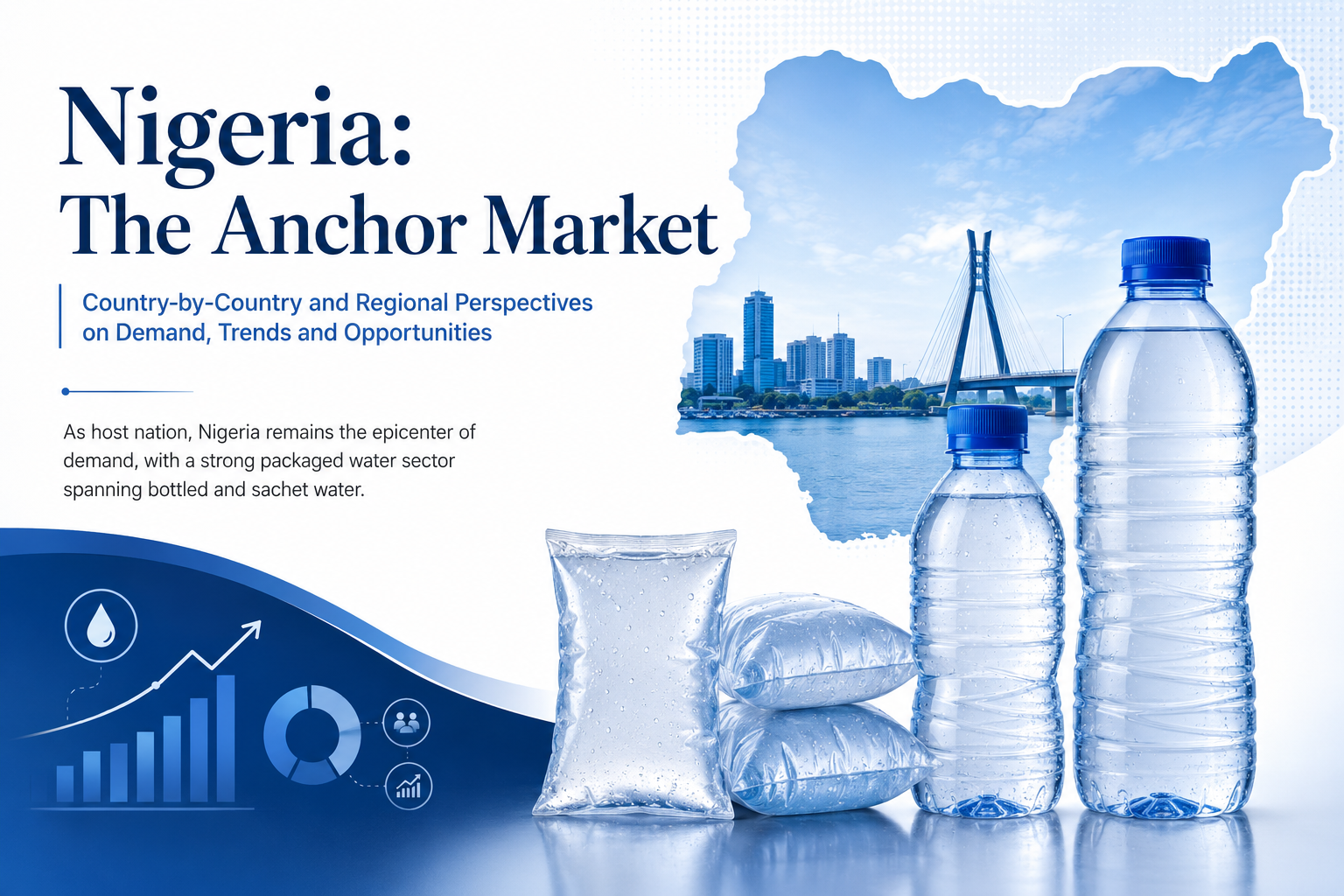
Nigeria: The Anchor Market
As host nation, Nigeria remains the epicenter of demand. Its packaged water sector – spanning bottled and sachet water – is one of the largest informal-to-formal industries in the country, alongside a fast-growing carbonated soft drinks and juice market. Local bottlers and entrepreneurs are actively seeking dependable, cost-efficient mineral water plants, CSD lines, and packaging machinery to meet both domestic quality expectations and export requirements – a gap that established manufacturers like DTPPL are well positioned to fill.
Ghana, Côte d’Ivoire, and Senegal: Regional Growth Corridors
These economies are emerging as secondary growth hubs within West Africa, particularly in packaged water, juice processing (leveraging strong local fruit supply chains), and consumer packaged beverages. Investment in reliable water treatment infrastructure and export-compliant bottling lines is a growing priority as these countries build formal beverage industries alongside their traditional agro-export base.
South Africa and East Africa: A Comparative Lens
While not the direct host region, South Africa and East African markets (Kenya, Tanzania) offer a useful comparative benchmark – both have more mature packaging and plastics recycling ecosystems. West African markets are increasingly looking to these regions, as well as to international best practice, as they build out their own circular economy infrastructure.
Europe: Technology and Sustainability Partner
European machinery manufacturers, particularly from Germany, Italy, and the UK, have long supplied high-precision packaging and processing equipment to African markets. With the EU’s Packaging and Packaging Waste Regulation (PPWR) tightening sustainability requirements at home, many European suppliers are now exporting not just machinery, but recyclable and compostable material technologies to West Africa – turning the region into an early adopter market for circular packaging solutions developed in Europe.
Client Review
“We are highly satisfied with the complete processing and packaging solutions provided by DTPPL. Our Mineral Water Plant, Juice Plant, Beverage Plant, and Packaging Machinery have delivered reliable performance, consistent product quality, and efficient production with minimal maintenance.The DTPPL team ensured smooth installation, professional project execution, and excellent after-sales support throughout the process. Their technical expertise and commitment to quality have made them a trusted partner. We highly recommend DTPPL for reliable processing and packaging solutions.”
– Blessing Onyekachi
Asia (China, India, Southeast Asia): Volume and Value Suppliers
Asian manufacturers, especially from China and India, remain dominant suppliers of plastics, flexible packaging films, and cost-competitive processing machinery to West Africa. India, in particular, has strengthened trade ties with Nigeria and Ghana in pharmaceutical packaging and printing technology, while China continues to lead in plastics extrusion and injection molding equipment supply.
The Middle East: A Logistics and Trade Bridge
Gulf states, particularly the UAE, are increasingly positioning themselves as logistics and re-export hubs connecting Asian packaging manufacturers with African buyers, shortening lead times and easing trade financing for West African importers.
North America: Selective but Growing Interest
US and Canadian packaging technology firms have historically had a lighter footprint in West Africa compared to Europe and Asia, but growing interest in sustainable packaging innovation and food safety compliance technology is opening new opportunities for North American exhibitors and investors.
OUR OTHER PRODUCT
Circular Economy: The Common Thread Across Markets
The explicit inclusion of the circular economy as a 2026 exhibition theme reflects a broader global shift. Packaging producers worldwide – regardless of region – are being asked to reconcile three competing pressures: cost efficiency, functional performance, and environmental responsibility. In West Africa, this manifests as growing interest in:
- Recyclable and mono-material flexible packaging
- Biodegradable and compostable alternatives to conventional plastics
- Lightweighting to reduce material use and transport emissions
- Local recycling infrastructure development to close the loop domestically rather than exporting waste
For international exhibitors, this represents a genuine opportunity: West African markets are not simply importing yesterday’s packaging technology – many are leapfrogging directly into sustainable and circular solutions, creating demand for cutting-edge machinery and materials rather than legacy systems.
 Call Now
What This Means for International Exhibitors and Buyers
For companies evaluating whether to participate in or attend Propak West Africa 2026, the strategic case is strong:
- First-mover advantage in a market still being defined, with less entrenched competition than mature markets in Europe or Asia
- Direct access to regional buyers from Nigeria, Ghana, Côte d’Ivoire, Senegal, and beyond, gathered in one location over three days
- Alignment with global sustainability mandates, allowing exhibitors to introduce circular economy technologies to a receptive, growth-oriented audience
- A platform to build long-term distribution and partnership networks ahead of West Africa’s next decade of industrial expansion
Conclusion
Propak West Africa 2026 arrives at a pivotal moment for the region’s packaging, food processing, plastics, labelling, and print industries. As the 9th edition convenes in Lagos from 8–10 September 2026, it does so against a backdrop of accelerating urbanization, rising consumption, tightening export standards, and an unmistakable global pivot toward circular, sustainable packaging. What distinguishes this exhibition is not merely its scale as “the largest” of its kind in West Africa, but its role as a connective hub – linking Nigerian and West African demand with European engineering, Asian manufacturing capacity, Middle Eastern trade logistics, and emerging North American sustainability innovation.
For global stakeholders – machinery manufacturers, material suppliers, brand owners, and investors – Propak West Africa is a chance to engage early with a market that is growing quickly, diversifying its supply base, and increasingly setting its own terms around sustainability rather than simply inheriting outdated practices from more mature regions. As international trade patterns continue to shift and companies look beyond saturated markets for growth, West Africa – anchored by Nigeria – stands out as one of the more compelling frontiers in global packaging and processing over the next decade.
FAQs
When and where is Propak West Africa 2026 taking place?
Propak West Africa 2026, the 9th edition, will be held from Tuesday, 8 September to Thursday, 10 September 2026, in Lagos, Nigeria.
What industries does Propak West Africa cover?
The exhibition covers packaging, food processing, plastics, labelling, and print, along with a dedicated focus on circular economy solutions and technologies.
Who should attend or exhibit at Propak West Africa?
The event is relevant for machinery manufacturers, packaging material suppliers, food and beverage processors, FMCG brand owners, plastics producers, printing and labelling companies, recycling and sustainability solution providers, and international trade delegations seeking access to West African markets.
Why is West Africa becoming an important market for global packaging companies?
West Africa, led by Nigeria, is experiencing rapid urbanization, rising consumer demand, growing export ambitions, and increasing regulatory focus on sustainable packaging – all of which are driving strong demand for modern packaging, processing, and printing technology.
How does the circular economy theme fit into the exhibition?
The circular economy focus reflects a global shift toward recyclable, biodegradable, and resource-efficient packaging. It highlights opportunities for exhibitors offering sustainable materials, recycling technologies, and lightweight or mono-material packaging solutions suited to both local and export markets.
Which countries and regions typically engage most with Propak West Africa?
Beyond host nation Nigeria, strong regional engagement comes from Ghana, Côte d’Ivoire, and Senegal, while international participation is typically led by suppliers and buyers from Europe (Germany, Italy, UK), Asia (China, India), and increasingly the Middle East and North America.
Is Propak West Africa only relevant to companies already operating in Africa?
No. The exhibition is equally valuable for companies exploring market entry into West Africa for the first time, given the region’s growth trajectory and relatively open competitive landscape compared to more saturated global packaging markets.
Our associates





































Director – Global Marketing and Sales
Mr. Bhavesh from Dharmanandan Techno Projects Pvt. Ltd. has played a pivotal role in elevating the DTPPL brand to the global stage, leveraging his exceptional expertise in marketing and communications. He is committed to helping clients achieve significant growth while strengthening their own brands. Dharmanandan Techno Projects Pvt. Ltd. is a leading manufacturer and supplier of water purification systems and turnkey solutions for mineral water plants. With years of experience in designing and delivering high-quality water treatment solutions, the company provides end-to-end services, including system design, installation, maintenance, and ongoing support. Specializing in scalable and customizable water plants, DTPPL has successfully served industries worldwide, ensuring clean and safe drinking water across diverse applications.