



Listening Article
Table of Contents
Demand of
Commercial RO Plant
March 18, 2026
FOR INDIAN CITIES
A Comprehensive Industry Analysis of Reverse Osmosis Water Treatment Technology
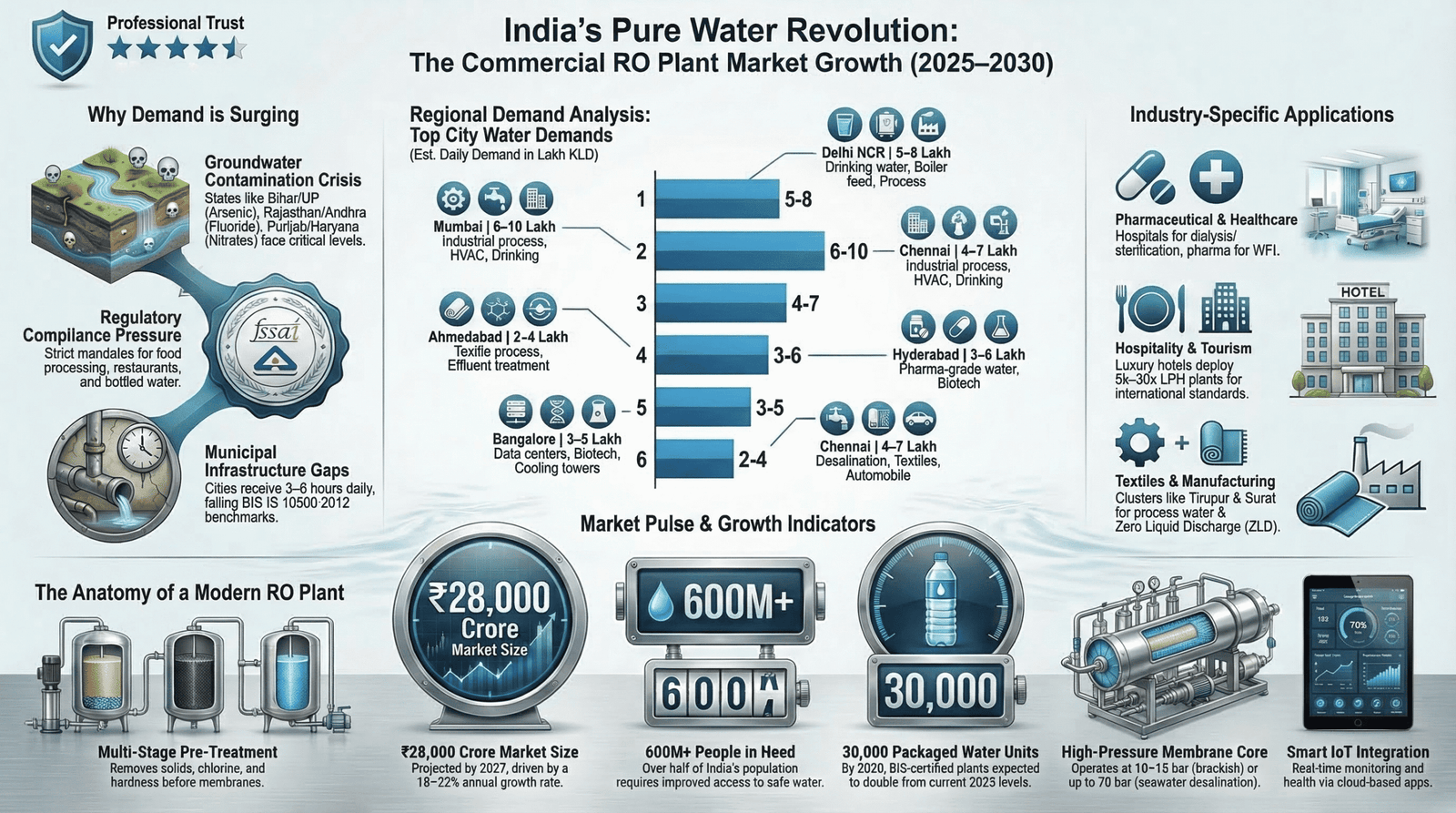
₹28,000 Cr Market Size by 2027 | 18-22% Annual Growth Rate | 600M+ Indians Needing Safe Water | 5,000+ Commercial Plants Installed |
Introduction: India’s Water Crisis and the Rise of Commercial RO Plants
India is home to nearly 1.4 billion people, yet safe and potable water remains an elusive commodity for hundreds of millions. Rapid urbanisation, industrial expansion, groundwater depletion, and deteriorating municipal supply infrastructure have collectively created an unprecedented demand for advanced commercial water purification systems. At the forefront of this transformation stands the Commercial Reverse Osmosis (RO) Plant – a scalable, high-efficiency water treatment solution that is fast becoming indispensable across Indian cities, industries, hospitals, educational institutions, and hospitality establishments.
A commercial RO plant is an industrial-grade water treatment system that uses semi-permeable membranes to remove dissolved salts, heavy metals, bacteria, viruses, Total Dissolved Solids (TDS), and other contaminants from feed water. Unlike domestic RO purifiers, commercial RO systems are designed for high-volume water processing – typically ranging from 500 LPH (litres per hour) to 50,000 LPH or more – making them ideal for bulk water purification requirements in business, industry, and public infrastructure.
What is a Commercial RO Plant?
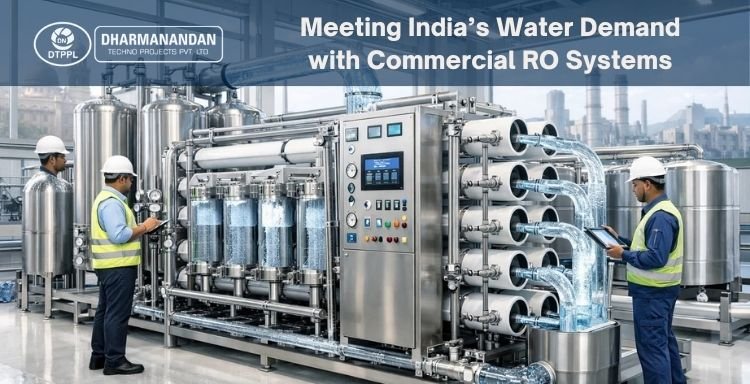
A Commercial RO Plant (Commercial Reverse Osmosis Plant) is a large-capacity water purification system using semi-permeable membranes under high pressure to produce high-purity water. These systems include pre-treatment filters (sand filter, activated carbon filter, antiscalant dosing), high-pressure pumps, RO membrane modules, post-treatment (UV sterilisation, remineralisation), and storage systems. Commercial RO plants are engineered for continuous operation, making them ideal for industries, institutions, and municipalities requiring purified water at scale.
 WhatsApp
The Surge in Demand: Key Factors Driving Commercial RO Plant Adoption
Groundwater Contamination Across Indian States
India’s Central Ground Water Board (CGWB) has reported alarming levels of contamination in groundwater sources across multiple states. Arsenic contamination plagues the Indo-Gangetic plains in West Bengal, Bihar, and Uttar Pradesh. Fluoride poisoning is rampant in Rajasthan, Telangana, and Andhra Pradesh. Nitrate excess from agricultural runoff contaminates aquifers in Punjab, Haryana, and Maharashtra. High TDS levels in water sources in Rajasthan, Gujarat, and Tamil Nadu render groundwater unfit for direct consumption. These conditions have made the installation of commercial RO systems not just preferable but mandatory for public health.
Failure of Municipal Water Supply Infrastructure
Urban India’s municipal water supply struggles to meet the demands of its booming population. Most Indian cities receive intermittent water supply – often just 2 to 6 hours per day – with no guarantee of quality. Water treatment plants operated by urban local bodies are often outdated, under-funded, or operating beyond capacity. The Bureau of Indian Standards (BIS) IS 10500:2012 defines permissible limits for drinking water quality, yet municipal water frequently fails to meet these benchmarks. Commercial RO plants bridge this gap by providing on-site, reliable water purification independent of municipal supply quality.
Rapid Industrial Expansion Requiring Process Water
Modern manufacturing demands ultra-pure or application-specific water. The pharmaceutical, textile, food and beverage, and semiconductor industries require water that meets stringent purity specifications well beyond what municipal supply provides. Industrial RO plants and industrial reverse osmosis systems are critical components of process water treatment systems in these sectors. The Make in India initiative and PLI (Production Linked Incentive) schemes have accelerated industrial growth, consequently driving demand for commercial RO water treatment plants across manufacturing corridors.
BIS and FSSAI Regulatory Compliance
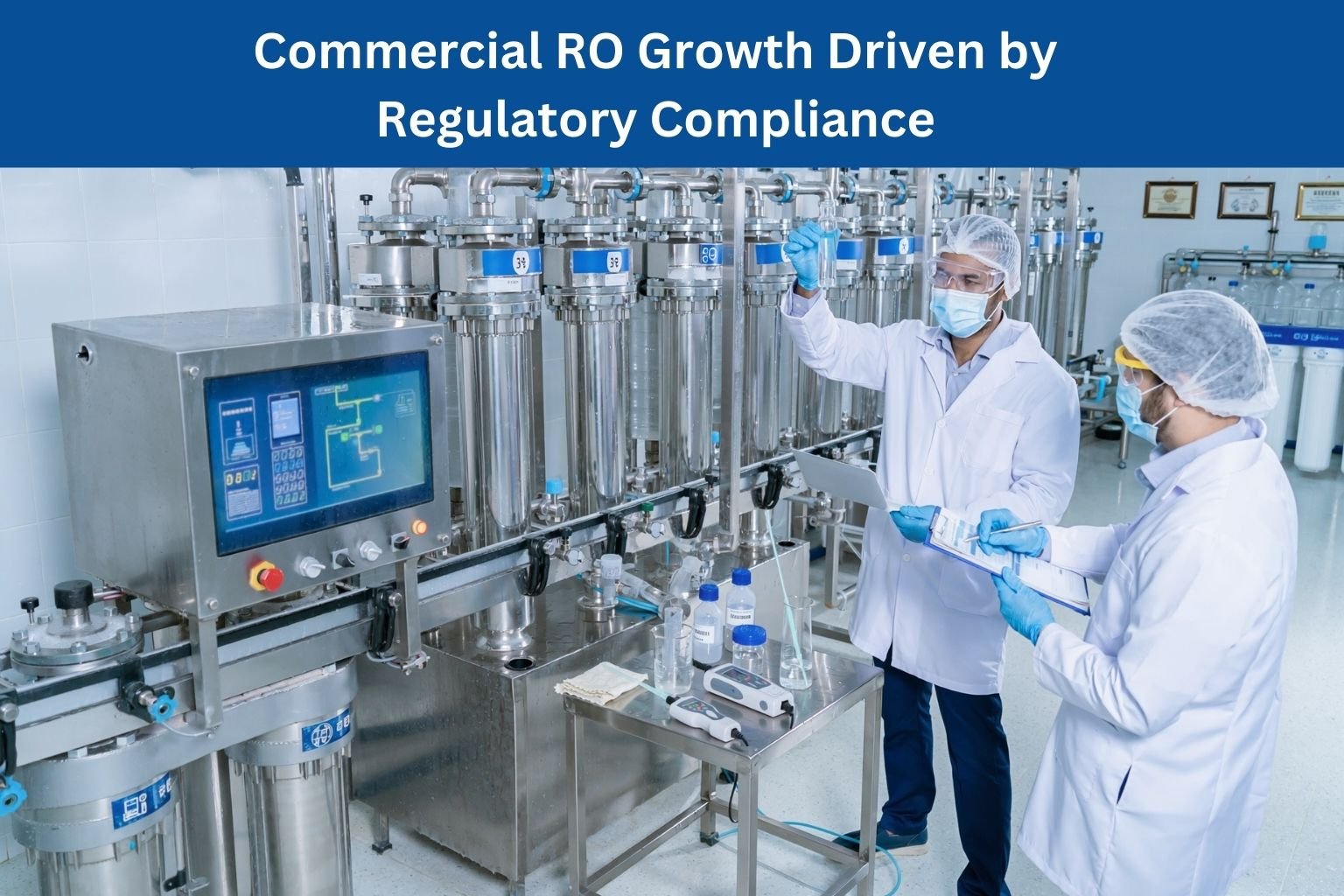
The Food Safety and Standards Authority of India (FSSAI) mandates that food processing units, packaged drinking water manufacturers, and restaurant chains maintain strict water quality standards. Similarly, the Bureau of Indian Standards (BIS) certification for packaged drinking water (IS 14543) requires compliance with specific purity parameters achievable only through RO-based purification. This regulatory pressure has significantly boosted demand for commercial RO plant installation in the F&B sector.
Growth in Hospitality, Healthcare, and Education Sectors
India’s thriving hotel industry, expanding hospital network, and the establishment of large educational campuses have created enormous demand for continuous high-quality water supply. A 200-bed hospital may require upwards of 40,000–60,000 litres of purified water daily for drinking, dialysis, sterilisation, and other medical applications. Five-star hotels and large commercial complexes require consistent water quality to meet international standards. The demand for commercial RO systems for hotels, RO plants for hospitals, and RO systems for educational institutions continues to grow at double-digit rates.
Client Review
“Excellent service and dependable system performance, Dharmanandan provided outstanding support throughout our experience. Their team is well-structured, with dedicated experts for every requirement, which made the entire process smooth and efficient. The Commercial RO Plant is delivering high-quality purified water consistently and has significantly improved our operations. I was also unfamiliar with the compliance procedures, but their team guided me step by step and handled everything professionally. Very happy with their reliable solutions and customer-friendly approach.”
– Vivaan Patel
City-by-City Analysis: Commercial RO Plant Demand Across India
The demand for commercial reverse osmosis plants varies significantly across Indian cities based on local water quality, industrial composition, population density, and economic activity. Below is a detailed analysis of key urban centres:
City / Region | Key Industries | Primary RO Application | Daily Demand (Est.) |
Delhi NCR | IT, Pharma, Food & Beverage, Hotels | Drinking water, process water, boiler feed | 5–8 Lakh KLD |
Mumbai | Finance, Pharmaceuticals, Film, Ports | Industrial process, drinking water, HVAC cooling | 6–10 Lakh KLD |
Bangalore | IT/ITES, Aerospace, Biotech | Process water, cooling towers, data centres | 3–5 Lakh KLD |
Chennai | Automobile, IT, Textiles, Ports | Desalination, process water, drinking water | 4–7 Lakh KLD |
Hyderabad | Pharma, IT, Biotech | Pharma-grade water, drinking water | 3–6 Lakh KLD |
Ahmedabad | Textiles, Chemicals, Pharma | Textile process water, effluent treatment | 2–4 Lakh KLD |
Pune | Automobile, IT, Defence | Industrial process, drinking water | 2–4 Lakh KLD |
Surat | Diamonds, Textiles, Chemicals | Industrial process, drinking water | 2–3 Lakh KLD |
Jaipur | Tourism, Marble, Handicrafts | High-TDS groundwater treatment | 1–2 Lakh KLD |
Ludhiana | Textiles, Hosiery, Bicycles | Textile process water, ETP feed | 1–2 Lakh KLD |
*KLD = Kilolitres per Day (estimated commercial RO treatment demand)
Delhi NCR – The Capital’s Urgent Need for Commercial RO Systems
Delhi is one of the most water-stressed capital cities in the world. Groundwater in many parts of the NCR – including Gurgaon, Faridabad, Noida, and Ghaziabad – is highly saline with TDS levels ranging from 1,500 to over 4,000 mg/L in certain pockets, far exceeding the BIS permissible limit of 500 mg/L. The Yamuna river, the primary surface water source, carries heavy industrial and domestic effluent load. Consequently, industries, commercial establishments, hospitals, and residential complexes across Delhi NCR are increasingly deploying high-capacity commercial RO plants ranging from 2,000 LPH to 50,000 LPH. The region has emerged as India’s largest market for commercial water purification systems and industrial RO plant manufacturers targeting large corporates and government departments.
OUR OTHER PRODUCT
Mumbai – Financial Capital’s Industrial Water Demands
Mumbai’s commercial RO plant demand is largely driven by its pharmaceutical manufacturing corridor (Navi Mumbai, Thane, Ambernath), large food and beverage processing plants, and its extensive hospitality industry. Pharma companies require ultrapure water (UPW) and Water For Injection (WFI) that necessitate multi-stage purification including RO, EDI (Electrodeionisation), and UV treatment. Mumbai’s packaged drinking water industry is also a major consumer of commercial RO plants, with dozens of BIS-certified plants operating across the metropolitan region.
Bangalore – Silicon Valley’s Data Centre and Biotech Water Needs
Bangalore’s explosive growth as India’s technology and biotech hub has created specialised demand for high-purity water systems in data centres, semiconductor fabs, and pharmaceutical research laboratories. Data centre cooling towers require softened and RO-treated water to prevent scaling and corrosion in heat exchangers. Biotech firms require water meeting ASTM Type I and Type II purity standards. The city’s reliance on groundwater – with rapidly declining water tables and increasing TDS – has made commercial RO systems standard infrastructure for every large commercial establishment. Bangalore’s commercial RO plant market is growing at an estimated 20–24% annually.
Chennai – Coastal City Embracing Desalination and RO
Chennai has been at the forefront of large-scale desalination in India, operating two major seawater reverse osmosis (SWRO) desalination plants at Minjur and Nemmeli. This infrastructure experience has percolated into the commercial sector, where brackish water RO plants and seawater desalination units are increasingly deployed by industries, resorts, and large residential complexes. The automobile manufacturing corridor (Oragadam, Sriperumbudur) and the Chennai port area generate massive demand for industrial RO water treatment plants. Textile industries in nearby Tirupur – one of India’s largest knitwear export hubs – rely heavily on commercial RO systems for textile processing and effluent treatment.
Hyderabad – Pharma City’s Stringent Water Quality Requirements
Hyderabad hosts one of India’s most concentrated pharmaceutical manufacturing clusters, the ‘Genome Valley’ and Medchal-Malkajgiri district industrial area. Pharma companies here operate under WHO-GMP, US FDA, and EU GMP guidelines, all of which mandate purified water systems built around multi-effect distillation (MED) or reverse osmosis combined with electrodeionisation. Pharmaceutical-grade commercial RO plants in Hyderabad process millions of litres daily. The city’s IT sector and growing healthcare infrastructure add further demand for commercial water purification.
Ahmedabad and Surat – Gujarat’s Industrial Water Powerhouses
Gujarat’s industrial heartland – especially Ahmedabad, Surat, Vadodara, and Ankleshwar GIDC – represents one of India’s most dynamic markets for commercial and industrial RO plants. The textile industry in Surat (the world’s largest synthetic textile producer) consumes vast quantities of water for dyeing and finishing processes, requiring pre-treated, low-TDS process water. The chemical and petrochemical industry in Ankleshwar, Bharuch, and Dahej requires RO-based industrial water treatment for boiler feed water, cooling water, and process water. Gujarat’s average groundwater TDS frequently exceeds 2,000–3,000 mg/L in industrial zones, making commercial RO systems not just desirable but operationally essential.
Industry-Wise Demand for Commercial RO Plants in India
Pharmaceutical Industry
The pharmaceutical sector is the highest per-unit consumer of purified water in India. According to pharmacopoeial standards (IP, BP, USP), drug manufacturing mandates Purified Water (PW) and Water For Injection (WFI), both of which rely on RO as a primary purification step. A typical mid-sized pharma plant requires a commercial RO system of 5,000–20,000 LPH capacity. With India’s pharma industry growing at over 11% annually and exporting to over 200 countries, the demand for GMP-compliant pharmaceutical water purification systems anchored by commercial RO plants is robust and growing.
Food & Beverage Industry
The Food Safety and Standards Authority of India (FSSAI) requires food processing units to use water that meets IS 10500 standards. Beverage companies – from carbonated drink manufacturers to packaged juice producers – require consistent, ultra-low TDS water (typically <50 mg/L) for product quality. Packaged drinking water plants (bisleri-type operations) are among the largest buyers of commercial RO water treatment plants in India. The explosion of cloud kitchens, restaurant chains, and food delivery services post-2020 has also contributed to the growing demand for commercial RO plants for food service businesses.
Textile Industry
The Indian textile industry – a ₹12 lakh crore sector – is one of the most water-intensive manufacturing sectors. Hard water used in dyeing processes causes uneven colour absorption, scaling in boilers, and equipment damage. Tirupur, Surat, Bhiwandi, Erode, and Ludhiana textile clusters require commercial RO systems for process water softening, boiler feed water treatment, and to meet zero liquid discharge (ZLD) norms mandated by the National Green Tribunal (NGT). The integration of commercial RO plants with ETP (Effluent Treatment Plants) and ZLD systems has emerged as a major growth segment.
Hospitality Sector – Hotels and Resorts
The Indian hospitality sector, growing at 13–15% post-pandemic, requires high-quality water for drinking, cooking, laundry, HVAC cooling, and swimming pools. Premium hotels and resort chains deploy centralised commercial RO plants rated at 5,000–30,000 LPH to ensure uniform water quality across all outlets. RO plants for hotels are now standard specifications in project documents from hospitality majors like Taj, Marriott, ITC, and Oberoi. Tourism hubs – Rajasthan (Jaipur, Udaipur, Jodhpur), Kerala (Kochi, Munnar), and Goa – are particularly active markets due to high-TDS groundwater and demanding international guest expectations.
Healthcare and Hospitals
Hospitals represent one of the most critical and growing end-user segments for commercial RO plants. Water in hospitals is used for patient drinking, surgical sterilisation, dialysis (haemodialysis), pharmaceutical compounding, and CSSD (Central Sterile Supply Department). Haemodialysis water treatment systems require RO-purified water with endotoxin levels below 0.25 EU/mL and chemical contaminants reduced to pharmaceutical-grade purity. A 300-bed multi-specialty hospital may operate two or more independent RO circuits ranging from 500 LPH to 5,000 LPH, plus dedicated dialysis water systems. The government’s Ayushman Bharat hospital construction programme and private healthcare investment boom are accelerating demand.
Read Our Article
Educational Institutions and Hostels
India’s 1,000+ universities and 40,000+ colleges – many operating large residential campuses – require centralised water purification systems for drinking and kitchen use. National Institutions of Technology (NITs), IITs, IIMs, and private university campuses are standardising on commercial RO plants of 2,000–10,000 LPH capacity to provide safe drinking water to thousands of students. The Jal Jeevan Mission and government school infrastructure programmes have extended this demand to school-level installations in semi-urban and rural areas.
IT Parks and Commercial Complexes
India’s sprawling IT parks – HITEC City (Hyderabad), Whitefield (Bangalore), DLF Cyber City (Gurgaon), and Rajiv Gandhi Infotech Park (Pune) – house tens of thousands of employees and require reliable, safe drinking water supply independent of municipal systems. Facility management companies managing these properties standardise on centralised commercial RO systems with automated monitoring and remote diagnostics. Smart RO plants with IoT-enabled monitoring have found strong uptake in this segment, enabling facility managers to track water quality parameters, membrane performance, TDS levels, and filter replacement schedules in real time.
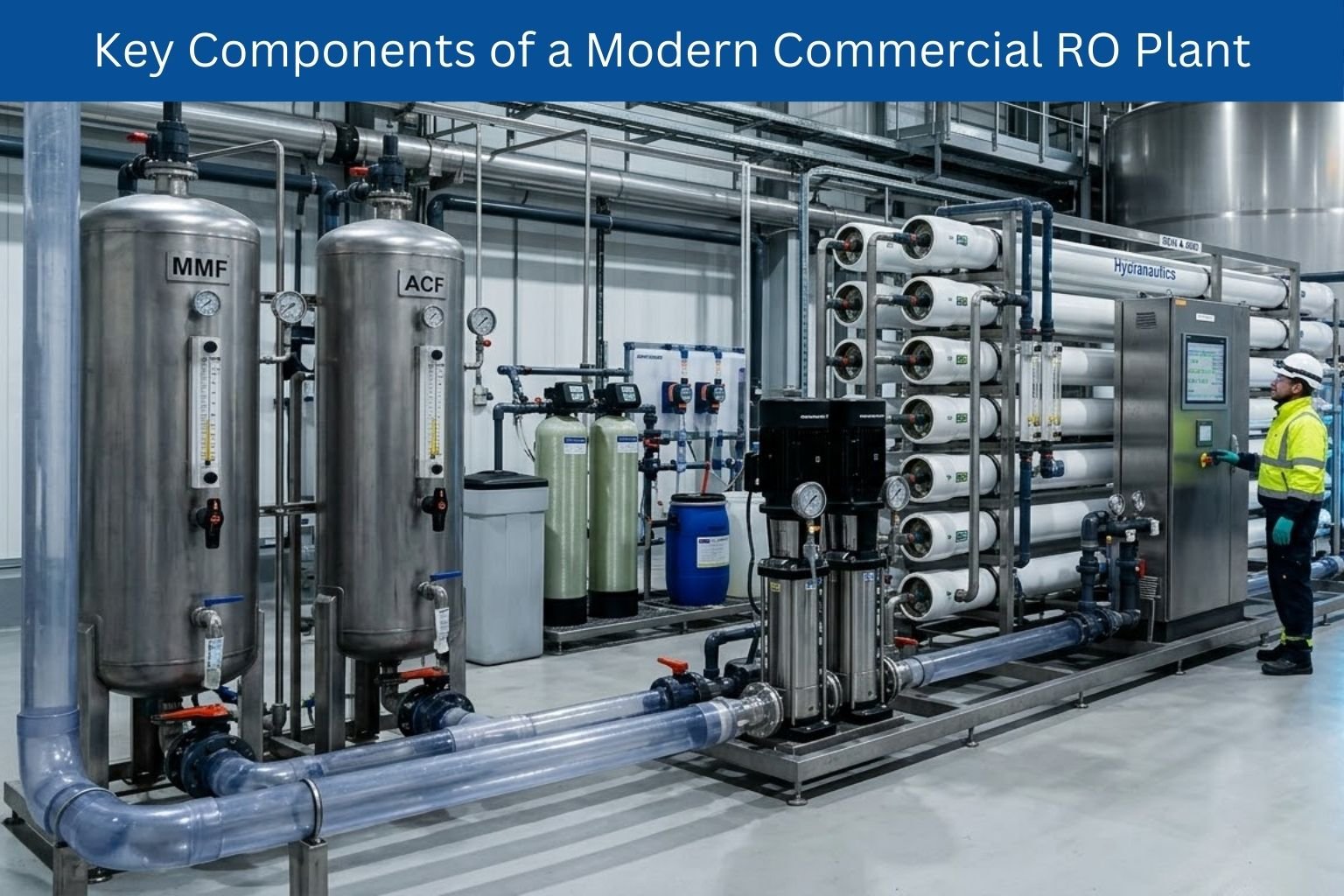
Technical Components of a Modern Commercial RO Plant
A commercial RO plant is a system of multiple treatment stages working in sequence to progressively remove contaminants. Understanding the components helps industries specify the right system for their application:
- Pre-Treatment System: Multimedia filter (MMF) / Sand filter to remove suspended solids and turbidity
- Activated Carbon Filter (ACF): Removes chlorine, chloramines, and organic matter that can damage RO membranes
- Softener Unit: Ion exchange resin removes hardness-causing calcium and magnesium ions
- Antiscalant Dosing System: Chemical dosing to prevent scaling on membrane surface
- Micron Cartridge Filter (5 micron): Final pre-filtration before the high-pressure pump
- High-Pressure Pump: Operates at 10–15 bar (brackish water) or 55–70 bar (seawater RO)
- RO Membrane Modules: Thin-film composite (TFC) polyamide membranes – 4040 or 8040 spiral wound elements
- Pressure Vessels: FRP (Fibre Reinforced Plastic) housings, typically 6-element configuration
- Control Panel with PLC/SCADA: Automated operation, fault alarms, production metering
- Permeate Storage Tank: Food-grade SS or HDPE storage for treated water
- Post-Treatment: UV sterilisation, ozonation, remineralisation for drinking water applications
- CIP (Clean-In-Place) System: Chemical cleaning circuit for membrane maintenance and life extension
Key Performance Parameters for Commercial RO Plants
Recovery Rate: 50–75% for brackish water RO (BWRO) | 35–45% for seawater RO (SWRO) | TDS Rejection: 95–99% for standard TFC membranes | Membrane Life: 3–5 years with proper pre-treatment and CIP maintenance | Operating Pressure: 10–15 bar (BWRO) | 55–70 bar (SWRO) | Flow Range: 500 LPH to 1,00,000 LPH per train | Standards: IS 10500:2012 (BIS), WHO Guidelines, FSSAI, US EPA
OUR OTHER PRODUCT
Emerging Trends in India’s Commercial RO Plant Market
IoT-Enabled Smart RO Systems
The integration of Internet of Things (IoT) sensors, cloud-based monitoring platforms, and automated dosing control is transforming commercial RO plant operations. Smart commercial RO plants now offer real-time monitoring of TDS, flow rate, pressure, ORP (Oxidation Reduction Potential), and turbidity, with alerts sent to facility managers via mobile apps. This reduces downtime, extends membrane life, and ensures consistent water quality compliance – particularly critical for pharma and food applications.
Zero Liquid Discharge (ZLD) Integration
With the National Green Tribunal (NGT) and State Pollution Control Boards enforcing ZLD norms on textile, pharma, and chemical industries in river proximity zones, the demand for RO-based ZLD systems has surged. In ZLD architecture, commercial RO plants serve as the primary salt concentration step, with the RO reject feed going to Multi-Effect Evaporators (MEE) or Mechanical Vapour Recompression (MVR) systems for final brine crystallisation. The ZLD market in India is growing at 25–30% CAGR, with commercial RO as a core technology component.
Solar-Powered Commercial RO Plants
India’s abundant solar radiation and the government’s push for renewable energy have catalysed development of solar-powered commercial RO plants. These systems use PV panels to drive high-pressure RO pumps, making them ideal for remote industrial sites, rural water ATMs, and off-grid applications. Several state governments – including Rajasthan, Gujarat, and Maharashtra – have subsidised solar RO plant installation in water-stressed areas. Energy recovery devices (ERDs) are also being integrated into large commercial RO systems to reduce energy consumption by up to 40%.
Containerised and Modular RO Systems
The demand for plug-and-play commercial RO plants – fully assembled in standard shipping containers – is rising rapidly for construction sites, mining operations, disaster relief, and temporary industrial facilities. These containerised RO plants can be commissioned within 48–72 hours and relocated as operational needs change, offering a flexible alternative to permanent installations.
Government Schemes Driving Institutional Demand
Government programmes are a major demand catalyst. The Jal Jeevan Mission (JJM), with a budget of ₹3.6 lakh crore, aims to provide Har Ghar Jal (tap water to every household). District-level community RO water treatment plants are a key implementation tool under JJM. The Smart Cities Mission includes water quality monitoring and treatment infrastructure in its mandate. AMRUT 2.0 focuses on water body rejuvenation and water supply upgradation – all creating institutional demand for commercial-scale RO treatment systems.
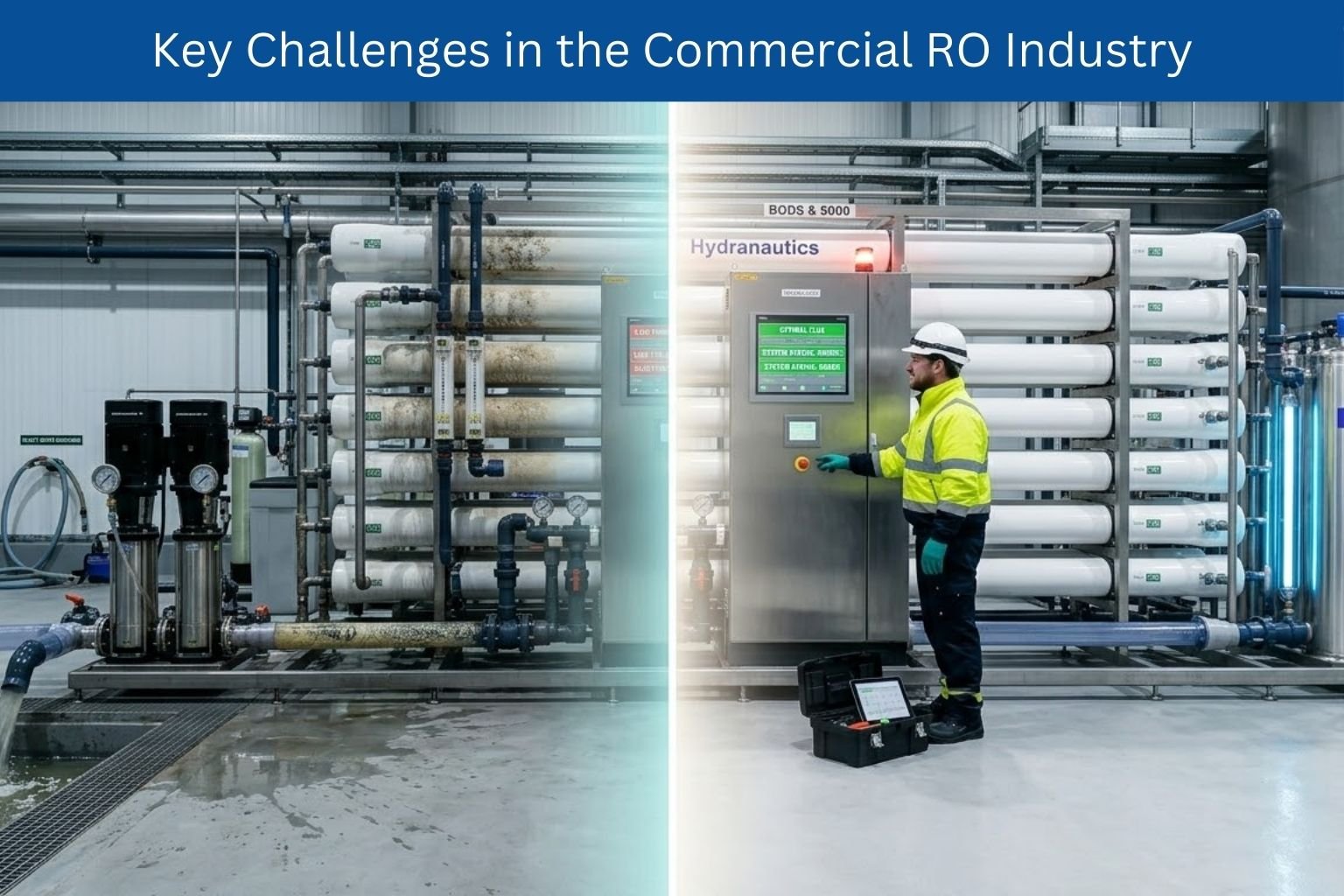
Challenges Facing the Commercial RO Plant Industry
Despite robust demand, the commercial RO plant sector faces several challenges:
- Brine/Reject Water Management: Commercial RO plants reject 25–50% of input water as high-TDS brine. Disposal of RO reject into drains causes environmental damage and regulatory penalties. The development of ZLD and brine concentration systems addresses this but adds cost.
- Membrane Fouling and Scaling: Biological fouling, mineral scaling (CaCO₃, CaSO₄), and colloidal fouling reduce membrane performance and increase replacement costs. Pre-treatment design is critical.
- High Energy Consumption: RO is energy-intensive, especially for high-pressure seawater applications. Rising electricity costs in India put pressure on operating economics, driving adoption of energy recovery systems.
- Lack of Skilled Operators: Commercial RO plants require trained operators for chemical dosing calibration, membrane inspection, CIP procedures, and performance optimisation. The skill gap in smaller cities affects system longevity.
- Competitive Pricing Pressure: The entry of low-cost Chinese RO membranes and components has intensified price competition, sometimes compromising installation quality and after-sales service.
- Water Wastage Concerns: In water-stressed regions, the reject water from low-recovery RO systems creates ethical and sustainability questions, driving demand for high-recovery RO and recycle systems.
Market Outlook: Commercial RO Plant Industry in India (2025-2030)
India’s commercial RO plant market is projected to grow at a CAGR of 18–22% between 2025 and 2030, driven by a confluence of regulatory, environmental, and economic factors. Key growth projections:
Growth Driver | Current (2025) | Projected (2030) |
Industrial Process Water Demand | High | Very High |
Jal Jeevan Mission Installations | ₹12,000 Cr/yr | ₹22,000 Cr/yr |
Pharma Water Purification Systems | ~3,200 plants | ~7,500 plants |
ZLD-integrated RO Systems | ~800 plants | ~3,500 plants |
Packaged Water Plants (BIS) | ~14,000 units | ~30,000 units |
Smart/IoT RO Plant Adoption | 12% penetration | 45% penetration |
How to Choose the Right Commercial RO Plant for Your Application
Selecting the appropriate commercial RO plant requires evaluation of several critical parameters:
- Feed Water Quality Analysis: Conduct a comprehensive water analysis report (WAR) for TDS, pH, hardness, iron, turbidity, chlorine, silica, and biological contamination before system sizing.
- Required Product Water Flow Rate: Calculate daily water demand (LPD) and peak hourly demand (LPH) to determine system capacity with 20–25% design margin.
- Application-Specific Purity Requirements: Drinking water, pharma water, boiler feed water, and process water have different TDS and quality targets – system design must match the end use.
- Recovery Rate and Reject Management: Plan for RO reject water usage – typically for flushing, gardening, or further treatment – to minimise water wastage.
- Energy Efficiency: Look for systems with energy recovery devices (ERDs), variable frequency drives (VFDs) on pumps, and optimised system pressure to minimise power consumption (kWh/m³).
- Automation Level: For large commercial plants, PLC-based automation with SCADA/HMI panels ensures consistent operation, reduces manpower requirements, and provides audit trails for regulatory compliance.
- After-Sales Service Network: Choose manufacturers with a strong service presence in your city – membrane replacement, CIP chemical supply, and preventive maintenance are ongoing requirements.
- BIS/ISO/WHO Compliance: Ensure the plant design meets relevant standards – BIS IS 10500, WHO guidelines, GMP requirements for pharma, FSSAI for food industry.
Commercial RO Plant (Reverse Osmosis System)
Capacity: 100 LPH to 1,000 LPH
(USD 4,200 to USD 49,500)
Conclusion: Commercial RO Plants as Critical Infrastructure for India’s Future
The surge in demand for commercial RO plants across Indian cities is not a passing trend – it is a structural, long-term shift driven by the inexorable forces of urbanisation, industrialisation, water scarcity, and regulatory mandates for water quality. From the pharmaceutical corridors of Hyderabad to the textile mills of Surat, from the IT campuses of Bangalore to the desert hotels of Rajasthan, commercial reverse osmosis water treatment systems have become as essential as electricity to modern industry and commerce.
As India marches toward a ₹5 trillion economy and continues rapid urbanisation, the quality and availability of water will be a decisive factor in industrial competitiveness and public health. The commercial RO plant industry stands at the intersection of this critical challenge – providing the technology, engineering, and service capability to ensure that India’s industries and institutions have access to the pure, safe, and reliable water they need to thrive. Investors, policymakers, and industry leaders should recognise commercial RO water purification as not merely an operational utility but as strategic infrastructure for India’s growth story.
Key Takeaway
India’s commercial RO plant market represents one of the fastest-growing industrial segments, underpinned by water quality challenges, regulatory compliance requirements, industrial expansion, and the government’s Jal Jeevan Mission. Cities across India – Delhi, Mumbai, Bangalore, Chennai, Hyderabad, Ahmedabad, Surat, Pune, Jaipur – are experiencing exponential growth in commercial RO plant installations across sectors including pharmaceuticals, food & beverage, textiles, hospitality, healthcare, and IT infrastructure.
Our associates
































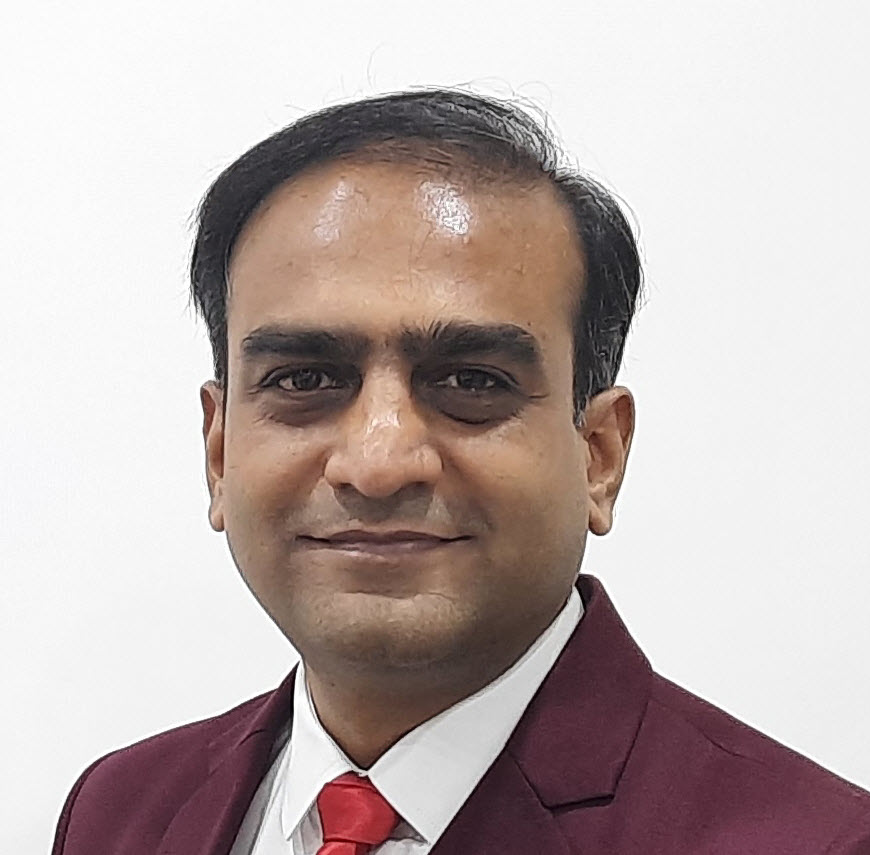
Director – Global Marketing and Sales
Mr. Bhavesh from Dharmanandan Techno Projects Pvt. Ltd. has played a pivotal role in elevating the DTPPL brand to the global stage, leveraging his exceptional expertise in marketing and communications. He is committed to helping clients achieve significant growth while strengthening their own brands. Dharmanandan Techno Projects Pvt. Ltd. is a leading manufacturer and supplier of water purification systems and turnkey solutions for mineral water plants. With years of experience in designing and delivering high-quality water treatment solutions, the company provides end-to-end services, including system design, installation, maintenance, and ongoing support. Specializing in scalable and customizable water plants, DTPPL has successfully served industries worldwide, ensuring clean and safe drinking water across diverse applications.