


dtppl

Share At:
Google AI ChatGPT Grok Perplexity

Listening Article

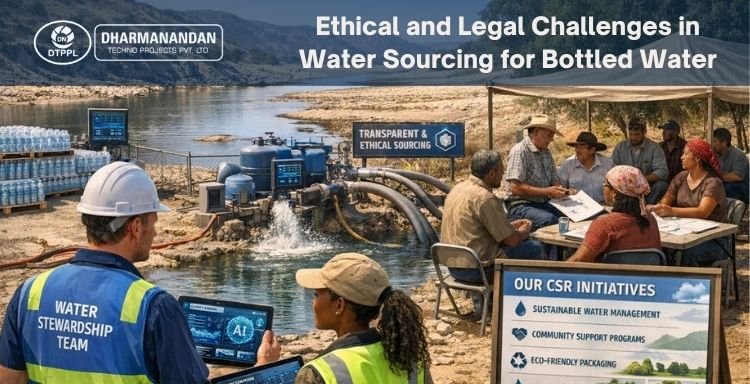
Water Sourcing for Bottled Water: Ethical and Legal Challenges

February 16, 2026

AI Summary

The 2026 landscape for bottled water is defined by the tension between rising demand and critical water scarcity. This article highlights that ethical water sourcing is no longer a PR luxury but a legal and operational necessity. Key takeaways include the rise of community water rights challenges, the implementation of strict FSSAI and UN-aligned regulations, and the shift toward Water Stewardship (managing shared river basins). Companies are increasingly using AI and blockchain for sourcing transparency while investing in Net-Positive CSR programs to balance profitability with their “license to operate” in drought-prone regions.

Introduction

In 2026, the bottled water industry stands at a critical crossroads. As climate-driven water scarcity affects 72% of the global population, the act of extracting water for commercial sale has transformed from a simple business operation into a complex ethical and legal battlefield. For modern mineral water companies, “sourcing” is no longer just about geological purity; it is about navigating a high-stakes environment where community water rights and legal compliance in water sourcing determine a brand’s survival.

Chat with Our Team on WhatsApp
WhatsApp WhatsApp!

The Importance of Ethical Water Sourcing

Ethical water sourcing has become the cornerstone of the bottled water sector. With global demand for premium natural water reaching record highs, the industry faces intense scrutiny over its “water footprint.” In an era where water is increasingly recognized as a fundamental human right rather than a mere commodity, businesses must adopt sustainable and responsible practices to avoid being labeled as “exploiters” of a shared life-giving resource.

The Ethical Concerns Surrounding Water Extraction

The primary ethical concerns in water sourcing revolve around the depletion of local aquifers.

  • Aquifer Over-extraction: Many mineral water brands and Mineral Water Plant source from deep underground aquifers that take centuries to recharge. Excessive pumping can lower the water table, causing local wells to run dry.
  • Artificial Scarcity: Critics argue that commodifying water creates a “pay-to-hydrate” system, which is ethically questionable in regions where public water infrastructure is failing or non-existent.
  • The Drought Dilemma: Ethical tensions peak during periods of drought. When a company continues to extract millions of liters for export while local farmers face water rationing, the brand faces significant reputational and moral backlash.

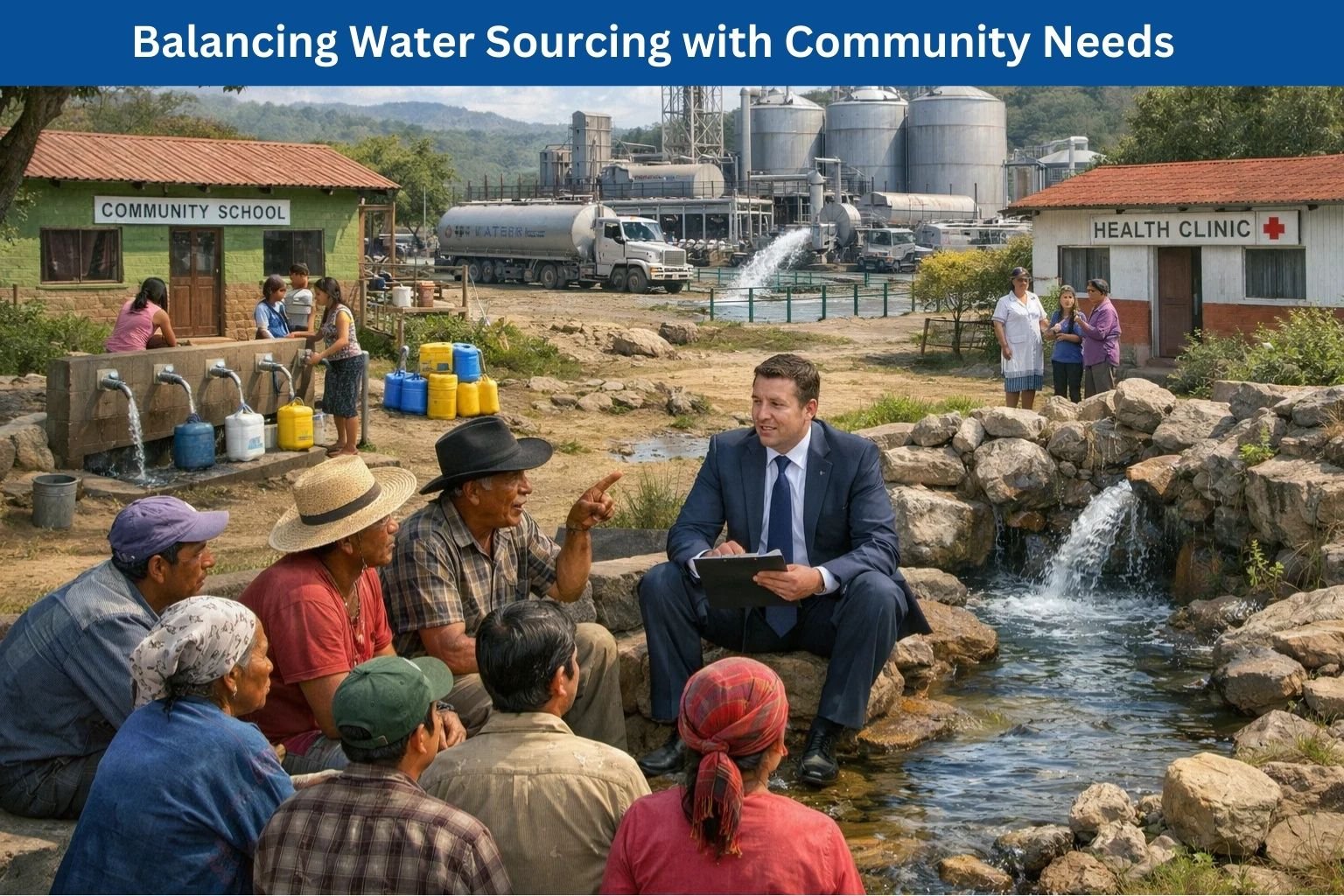
Impact on Local Communities: Balancing Needs with Access

The social impact of water sourcing is often felt most by rural and indigenous populations.

    • Community Water Rights: In many jurisdictions, “water grab” lawsuits have surged as communities fight to reclaim their historical access to springs.
    • Economic Disparity: Ethical friction arises when a multinational corporation pays a nominal permit fee—sometimes as low as $200 per year—to extract water that is then sold for a 500x markup, while the local community struggles with deteriorating sanitation.
    • Balancing Interests: Leading companies are now moving toward “benefit-sharing” models, where they invest in local schools, healthcare, and public water taps to offset their extraction impact.

Regulatory Framework: Legal Challenges in Water Extraction

The regulatory framework for water sourcing has tightened significantly as of January 2026.

  • Strict Testing Frameworks: In markets like India, the FSSAI has introduced mandatory monthly microbiological checks and rigorous periodic quality audits.
  • Permit Loopholes: Regulators are closing loopholes that previously allowed companies to extract water under outdated “agricultural” or “industrial” permits, now requiring specific “bottled water extraction” licenses with real-time monitoring.
  • Environmental Impact Assessments (EIA): A modern bottling plant cannot be commissioned without an EIA that proves the extraction will not cause “irreversible ecological damage.”

Client Review

“DTPPL is the finnest & No. 1 leading brand in Mineral Water Plant Machinery Manufacturing Industries. Customer services are outstanding. Anytime they are on standby mode for their beloved customer. They believe in customer satisfaction first. Moreover Reliable & Reasonable. Keep It up Guys.”

– Advait Kulkarni

Sourcing and Environmental Sustainability

Large-scale extraction affects more than just the water table; it impacts entire ecosystems.

  • Biodiversity Risk: Lowering water levels in rivers and wetlands can destroy habitats for endangered aquatic life.
  • Land Subsidence: In some regions, over-extraction has led to the literal sinking of land, damaging local infrastructure and agricultural fields.
  • Legal Protections: New “Rights of Nature” laws in several countries now allow local ecosystems (like rivers or forests) to be represented in court against over-pumping.

The Role of Transparency in Water Sourcing

Transparency is the antidote to consumer distrust.

  • Public Disclosure: Forward-thinking brands are now publishing annual “Water Disclosure Reports,” detailing exactly how much they extract and where it goes.
  • Source Labeling: By 2026, many regulations mandate that labels must explicitly state the source (e.g., “Deep Borehole #4, Valley Basin”) to prevent deceptive marketing.

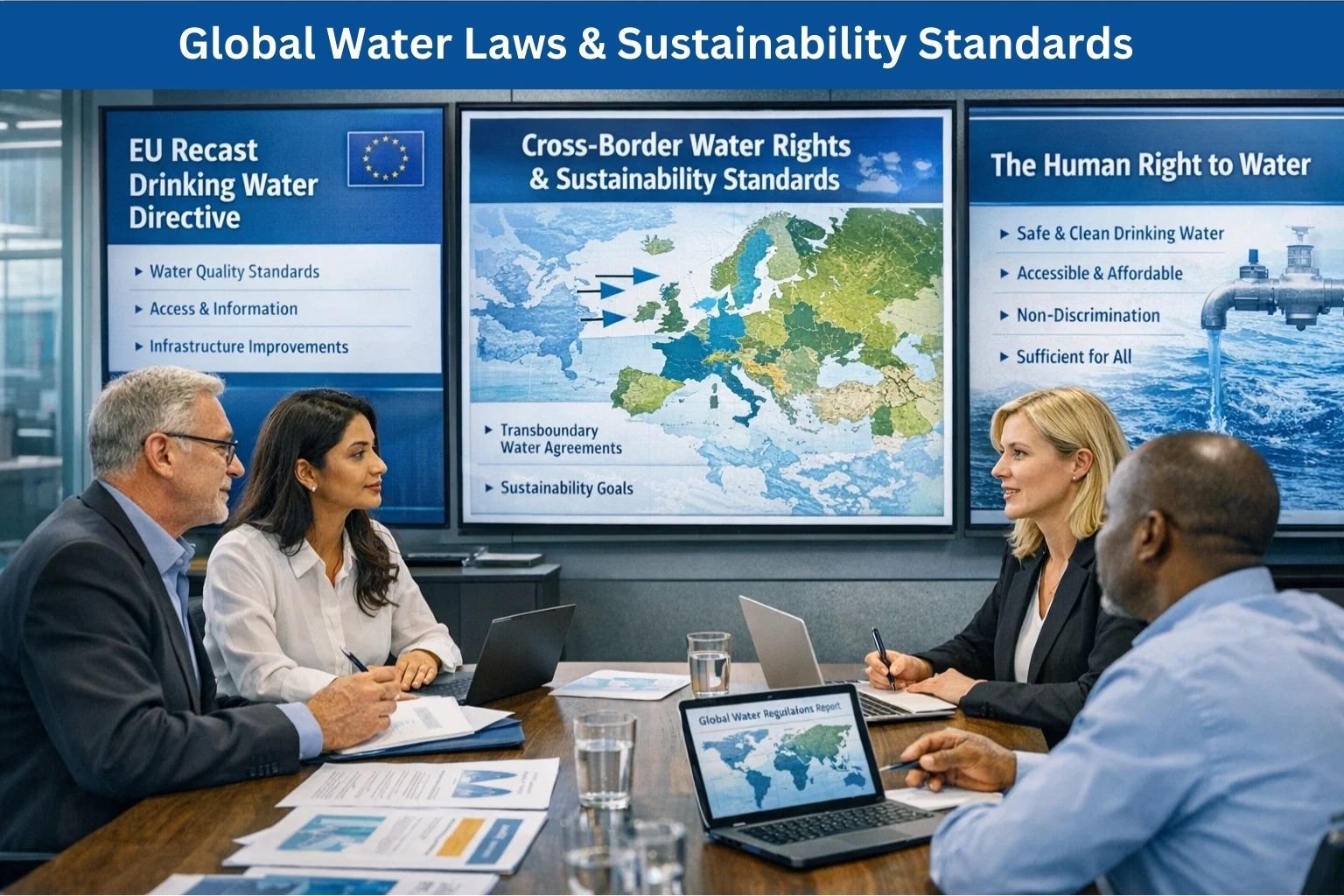
Compliance with International Water Laws

Operating globally requires adhering to the UN Sustainable Development Goal 6 (SDG 6)—ensuring water and sanitation for all.

  • Cross-Border Standards: Companies must now navigate conflicting laws, such as the EU’s “Recast Drinking Water Directive,” which imposes strict limits on PFAS and microplastics, even in natural mineral waters.
  • Water Rights Compliance: Aligning with the UN’s “Human Right to Water” framework is no longer optional for brands seeking global investment.

Corporate Social Responsibility (CSR) in Water Sourcing

Responsible water sourcing is now a core pillar of CSR.

  • Replenishment Programs: Companies like Coca-Cola and PepsiCo have committed to “Net-Positive Water,” aiming to return more water to nature and communities than they use in their products.
  • WASH Initiatives: Investing in Water, Sanitation, and Hygiene (WASH) programs in the very communities where they source water helps build long-term goodwill.

The Role of Water Stewardship

Water stewardship goes beyond mere efficiency. It involves “collective action”—working with other industries, farmers, and governments in a river basin to manage the resource sustainably. Companies are now seeking Alliance for Water Stewardship (AWS) certification, which proves they are managing water in a way that is socially beneficial and environmentally responsible.

Public Perception and Consumer Trust

The “Gen Z” and “Alpha” consumers of 2026 prioritize ethics over price.

  • The Reputation Risk: One viral social media post showing a dried-up community well next to a high-end bottling plant can cause millions in losses and lead to nationwide boycotts.
  • Building Trust: Brands that can prove their ethical sourcing reputation through third-party audits and blockchain-verified sourcing are seeing a 15% higher growth rate than those that remain opaque.

Balancing Profitability with Ethical Sourcing

The challenge lies in balancing ethics with business goals. Ethical sourcing is expensive—it requires better tech, higher taxes, and community investment. However, companies are finding that “sustainable water” is a long-term hedge against risk. A dry well is 100% unprofitable; a sustainably managed spring is a multi-generational asset.
Mineral Water Plant

Capacity: 500 LPH to 50,000 LPH

Price Range: INR 25,00,000 to INR 15,00,00,000 -
(USD 27,500 to USD 16,49,000)

The Future: Innovations and Solutions

Future of water sourcing trends include:

  • Atmospheric Water Generation (AWG): Extracting water from humidity to reduce reliance on ground sources.
  • Brackish Desalination: Using modular, solar-powered units to treat non-potable underground water.
  • Smart Monitoring: Using satellite data and AI to predict aquifer stress levels before they become critical.

OUR OTHER PRODUCT

Water Bottle Filling Machine

Conclusion: Ensuring Long-Term Compliance

As we move toward 2030, the bottled water industry must transition from being a “water taker” to a “water maker.” Long-term water sustainability requires a shift in mindset: seeing water not as a raw material to be exhausted, but as a shared heritage to be protected. Only those brands that prioritize legal compliance in water sourcing and genuine ethical transparency will thrive in the increasingly thirsty world of tomorrow.

Frequently Asked Questions (FAQs)

The biggest risk is over-extraction during local droughts, which can dry up community wells and lead to “water grab” lawsuits and massive reputational damage.

It depends on the local permits, but in 2026, many governments are revoking extraction licenses during “Level 4” water emergencies to prioritize human consumption over commercial bottling.

CSR is about giving back (like building a school), while water stewardship is about the actual management of the water—working with neighbors to ensure the entire river basin stays healthy and sustainable.

Look for labels that mention AWS (Alliance for Water Stewardship) certification or brands that provide a QR code leading to a transparent report on their extraction volumes and community impact.

These are legal frameworks that give natural entities like rivers or aquifers legal “personhood,” allowing them to be represented by guardians in court to prevent environmental destruction from over-pumping.

Our associates

About Author