





Listening Article
Table of Contents
Beverage Brand Foundation Building: Establishing Your Brand’s DNA
December 26, 2025
Brand Foundation as Your Business DNA
Think of your brand foundation as the DNA of your beverage business-it contains all the essential information that determines how your company will grow, evolve, and express itself in the marketplace. Just as DNA influences every cell in a living organism, your brand foundation influences every decision, communication, and interaction your business will have with customers, partners, and stakeholders throughout its lifetime.
When you’re starting a beverage manufacturing business, you might feel tempted to rush past brand development and focus immediately on production and sales. This represents one of the most costly mistakes new entrepreneurs make. Consider this comparison: building a business without a strong brand foundation is like constructing a house without a proper foundation—it might stand for a while, but it will never withstand the storms and pressures that inevitably come. Your brand foundation provides the structural integrity that allows your business to grow sustainably and weather competitive challenges.
The beverage industry presents unique brand-building challenges that require sophisticated understanding and strategic thinking. Unlike many other industries where functional benefits dominate purchasing decisions, beverage choices involve complex interactions between rational health considerations, emotional lifestyle associations, and social identity expression. Your brand must address all three levels simultaneously while maintaining authentic consistency across every customer interaction.
The Psychology of Brand Perception in Beverage Purchasing
Before diving into the tactical aspects of brand building, you need to understand how consumers actually form brand perceptions and make beverage purchasing decisions. This understanding becomes the foundation for every brand decision you make, ensuring your efforts align with natural human psychology rather than fighting against it.

Brand Perception Formation in Beverage Marketing
Brand perception formation occurs through multiple channels and touchpoints, creating what marketers call the “brand ecosystem.” Every interaction a potential customer has with your brand—from seeing your logo on a delivery truck to tasting your product to reading about your company online—contributes to their overall brand perception. These individual touchpoints combine to create an overall brand impression that either encourages or discourages purchase consideration.The Emotional and Intuitive Aspects of Brand Perception
The challenge lies in understanding that brand perception formation happens largely at the subconscious level through emotional and intuitive processes rather than rational analysis. When a consumer stands in front of a beverage cooler making a purchase decision, they’re not conducting a detailed comparison of ingredients, manufacturing processes, and cost-benefit analysis. Instead, they’re responding to immediate emotional and intuitive impressions formed through previous brand exposures and associations.The Role of Visual Identity in Beverage Marketing Success
This reality explains why visual identity elements like colors, fonts, and packaging design carry such significant influence in beverage marketing success. Your brain processes visual information approximately 60,000 times faster than text, meaning consumers form initial brand impressions within milliseconds of visual exposure. These rapid impressions strongly influence subsequent rational evaluation and purchase decisions, making visual brand development a crucial competitive factor.
Understanding the emotional dimensions of beverage consumption helps explain why successful brands focus heavily on lifestyle association and identity expression rather than purely functional benefits. Consumers don’t just purchase beverages to satisfy thirst—they purchase products that help them express their values, aspirations, and identity to themselves and others. Your brand development must account for these deeper psychological motivations to achieve lasting market success.
Brand Identity Development: Creating Your Unique Market Position in Beverage Industry
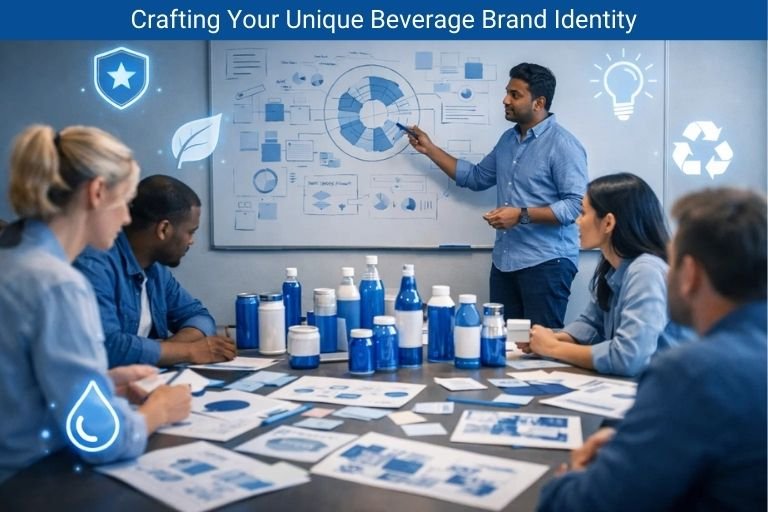
Brand identity development begins with deep introspection about your company’s purpose, values, and unique contribution to the beverage marketplace. This process requires moving beyond surface-level descriptions like “we make quality water” to discover the fundamental reasons your company exists and the unique value only you can deliver to customers.
Building a Brand Identity with Your Founder’s Story
Start by examining your founder’s story and motivations for entering the beverage industry. What personal experiences, insights, or frustrations led to your business creation? These foundational motivations often contain the seeds of authentic brand differentiation that resonates powerfully with customers who share similar values or experiences. Authentic founder stories create emotional connections that manufactured marketing messages cannot replicate.Example of Brand Storytelling in Beverage Industry
Consider the example of how premium water brands like Fiji leverage their origin stories for brand differentiation. Fiji Water doesn’t just emphasize purity—they tell the story of artesian aquifers and pristine volcanic island origins that create emotional associations with exotic beauty and natural perfection. Your brand story should similarly connect your unique origins, whether geographic, technological, or philosophical, with emotional benefits that matter to your target customers.Mission Statement and Values Definition
Mission statement development requires moving beyond generic business platitudes to articulate the specific positive impact your company aims to create in customers’ lives and the broader world. Effective mission statements in the beverage industry often focus on health enhancement, lifestyle improvement, or environmental stewardship rather than purely commercial objectives. Your mission should inspire both internal team members and external customers while providing clear guidance for business decisions.
Values definition establishes the fundamental principles that guide your company’s behavior and decision-making processes. These values should reflect authentic beliefs held by your leadership team while appealing to your target customers’ personal values. Values like quality excellence, environmental responsibility, or community support can differentiate your brand while providing frameworks for consistent behavior across all business operations.
Visual Identity System Development: Creating Memorable Brand Recognition
Visual identity development represents one of your most important brand investments because visual elements create immediate recognition and emotional response that influence all subsequent customer interactions. Professional visual identity development requires understanding design principles, consumer psychology, and industry conventions while creating distinctive elements that support your brand positioning.
Logo Design Principles for Beverage Brands
Logo design principles for beverage brands must balance memorability with scalability across diverse applications from bottle labels to vehicle graphics to digital advertising. Your logo will appear in countless contexts throughout your business lifetime, requiring design elements that maintain clarity and impact whether displayed on a tiny social media profile image or a large outdoor billboard. This scalability requirement influences design decisions about complexity, color usage, and typography selection.Color Psychology in Beverage Branding
Color psychology plays a particularly important role in beverage branding because colors trigger immediate emotional and physiological responses that influence purchase decisions. Blue colors often suggest purity and refreshment, making them popular choices for water brands, while green colors imply natural health benefits that appeal to health-conscious consumers. Understanding these psychological associations helps you select colors that reinforce your brand positioning while appealing to your target audience’s subconscious preferences.Typography Selection and Its Impact on Brand Perception
Typography selection significantly influences brand perception through subconscious associations with different font characteristics. Clean, modern sans-serif fonts suggest innovation and efficiency, while elegant serif fonts imply tradition and sophistication. Script fonts can suggest artisanal quality and personal attention, while bold fonts communicate strength and confidence. Your typography choices should align with your brand personality while ensuring legibility across all applications.Packaging Design Integration: The Most Important Touchpoint
Packaging design integration ensures your visual identity translates effectively to the most important customer touchpoint—your actual product packaging. Beverage packaging must balance brand identity expression with functional requirements like ingredient listing, nutritional information, and regulatory compliance. Successful packaging design creates shelf appeal that attracts attention while communicating key brand messages and benefits clearly and quickly.Brand Guideline Development: Ensuring Consistency Across All Channels
Brand guideline development establishes consistent standards for visual identity application across all business uses. Comprehensive brand guidelines specify logo usage rules, color specifications, typography applications, and design principles that ensure consistent brand presentation regardless of who creates materials or what applications are involved. These guidelines become increasingly important as your business grows and multiple people become involved in creating brand communications.Client Review
“Partnering with DTPPL has been a game-changer for our brand. Their expertise in building a strong brand foundation helped us define our identity, messaging, and visual elements with precision. The team's understanding of consumer psychology allowed us to connect deeply with our audience, creating a unique brand story. DTPPL’s ongoing support has positioned us as a credible, innovative brand in the competitive beverage market. Highly recommended for any beverage startup looking to establish a solid brand presence.”
– Sarah Williams
Messaging Framework Development: Communicating Your Value Consistently Across Touchpoints
Effective messaging framework development translates your brand identity into specific words, phrases, and communication approaches that consistently convey your value proposition across all customer interactions. This framework ensures every person representing your brand—from sales team members to customer service representatives—communicates consistent messages that reinforce your positioning and differentiate your company from competitors.Brand Voice Definition: Establishing Consistency in Communications
Brand voice definition establishes the personality characteristics that should be reflected in all written and verbal communications. Your brand voice might be authoritative and scientific if you’re positioning as a health-focused brand, or friendly and approachable if you’re targeting families and lifestyle consumers. This voice should reflect your company’s authentic personality while appealing to your target audience’s communication preferences and cultural expectations.Core Message Development: Defining Your Brand’s Key Value Proposition
Core message development identifies the three to five most important points you want every customer to understand about your brand and products. These core messages should address the primary reasons customers should choose your products over alternatives while differentiating your brand from competitive offerings. Core messages typically include functional benefits like superior quality or taste, emotional benefits like lifestyle enhancement, and proof points like certifications or testimonials that support your claims.Value Proposition Articulation: Highlighting What Makes Your Brand Unique
Value proposition articulation requires translating your unique advantages into specific customer benefits that matter to your target audience. Rather than focusing on features like “advanced filtration systems,” effective value propositions emphasize benefits like “pure, great-tasting water that supports your active lifestyle.” This benefit-focused approach helps customers immediately understand why your products matter to them personally.Proof Point Development: Providing Evidence for Your Brand Claims
Proof point development identifies the specific evidence that supports your brand claims and differentiates your offerings from competitors. Proof points might include third-party certifications, scientific testing results, customer testimonials, industry awards, or proprietary processes that demonstrate your superior value. These proof points provide rational justification for emotional purchasing decisions while building credibility and trust.Storytelling Framework Creation: Sharing Your Brand’s Story Effectively
Storytelling framework creation establishes consistent approaches for sharing your brand story across different contexts and audiences. Your storytelling framework should include your founding story, customer success stories, and value demonstration stories that can be adapted for various applications from sales presentations to social media content to website copy. Effective storytelling creates emotional connections while communicating key brand messages memorably.
Positioning Strategy Development: Claiming Your Unique Market Space
Market positioning determines how customers perceive your brand relative to competitive alternatives and establishes the specific market space you aim to own in consumers’ minds. Effective positioning requires understanding the current competitive landscape while identifying gaps or opportunities where your unique advantages can create sustainable differentiation.
Competitive Analysis for Positioning Purposes
Competitive analysis for positioning purposes requires examining not just direct competitors but also alternative solutions that address the same customer needs your products serve. For a premium water brand, direct competitors include other premium water brands, but alternative solutions might include home filtration systems, flavored waters, or health drinks that serve similar hydration and health needs. Understanding this broader competitive context helps identify positioning opportunities that might not be obvious when focusing only on direct competitors.Differentiation Strategy Development
Differentiation strategy development identifies the specific attributes, benefits, or associations that will distinguish your brand from competitive alternatives in customers’ minds. Effective differentiation in the beverage industry often focuses on source and purity advantages, health and wellness benefits, taste and quality superiority, convenience and lifestyle integration, or environmental and social responsibility leadership. Your differentiation strategy should build on authentic advantages while appealing to target customer priorities.Positioning Statement Creation
Positioning statement creation synthesizes your differentiation strategy into a clear declaration of the market space you aim to own. A well-crafted positioning statement follows this format: “For [target audience], [brand name] is the [category] that [unique benefit] because [proof point or reason to believe].” This statement provides clear guidance for all marketing and business decisions while establishing accountability for positioning success.Competitive Positioning Mapping
Competitive positioning mapping visualizes your brand’s position relative to competitors across key attributes that matter to customers. This mapping exercise helps identify positioning opportunities, validate differentiation strategies, and track positioning success over time. Common positioning maps for beverage brands might plot brands across dimensions like price versus quality, health benefits versus taste appeal, or convenience versus premium experience.Message Hierarchy Development
Message hierarchy development prioritizes your positioning messages based on their importance to target customers and their effectiveness in driving purchase decisions. Primary messages focus on your most compelling differentiation advantages, secondary messages provide supporting evidence and benefits, and tertiary messages address specific customer concerns or questions. This hierarchy ensures consistent emphasis across all communications while maintaining flexibility for different contexts and audiences.
Brand Personality Development: Creating Emotional Connections
Brand personality development humanizes your brand by establishing the character traits and emotional qualities that will guide all customer interactions and communications. Just as personal relationships depend on personality compatibility and emotional connection, successful brand relationships require personality development that resonates with your target customers’ preferences and values.Personality Trait Identification
Personality trait identification begins by examining your company’s authentic characteristics and the traits that would appeal most strongly to your target audience. Consider whether your brand personality should be sophisticated and premium, friendly and approachable, innovative and cutting-edge, reliable and trustworthy, or fun and energetic. These personality traits should reflect your company’s genuine nature while appealing to customer preferences and market positioning objectives.Archetype Selection for Brand Personality
Archetype selection provides a foundational framework for personality development by connecting your brand with universal character types that resonate across cultures and demographics. Common brand archetypes in the beverage industry include the Caregiver (focused on nurturing and health), the Hero (emphasizing strength and achievement), the Sage (providing wisdom and knowledge), or the Innocent (representing purity and simplicity). Selecting an appropriate archetype provides guidance for personality development while ensuring emotional resonance with target audiences.Communication Style Development for Brand Consistency
Communication style development translates personality traits into specific approaches for written and verbal communications. A sophisticated brand personality might use formal language and industry expertise, while a friendly personality would emphasize casual conversation and personal connection. Your communication style should consistently reflect your personality across all touchpoints from product packaging to customer service interactions to social media content.Visual Personality Integration: Supporting Brand Identity
Visual personality integration ensures your visual identity elements support and reinforce your brand personality rather than creating conflicting impressions. Color choices, typography selections, imagery styles, and design approaches should all align with your personality traits while creating cohesive brand experiences. A premium personality requires elegant, sophisticated visual elements, while an approachable personality might use warmer colors and casual typography.Personality Consistency Management Across Touchpoints
Personality consistency management establishes processes and training that ensure every person representing your brand understands and consistently expresses your brand personality. This includes sales team training, customer service scripts, social media guidelines, and vendor briefings that maintain personality consistency across all customer interactions. Consistent personality expression builds brand recognition and emotional connection while differentiating your company from competitors with less defined personalities.
Brand Architecture and Hierarchy: Planning for Growth
Brand architecture planning establishes the structural framework for organizing your current and future products, services, and business units under your overall brand umbrella. Effective brand architecture planning during the startup phase prevents future confusion and repositioning costs while providing scalability for business growth and expansion opportunities.
Master Brand Strategy Development
Master brand strategy development determines whether your company will operate as a single master brand covering all products and services, or whether you’ll develop sub-brands for different product categories or market segments. Master brand strategies offer efficiency advantages and unified messaging, while sub-brand strategies allow targeted positioning for specific audiences. Your choice should consider your expansion plans, target market diversity, and competitive positioning requirements.Product Portfolio Planning and Brand Positioning
Product portfolio planning identifies how current and planned products will be organized and positioned within your brand architecture. Consider whether different products should carry the same brand name with descriptive modifiers, or whether distinct product brands would better serve different market segments. Product portfolio planning should account for potential cannibalization between products while maximizing overall brand value and market coverage.Brand Extension Strategy Development
Brand extension strategy development establishes principles for evaluating and implementing future growth opportunities under your brand umbrella. Successful brand extensions leverage existing brand equity while maintaining brand integrity and customer trust. Extension strategies should consider brand fit, market opportunity, and resource requirements while avoiding dilution of core brand positioning.Naming Convention Establishment for New Products
Naming convention establishment creates consistent approaches for naming new products, services, or business units that maintain brand coherence while allowing appropriate differentiation. Naming conventions should consider trademark availability, international expansion potential, and digital domain considerations while reflecting your brand personality and positioning strategy.Brand Hierarchy Management for Organizational Clarity
Hierarchy management systems ensure clear organization and communication of brand relationships as your business grows and evolves. Brand hierarchy should be intuitive for customers while supporting effective marketing communication and business operations. Clear hierarchy management prevents customer confusion while maximizing brand equity leverage across your business portfolio.
Cultural and Regional Adaptation: Building Global Brand Relevance
Cultural adaptation strategies ensure your brand foundation translates effectively across different regional markets and cultural contexts while maintaining core brand integrity and recognition. Understanding cultural differences in color perception, communication styles, and value systems helps you adapt your brand presentation for maximum local relevance without compromising brand consistency.Color Meaning Variations Across Cultures
Color meaning variations across cultures can significantly impact brand perception and success in different markets. While white represents purity and cleanliness in Western cultures, it symbolizes mourning in some Asian cultures. Red represents good fortune in Chinese culture but can signify danger in Western contexts. Understanding these cultural color associations helps you adapt visual identity elements for different markets while maintaining brand recognition.Communication Style Preferences in Global Beverage Branding
Communication style preferences vary significantly across cultures and regions, requiring adaptation of messaging approaches and personality expression. High-context cultures like Japan prefer subtle, indirect communication that respects hierarchy and relationship harmony, while low-context cultures like Germany value direct, explicit communication that emphasizes facts and efficiency. Your brand communication style should adapt to these preferences while maintaining core personality consistency.Aligning Brand Values with Local Cultural Priorities
Value system alignment ensures your brand values and messaging resonate with local cultural priorities and social norms. Environmental consciousness might be a primary value in European markets, while family and tradition could be more important in Middle Eastern markets. Understanding and adapting to these value differences helps your brand connect authentically with local audiences while maintaining global brand integrity.Religious and Social Considerations in Global Brand Strategy
Religious and social considerations address potential conflicts between your brand presentation and local religious or social norms. Packaging imagery, marketing messages, and brand associations should be evaluated for potential cultural sensitivity issues while maintaining brand authenticity. This consideration helps prevent costly mistakes while demonstrating respect for local communities and customers.Legal and Regulatory Adaptation in International Markets
Legal and regulatory adaptation ensures your brand elements comply with local trademark, advertising, and labeling requirements across different markets. Brand name availability, logo trademark protection, and marketing message regulations vary significantly between countries and regions. Early consideration of these requirements prevents costly rebranding exercises while enabling smoother international expansion.
Read Our Article: Beverage Manufacturing Technology Leadership with DTPPL
Digital Brand Presence Foundation: Building Online Brand Authority
Digital brand presence development establishes your brand’s online foundation across websites, social media platforms, and digital marketing channels. Your digital presence often provides customers’ first brand interaction, making professional development crucial for brand perception and business success.Website Brand Integration: Building Your Digital Identity
Website brand integration ensures your website effectively communicates your brand identity, positioning, and value proposition while providing excellent user experience and conversion optimization. Your website should reflect your brand personality through design elements, communication style, and content approach while making it easy for visitors to understand your offerings and take desired actions.Social Media Brand Consistency: Reinforcing Your Brand Message
Social media brand consistency maintains unified brand presentation across all social platforms while adapting content formats and communication styles to each platform’s unique characteristics and audience expectations. Your social media presence should reinforce brand positioning while building community and engagement through valuable content and authentic interaction.Content Strategy Alignment: Creating Value for Your Audience
Content strategy alignment ensures all digital content supports your brand positioning and messaging framework while providing value to your target audience. Content topics, formats, and distribution should consistently reinforce your brand authority and expertise while addressing customer needs and interests. Effective content strategy builds brand awareness and trust while driving business results.SEO Integration for Brand Visibility
Search engine optimization (SEO) integration incorporates your brand positioning and messaging into SEO strategies that improve online visibility while maintaining brand consistency. Keyword selection, content optimization, and link building should support both search rankings and brand communication objectives while avoiding tactics that might compromise brand reputation.Online Reputation Management for Beverage Brands
Online reputation management establishes systems for monitoring and managing your brand’s online reputation across review sites, social media platforms, and search results. Proactive reputation management prevents minor issues from becoming major brand problems while building positive brand associations through excellent customer service and community engagement.
Brand Consistency Management: Maintaining Excellence Across All Touchpoints
Brand consistency management ensures every customer interaction reinforces your brand positioning and creates positive brand associations regardless of the specific touchpoint or context involved. Consistency management becomes increasingly important as your business grows and more people become involved in brand representation and communication.Brand Guideline Development: Ensuring Consistent Brand Presentation
Brand guideline development creates comprehensive documentation that specifies exactly how your brand should be presented across all applications and contexts. Brand guidelines should cover logo usage, color specifications, typography standards, photography styles, messaging frameworks, and communication tone to ensure consistent brand presentation regardless of who creates materials or manages communications.Training Program Development for Brand Consistency
Training program development ensures every team member understands your brand positioning, personality, and presentation standards while developing skills for effective brand representation. Brand training should cover both tactical elements like logo usage and strategic elements like brand positioning and value proposition communication. Regular training updates ensure brand knowledge remains current as your business evolves.Quality Control Systems for Brand Material Approval
Quality control systems establish processes for reviewing and approving brand materials before public use to ensure consistency and quality standards. Quality control might include approval workflows for marketing materials, customer communications, and external partnerships that represent your brand. These systems prevent brand dilution while maintaining professional presentation standards.Vendor and Partner Management for Brand Consistency
Vendor and partner management ensures external suppliers and partners understand and maintain your brand standards in their work and communications. Brand guidelines for vendors should specify requirements for materials creation, brand representation, and communication standards while providing resources and support for compliance. Partner brand training helps extend brand consistency beyond your direct employees.Performance Monitoring for Brand Consistency
Performance monitoring establishes metrics and systems for tracking brand consistency and identifying areas for improvement. Brand consistency audits might evaluate materials across different departments, touchpoints, and time periods to identify inconsistencies and improvement opportunities. Regular monitoring ensures brand presentation remains excellent while identifying training or system improvement needs.
DTPPL Brand Excellence Partnership: Leveraging Manufacturing Leadership for Brand Authority
DTPPL’s brand development partnership recognizes that successful beverage brands must integrate manufacturing excellence with brand positioning to create authentic competitive advantages. Our comprehensive brand support combines industry expertise with practical implementation assistance that accelerates brand development while avoiding common startup mistakes.Technical Excellence Translation in Marketing Communications
Technical excellence translation helps you effectively communicate the quality and innovation advantages that DTPPL equipment provides through your brand positioning and messaging. Understanding how to translate technical capabilities into customer benefits creates authentic differentiation while building brand authority and credibility with both industry professionals and end consumers.Industry Authority Positioning: Building Credibility with DTPPL
Industry authority positioning leverages DTPPL’s established reputation and expertise to enhance your brand credibility and market acceptance. Association with recognized industry leaders like DTPPL provides immediate credibility while opening doors to partnership opportunities, media coverage, and industry recognition that would be difficult for startups to achieve independently.Quality Assurance Integration: Aligning Brand Promises with Production Capabilities
Quality assurance integration ensures your brand promises align with your actual production capabilities and quality standards. DTPPL’s quality systems and production expertise help you make authentic brand claims about product quality, consistency, and innovation while avoiding positioning that exceeds your delivery capabilities. This alignment builds sustainable brand trust while preventing credibility issues.Innovation Partnership for Brand Leadership
Innovation partnership positions your brand at the forefront of industry innovation through access to DTPPL’s ongoing research and development efforts. Being associated with manufacturing innovation enhances brand positioning while providing opportunities for product development and market leadership that differentiate your brand from competitors using conventional equipment.Success Acceleration through DTPPL Partnership
Success acceleration through DTPPL partnership combines manufacturing excellence with brand development expertise to create powerful competitive advantages that drive rapid market success. This comprehensive approach ensures your brand foundation supports sustainable growth while building authentic brand authority in the competitive beverage marketplace.
FAQs for Beverage Brand Foundation Building
What is the importance of a strong brand foundation in the beverage industry?
A strong brand foundation is critical because it shapes your business’s identity, positioning, and value proposition, helping you build trust, credibility, and long-term customer loyalty.How do I differentiate my beverage brand in a competitive market?
Differentiation comes from understanding consumer psychology, creating a unique brand story, and aligning your brand identity with the values of your target audience while offering functional and emotional benefits.Why is emotional branding important in beverage marketing?
Emotional branding helps connect with consumers on a deeper level, making them feel that your product reflects their values and aspirations, driving brand loyalty and advocacy.How can I use color psychology in my beverage brand?
Understanding color psychology helps you choose colors that resonate with your target audience, such as blue for purity and refreshment, or green for health-conscious appeal.What role does consumer taste testing play in brand positioning?
Consumer taste testing provides invaluable insights into how your products are perceived, helping you refine your product offerings and ensure that your brand resonates with actual consumer preferences.How can I create a memorable visual identity for my beverage brand?
A memorable visual identity involves consistent use of design elements like logos, colors, and packaging design that resonate with your target audience and create immediate recognition.What are the key elements of an effective brand story in the beverage industry?
An effective brand story should include your unique origins, whether geographic, technological, or philosophical, and connect these origins to emotional benefits that matter to your customers.How important is sustainability in beverage brand development?
Sustainability has become a major factor in consumer decision-making. Incorporating eco-friendly packaging and sustainable sourcing can significantly enhance your brand’s appeal and attract conscious consumers.What is a unique value proposition, and why does it matter in the beverage industry?
Your unique value proposition is the clear statement of the specific benefits your brand offers that competitors cannot easily replicate, helping you stand out in the market.How can I align my beverage brand with consumer lifestyle aspirations?
Align your brand with consumer lifestyle aspirations by addressing emotional drivers like health benefits, premium quality, and social identity expression, making your product a reflection of their personal values.Our associates








































Director – Global Marketing and Sales
Mr. Bhavesh from Dharmanandan Techno Projects Pvt. Ltd. has played a pivotal role in elevating the DTPPL brand to the global stage, leveraging his exceptional expertise in marketing and communications. He is committed to helping clients achieve significant growth while strengthening their own brands. Dharmanandan Techno Projects Pvt. Ltd. is a leading manufacturer and supplier of water purification systems and turnkey solutions for mineral water plants. With years of experience in designing and delivering high-quality water treatment solutions, the company provides end-to-end services, including system design, installation, maintenance, and ongoing support. Specializing in scalable and customizable water plants, DTPPL has successfully served industries worldwide, ensuring clean and safe drinking water across diverse applications.