




Listening Article
Table of Contents
Beverage Industry Startup Phase Marketing Strategies for Successful Brand Launch
December 25, 2025
Startup Marketing Landscape: Foundation for Success in Beverage Manufacturing
When you embark on your beverage manufacturing journey, you’re entering a marketplace where established giants command significant resources and brand recognition. However, this apparent disadvantage transforms into your greatest opportunity when you understand how to leverage startup agility, innovation, and targeted marketing strategies. The key lies in recognizing that successful startup marketing isn’t about competing with major brands on their terms—it’s about identifying and dominating specific market segments where your unique value proposition resonates most powerfully.
The beverage industry startup landscape presents unique challenges that require sophisticated understanding and strategic navigation. Unlike many other industries, beverage manufacturing involves complex supply chains, strict regulatory requirements, and consumer purchasing decisions heavily influenced by taste, health consciousness, and brand perception. Your marketing strategy must account for these multifaceted considerations while building sustainable competitive advantages that grow stronger over time.
The Psychology of Beverage Consumer Behavior: Your Strategic Starting Point for Marketing Success
Before developing any marketing initiatives, you must deeply understand the psychological drivers that influence beverage purchasing decisions. Consumer behavior in the beverage industry operates on multiple levels of consciousness, from rational health considerations to emotional brand connections and social status signaling. This understanding becomes your foundation for creating marketing messages that resonate at the deepest level with your target audience.
Health Consciousness: The Primary Rational Driver for Beverage Purchases
Health consciousness represents the primary rational driver in modern beverage purchasing decisions. Consumers increasingly scrutinize ingredient lists, nutritional information, and health claims with scientific precision. Your marketing must address these rational concerns with compelling evidence, third-party certifications, and transparent communication about your product’s health benefits. However, focusing solely on rational appeals misses the emotional and social dimensions that ultimately drive purchase decisions.Emotional Connections in Beverage Marketing: Building Lifestyle Aspirations
Emotional connections in beverage marketing often center around lifestyle aspiration, comfort, and personal identity expression. Consumers don’t just buy water—they buy the feeling of vitality, purity, and self-care that premium water represents. They don’t just purchase soft drinks—they buy moments of joy, social connection, and personal reward. Your marketing strategy must tap into these emotional drivers while maintaining authenticity and avoiding the perception of manipulation.Social Signaling Through Beverage Choices: Leveraging Social Dynamics
Social signaling through beverage choices has become increasingly sophisticated, with consumers using their drink selections to communicate values, status, and group membership. Understanding these social dynamics allows you to position your products as vehicles for positive self-expression and social connection, creating powerful word-of-mouth marketing effects that amplify your traditional marketing investments.
Market Research Excellence: Building Intelligence-Driven Marketing Strategies
Effective startup marketing begins with comprehensive market research that goes far beyond basic demographic analysis. Your research must uncover the subtle market gaps, emerging trends, and unmet consumer needs that represent your greatest opportunities for differentiation and growth. This research becomes the foundation for every marketing decision you make, ensuring your investments generate maximum return and market impact.
Primary Research Methodologies for Beverage Startups
Primary research methodologies for beverage startups should focus on understanding consumer taste preferences, purchasing behavior patterns, and decision-making processes. Direct consumer interaction through surveys, focus groups, and taste testing provides invaluable insights that secondary research cannot deliver. However, conducting effective primary research requires careful methodology to avoid bias and ensure actionable results.Consumer Taste Testing: Valuable Insights for Marketing Positioning
Consumer taste testing represents one of your most valuable research tools, particularly when conducted in realistic consumption environments rather than sterile laboratory settings. Understanding how your products perform in actual usage situations—during meals, social gatherings, or daily routines—provides insights that directly translate into marketing positioning and product development strategies. This research should include not just taste preferences but also packaging convenience, portion size preferences, and consumption occasion analysis.Secondary Research Analysis: Identifying Emerging Trends and Competitive Gaps
Secondary research analysis should focus on identifying market trends, competitive positioning gaps, and regulatory developments that create marketing opportunities. Industry reports, trade publications, and regulatory announcements provide intelligence about emerging market segments, changing consumer preferences, and competitive vulnerabilities. The key lies in synthesizing this information to identify specific opportunities where your startup can gain a competitive advantage.Competitive Intelligence Gathering: Gaining a Market Edge
Competitive intelligence gathering requires systematic analysis of existing brands’ marketing strategies, pricing models, distribution channels, and customer feedback patterns. This analysis shouldn’t aim to copy successful competitors but rather to identify market gaps and differentiation opportunities. Pay particular attention to areas where established brands have become complacent or where changing consumer preferences have created vulnerability.
Target Audience Identification and Segmentation: Precision Marketing for Maximum Impact
Successful beverage marketing requires moving beyond broad demographic categories to develop precise understanding of specific consumer segments that represent your highest-value opportunities. Effective segmentation combines demographic characteristics with psychographic profiles, behavioral patterns, and needs-based analysis to create actionable target audience definitions that guide every aspect of your marketing strategy.Geographic Segmentation in Beverage Marketing: Localizing Your Strategy
Geographic segmentation in beverage marketing must account for regional taste preferences, climate considerations, cultural factors, and distribution logistics. Water hardness levels, local cuisine traditions, and regional health consciousness trends all influence consumer preferences and marketing message effectiveness. Understanding these geographic nuances allows you to customize your approach for maximum local market penetration while maintaining brand consistency across broader markets.Demographic Segmentation: Defining Your Ideal Beverage Consumer
Demographic segmentation provides the foundational framework for audience identification, but requires sophisticated analysis to identify the most profitable segments for startup focus. Age-based segmentation must consider generational values, technology adoption patterns, and purchasing power dynamics. Income-based segmentation should account for value perception differences and price sensitivity patterns that influence product positioning and pricing strategies.Psychographic Segmentation: Tapping Into Consumer Values
Psychographic segmentation often provides the most powerful insights for beverage marketing, revealing the underlying motivations, values, and lifestyle factors that drive purchasing decisions. Health-conscious consumers, convenience-oriented buyers, and environmentally conscious segments each require distinct marketing approaches that resonate with their core values and decision-making criteria.Behavioral Segmentation: Aligning Marketing with Consumption Patterns
Behavioral segmentation analysis should focus on usage occasions, consumption patterns, brand loyalty factors, and purchasing channel preferences. Understanding when, where, and why consumers choose specific beverages allows you to position your products for maximum market impact and develop marketing messages that align with natural consumption behaviors.Client Review
“We recently partnered with DTPPL for both beverage manufacturing equipment and marketing strategies, and the results have been outstanding. Their in-depth industry knowledge and market insights allowed us to target the right audience and differentiate our brand effectively. The combination of innovative digital marketing strategies, including SEO and social media, alongside traditional channels like print and radio, gave us the perfect blend to maximize brand visibility. Their guidance on leveraging health-conscious trends and building emotional connections with our customers has been invaluable. With their continued support, we’ve seen measurable growth in sales and customer engagement. Highly recommend DTPPL for anyone in the beverage industry.”
– John Smith
Digital Marketing Fundamentals: Building Your Online Presence for Beverage Success
Digital marketing represents your most cost-effective opportunity to reach target audiences, build brand awareness, and drive sales growth during the startup phase. However, effective digital marketing requires strategic thinking that goes beyond basic social media posting to create integrated campaigns that build lasting customer relationships and measurable business results.Search Engine Optimization (SEO) for Beverage Brands
Search engine optimization (SEO) strategies for beverage brands must balance local market focus with broader industry visibility. Local SEO becomes crucial for attracting customers in your immediate market area, while broader SEO efforts position your brand for future expansion opportunities. Content creation should focus on addressing common consumer questions about beverage choices, health benefits, and usage occasions while incorporating relevant keywords naturally.Social Media Marketing for Beverage Startup Engagement
Social media marketing effectiveness depends on selecting the right platforms for your target audience and creating content that encourages engagement and sharing. Visual platforms like Instagram and TikTok excel for showcasing product appeal and lifestyle integration, while LinkedIn provides opportunities for B2B relationship building and industry thought leadership. Facebook offers comprehensive advertising capabilities and community building tools that support both customer acquisition and retention.Content Marketing: Establishing Authority in the Beverage Industry
Content marketing strategies should position your brand as a trusted source of information about beverage choices, health considerations, and lifestyle integration. Educational content about hydration science, ingredient benefits, and sustainable packaging creates value for consumers while building brand authority. Recipe content, usage suggestions, and lifestyle integration ideas encourage product trial and repeat purchases.Email Marketing for Beverage Brands: Building Long-Term Relationships
Email marketing campaigns for beverage brands should focus on building long-term customer relationships through valuable content delivery and personalized product recommendations. Newsletter content might include health tips, seasonal usage suggestions, new product announcements, and exclusive offers that reward customer loyalty. Segmentation strategies should account for purchase history, engagement levels, and preferences indicated through previous interactions.Paid Advertising Optimization: Maximizing ROI for Beverage Brands
Paid advertising optimization requires careful budget allocation across channels and continuous performance monitoring to maximize return on investment (ROI). Search advertising excels for capturing high-intent consumers actively seeking beverage solutions, while social media advertising provides opportunities for brand awareness building and lifestyle integration messaging. Retargeting campaigns help convert initial website visitors into customers while building brand recognition.
Traditional Marketing Integration: Maximizing Offline Opportunities for Beverage Brands
While digital marketing provides cost-effective reach and measurement capabilities, traditional marketing channels remain essential for building brand credibility and reaching consumers who prefer offline shopping experiences. Effective traditional marketing integration amplifies your digital efforts while creating multiple touchpoints that reinforce your brand message and drive purchase decisions.Print Advertising in Beverage Marketing
Print advertising opportunities in beverage marketing should focus on publications that reach your target audience during relevant consumption occasions or decision-making moments. Health and fitness magazines provide excellent platforms for reaching health-conscious consumers, while local publications offer opportunities for community connection and local market penetration. Trade publications help build industry relationships and B2B sales opportunities.Radio Advertising for Beverage Brand Engagement
Radio advertising effectiveness depends on selecting programs and time slots that align with your target audience’s listening habits and consumption occasions. Morning drive time reaches commuters who might purchase beverages for workplace consumption, while fitness program sponsorships connect with health-conscious listeners during relevant mindset moments. Local radio provides community connection opportunities and supports local market building strategies.Point-of-Sale Materials and In-Store Promotions for Beverage Products
Point-of-sale materials and in-store promotions create crucial moments of truth where consumers make final purchasing decisions. Professional display materials, product sampling opportunities, and promotional pricing strategies can significantly influence purchase decisions, particularly for new brands seeking trial among established competitors. These materials must reflect your brand positioning while providing clear information about product benefits and usage occasions.Event Marketing and Sponsorship Opportunities in Beverage Industry
Event marketing and sponsorship opportunities allow direct consumer interaction and brand experience creation that builds lasting connections. Local health fairs, sports events, and community festivals provide platforms for product sampling, brand education, and customer relationship building. These events should align with your brand values and target audience interests while providing measurable return on investment through customer acquisition and brand awareness building.Public Relations Strategies for Beverage Brands
Public relations strategies should focus on building industry credibility and media relationships that support long-term brand building goals. Press releases about product launches, facility expansions, or community involvement create media coverage opportunities that build brand awareness and credibility. Industry expert positioning through speaking engagements and thought leadership content establishes your brand as a trusted authority in the beverage space.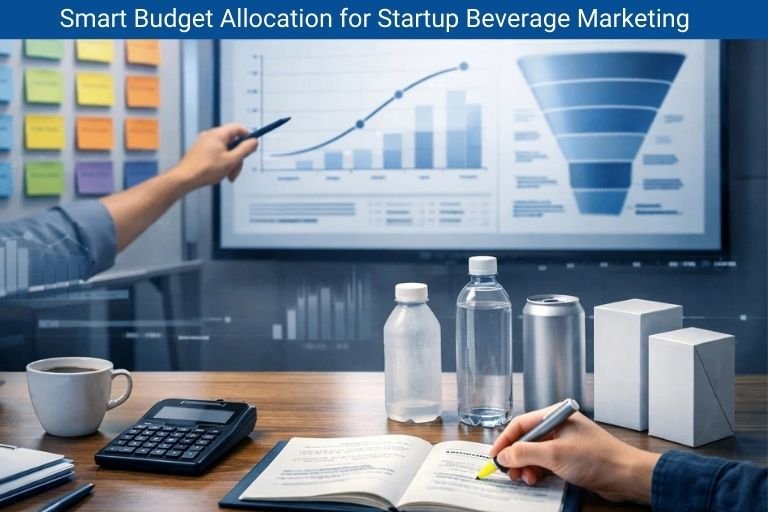
Budget Optimization Strategies: Maximizing Marketing Impact with Limited Resources
Startup marketing success requires strategic budget allocation that maximizes impact while building sustainable growth foundations. Effective budget optimization balances immediate sales generation needs with long-term brand building investments, ensuring your marketing efforts create both short-term results and lasting competitive advantages.
Channel Allocation Strategies for Beverage Marketing
Channel allocation strategies should prioritize high-impact, measurable activities that directly contribute to customer acquisition and retention goals. Digital marketing typically provides superior measurement capabilities and lower cost per acquisition compared to traditional channels, making it the logical focus for initial budget allocation. However, traditional marketing investments in credibility building and local market penetration often prove essential for long-term success.
Campaign Timing Optimization for Beverage Products
Campaign timing optimization requires understanding seasonal patterns, competitive activity cycles, and target audience engagement patterns. Beverage consumption often peaks during summer months and health-focused periods like January, creating opportunities for concentrated marketing efforts during high-impact periods. Understanding these patterns allows you to concentrate limited budgets during periods of maximum potential return.Testing and Optimization Strategies for Beverage Marketing Campaigns
Testing methodology should focus on small-scale experiments that provide actionable insights for larger investment decisions. A/B testing of advertising messages, landing page designs, and email campaigns provides data-driven guidance for budget allocation decisions. This approach minimizes risk while building intelligence that improves future marketing effectiveness.Resource Allocation Between Customer Acquisition and Retention in Beverage Marketing
Resource allocation between customer acquisition and retention activities requires careful balance based on your business model and growth stage. While customer acquisition often receives primary focus during startup phases, retention marketing typically provides superior return on investment and should receive increasing attention as your customer base grows. Understanding the lifetime value of customers in different segments helps optimize this allocation.Performance Measurement Systems for Beverage Marketing Effectiveness
Performance measurement systems must provide real-time insights that enable rapid optimization and course correction. Key performance indicators should include both leading indicators like website traffic and engagement rates, and lagging indicators like customer acquisition costs and lifetime value. Regular analysis of these metrics enables continuous improvement and ensures marketing investments generate maximum return.
Read Our Article: Beverage Manufacturing Technology Leadership with DTPPL
Content Marketing Excellence: Building Authority and Trust Through Value Creation
Content marketing represents one of your most powerful tools for building brand authority, educating consumers, and driving organic growth through search engine visibility and social sharing. Effective content marketing goes beyond basic product promotion to create genuine value for your target audience while positioning your brand as a trusted resource for beverage-related information and guidance.Educational Content Strategies for Beverage Consumer Education
Educational content strategies should address the questions and concerns that influence beverage purchasing decisions while demonstrating your expertise and commitment to consumer welfare. Content about hydration science, ingredient benefits, and health optimization provides value while subtly promoting your products’ advantages. This approach builds trust and authority while driving search engine traffic from consumers seeking reliable information.Storytelling Approaches for Beverage Marketing
Storytelling approaches in beverage marketing should focus on authentic narratives that connect with consumer values and aspirations. The story of your company’s founding, commitment to quality, and community impact creates emotional connections that differentiate your brand from generic competitors. Customer success stories and testimonials provide social proof while demonstrating real-world benefits that resonate with potential buyers.Visual Content Creation for Beverage Marketing Campaigns
Visual content creation requires investment in professional photography and videography that showcases your products’ appeal and lifestyle integration. High-quality images and videos are essential for social media success and website effectiveness, while professional production values communicate brand quality and attention to detail. This content should demonstrate usage occasions, health benefits, and lifestyle integration in authentic, appealing ways.Content Distribution Strategies for Beverage Brands
Content distribution strategies must ensure your valuable content reaches your target audience through appropriate channels and timing. Blog content provides search engine optimization benefits and positions your website as a destination for valuable information. Social media distribution amplifies reach and encourages sharing, while email newsletters deliver content directly to interested customers. Guest posting and collaboration opportunities extend your reach to new audiences.User-Generated Content for Beverage Brand Advocacy
User-generated content encouragement creates authentic brand advocacy while reducing content creation costs. Encouraging customers to share photos, reviews, and usage suggestions creates social proof while providing fresh content for your marketing channels. This approach builds community around your brand while demonstrating real-world product satisfaction and lifestyle integration.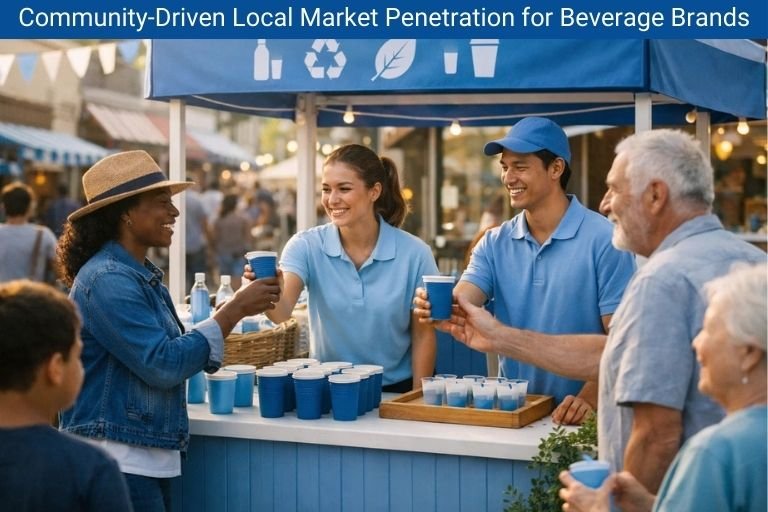
Local Market Penetration: Building Strong Regional Foundations for Beverage Brands
Local market success provides the foundation for broader expansion while creating sustainable competitive advantages that larger competitors struggle to replicate. Effective local marketing combines deep community understanding with targeted outreach strategies that build brand recognition and customer loyalty within specific geographic areas.
Community Engagement for Beverage Marketing
Community engagement strategies should position your brand as a valued community member rather than an outside commercial entity. Sponsoring local events, supporting community causes, and partnering with local businesses creates positive associations while building brand visibility. These activities should align with your brand values while providing measurable return through increased brand awareness and customer acquisition.Local Partnership Development for Beverage Distribution
Local partnership development with retailers, restaurants, and service providers creates distribution opportunities while building mutually beneficial business relationships. Exclusive local offerings, co-marketing initiatives, and cross-promotional opportunities can significantly expand your market reach while reducing marketing costs. These partnerships should provide clear value to all parties while supporting your broader marketing objectives.Geographic Expansion Planning for Beverage Marketing
Geographic expansion planning should identify adjacent markets with similar demographic profiles and competitive landscapes that represent natural growth opportunities. Understanding the factors that drive success in your initial market allows you to replicate effective strategies in new locations while avoiding common expansion pitfalls. This systematic approach reduces risk while accelerating growth in new markets.Local Media Relationships for Beverage Brand Visibility
Local media relationships provide cost-effective publicity opportunities that build brand credibility and market awareness. Developing relationships with local newspaper editors, radio personalities, and community influencers creates opportunities for media coverage that would be prohibitively expensive through paid advertising. These relationships should be built on genuine value exchange rather than purely promotional objectives.Performance Measurement and Optimization for Beverage Marketing Success
Performance measurement systems must provide real-time insights that enable rapid optimization and course correction. Key performance indicators should include both leading indicators like website traffic and engagement rates, and lagging indicators like customer acquisition costs and lifetime value. Regular analysis of these metrics enables continuous improvement and ensures marketing investments generate maximum return.Data-Driven Marketing for Beverage Industry Growth
Successful startup marketing requires continuous measurement, analysis, and optimization based on real performance data rather than assumptions or hope. Effective measurement systems provide actionable insights that guide resource allocation decisions and identify opportunities for improvement while ensuring accountability for marketing investments.Key Performance Indicator (KPI) Selection for Beverage Marketing
Key performance indicator selection should balance leading indicators that predict future success with lagging indicators that measure actual business results. Website traffic, social media engagement, and email open rates provide early signals about marketing effectiveness, while customer acquisition costs, lifetime value, and sales conversion rates measure ultimate business impact. Regular analysis of both types of metrics enables proactive optimization and course correction.
Google Analytics Implementation
Analytics implementation requires proper tracking setup across all marketing channels to ensure accurate attribution and performance measurement. Google Analytics, social media analytics platforms, and email marketing measurement tools should be configured to track customer journeys from initial awareness through purchase and retention. This comprehensive tracking enables optimization of the entire customer experience rather than individual marketing components.
Testing Methodology for Marketing Campaign Optimization
Testing methodology should focus on systematic experimentation that provides statistically significant insights for optimization decisions. A/B testing of advertising messages, landing page designs, and email campaigns should follow proper statistical procedures to ensure reliable results. This approach minimizes risk while building intelligence that improves future marketing effectiveness.Optimization Strategies for Beverage Marketing Campaigns
Optimization strategies should prioritize high-impact improvements that directly contribute to business objectives while considering implementation complexity and resource requirements. Small improvements in conversion rates or customer acquisition costs can significantly impact overall business performance, making systematic optimization a crucial competitive advantage for resource-constrained startups.Reporting Systems for Effective Marketing Performance Tracking
Reporting systems should provide regular insights that enable rapid decision-making and course correction while maintaining accountability for marketing investments. Weekly performance reviews, monthly strategic assessments, and quarterly comprehensive evaluations ensure marketing efforts remain aligned with business objectives while identifying emerging opportunities and challenges.

Common Startup Marketing Pitfalls and Prevention Strategies
Understanding and avoiding common marketing mistakes can save substantial time, money, and market opportunity while positioning your startup for sustainable success. These pitfalls often result from inexperience, resource constraints, or misunderstanding of beverage industry dynamics, making awareness and prevention strategies essential for startup success.Budget Allocation Mistakes in Beverage Marketing
Budget allocation mistakes frequently involve either spreading resources too thin across multiple channels or concentrating too heavily on single approaches without proper testing and optimization. Effective budget management requires starting with focused efforts that provide measurable results, then gradually expanding based on proven success rather than assumptions about channel effectiveness.
Target Audience Definition Errors in Beverage Marketing
Target audience definition errors often result from oversimplified demographic analysis that misses the psychographic and behavioral factors that actually drive purchasing decisions. Successful targeting requires deep understanding of customer motivations, decision-making processes, and lifestyle factors that influence beverage choices beyond basic age, income, and geographic characteristics.Messaging Consistency Failures in Beverage Marketing
Messaging consistency failures occur when marketing communications across different channels convey conflicting brand positioning or value propositions. Establishing clear brand guidelines and messaging frameworks before launching marketing campaigns ensures consistent communication that builds brand recognition and trust rather than confusion.
Timing Miscalculations in Beverage Marketing Campaigns
Timing miscalculations can significantly impact marketing effectiveness, particularly in the seasonally influenced beverage industry. Understanding consumption patterns, competitive activity cycles, and target audience engagement patterns enables optimal timing for product launches, promotional campaigns, and content marketing initiatives.Performance Measurement Inadequacies in Beverage Marketing
Performance measurement inadequacies often result from tracking vanity metrics that don’t correlate with business results rather than focusing on indicators that directly impact customer acquisition, retention, and profitability. Establishing proper measurement frameworks from the beginning enables data-driven optimization and prevents wasted marketing investments.
DTPPL’s Marketing Success Partnership: Amplifying Your Marketing Impact
DTPPL’s comprehensive marketing support program recognizes that manufacturing excellence alone doesn’t guarantee market success—effective marketing strategies and execution are equally crucial for beverage industry achievement. Our marketing partnership approach combines industry expertise with practical implementation support that amplifies your marketing impact while reducing common startup mistakes.Technical Excellence Integration into Marketing Messages
Technical excellence integration into marketing messages ensures your marketing communications effectively convey the quality and innovation advantages that DTPPL equipment provides. Understanding how to translate technical specifications into consumer benefits enables more effective marketing while building competitive differentiation that resonates with target audiences.
Industry Expertise Sharing Through Marketing Partnership
Industry expertise sharing through our marketing partnership provides access to decades of beverage industry knowledge that informs strategic decision-making and prevents common mistakes. Our experience across diverse markets, products, and business models provides valuable insights that accelerate your marketing success while avoiding costly trial-and-error approaches.Network Access Through DTPPL’s Industry Relationships
Network access through DTPPL’s extensive industry relationships creates opportunities for partnership development, media relationships, and market intelligence that would be difficult for startups to develop independently. These connections provide competitive advantages while accelerating market penetration and business development.Ongoing Support and Consultation for Marketing Effectiveness
Ongoing support and consultation ensures your marketing strategies evolve effectively as your business grows and market conditions change. Regular strategy reviews, performance analysis, and optimization recommendations help maintain marketing effectiveness while adapting to new challenges and opportunities.
Success Amplification Through DTPPL Partnership
Success amplification through DTPPL partnership positions your brand for accelerated growth and market leadership by combining manufacturing excellence with marketing effectiveness. This comprehensive approach creates sustainable competitive advantages that drive long-term business success and market positioning.
The DTPPL Advantage: Transforming Vision into Reality in Beverage Industry Marketing
This comprehensive training manual represents more than 25 years of industry leadership, innovation, and customer success. DTPPL’s commitment to excellence extends beyond equipment manufacturing to comprehensive partnership, ensuring every client achieves sustainable competitive advantage and measurable business success.
Why Choose DTPPL: Unmatched Value Proposition for Beverage Startups
Technical Excellence
- Cutting-edge technology and engineering innovation
- Proven quality systems and international certifications
- Continuous research and development programs
- Industry-leading performance and reliability
Comprehensive Solutions for Beverage Manufacturing
- Complete equipment and system solutions
- Professional installation and commissioning services
- Ongoing support and maintenance programs
- Business development and strategic consulting
Global Expertise in Beverage Market
- International market knowledge and experience
- Multi-cultural competency and local adaptation
- Global support network and service capabilities
- Proven success across diverse markets and applications
Customer Partnership for Long-Term Success
- Dedicated account management and relationship development
- Customized solutions addressing specific customer needs
- Ongoing business development and growth support
- Long-term partnership and mutual success focus
Read Our Article: What is the Investment, Cost, and Profit in the Soft Drink Business?
Your Success Journey Starts Here: Partnering with DTPPL for Beverage Marketing Success
Whether you’re an entrepreneur launching your first beverage manufacturing operation, an established company seeking expansion and growth, or a global brand requiring technological innovation and operational excellence, DTPPL provides the expertise, solutions, and partnership to transform your vision into measurable success.
Take Action Today:
- Contact DTPPL’s expert consultation team
- Schedule a comprehensive needs assessment
- Develop your customized solution strategy
- Begin your journey to market leadership and business success
FAQs for Beverage Industry Startup Marketing Strategies
What are the first steps in creating a successful beverage startup marketing strategy?
Start by understanding your target audience, their preferences, and market trends. Conduct market research and define your unique value proposition to position your brand effectively.How can I identify my target audience in the beverage industry?
Effective segmentation is key. Use demographic, psychographic, and behavioral data to define specific consumer segments, such as health-conscious individuals or premium product seekers.What digital marketing strategies should I focus on for my beverage brand?
Focus on search engine optimization (SEO), social media marketing, content marketing, and email campaigns to build an online presence and engage your audience effectively.How can I differentiate my beverage startup from established brands?
Leverage your startup’s agility by focusing on niche markets, offering unique product innovations, and tapping into emerging consumer trends like health consciousness and sustainability.How important is consumer behavior research for a beverage startup?
Consumer behavior is crucial in the beverage industry. Conduct taste testing, focus groups, and surveys to understand preferences, purchasing patterns, and key decision-making factors.What are the benefits of using influencer marketing for beverage startups?
Influencer marketing helps build credibility, increase brand awareness, and foster consumer trust through authentic endorsements from trusted figures in your target market.
What role does emotional branding play in beverage marketing?
Emotional branding connects with consumers on a personal level, making them feel good about their purchase. It emphasizes the lifestyle, joy, or self-care associated with your product.
How can I maximize the effectiveness of paid advertising for my beverage startup?
Optimize paid advertising through platforms like Google Ads, social media, and retargeting campaigns. Focus on capturing high-intent consumers and improving conversion rates.
What is the importance of local market penetration for beverage startups?
Targeting local markets helps create brand recognition and loyal customers while providing a foundation for expansion into broader markets. Community engagement and local partnerships are essential.
How do I track the success of my beverage startup’s marketing efforts?
Use key performance indicators (KPIs) such as website traffic, engagement rates, and customer acquisition costs to measure the effectiveness of your marketing strategies and adjust accordingly.
Our associates








































Director – Global Marketing and Sales
Mr. Bhavesh from Dharmanandan Techno Projects Pvt. Ltd. has played a pivotal role in elevating the DTPPL brand to the global stage, leveraging his exceptional expertise in marketing and communications. He is committed to helping clients achieve significant growth while strengthening their own brands. Dharmanandan Techno Projects Pvt. Ltd. is a leading manufacturer and supplier of water purification systems and turnkey solutions for mineral water plants. With years of experience in designing and delivering high-quality water treatment solutions, the company provides end-to-end services, including system design, installation, maintenance, and ongoing support. Specializing in scalable and customizable water plants, DTPPL has successfully served industries worldwide, ensuring clean and safe drinking water across diverse applications.