



Listening Article
Table of Contents
Ghana’s Mineral Water Market: A Comprehensive Insight
October 8, 2025
Objective
The objective of this article is to provide a comprehensive overview of Ghana’s bottled water industry, with a focus on the mineral water sector. It aims to explore key aspects such as water scarcity, purification technologies, licensing requirements, investment opportunities, government support, and challenges faced by local entrepreneurs. Additionally, the article sheds light on the potential for exporting bottled water to neighbouring West African countries and how companies like Dharamanandan Techno Projects Pvt. Ltd. (DTPPL) assist in setting up mineral water plants in Ghana. The goal is to inform entrepreneurs, investors, and stakeholders about the growing bottled water market in Ghana and the factors to consider when establishing and operating a mineral water plant.
Ghana, a country located in West Africa, is known for its rich culture, diverse ecosystems, and growing economy. However, like many developing nations, Ghana faces challenges related to water availability, accessibility, and purity. The growing demand for safe, drinkable water has led to an expanding bottled water industry, presenting investment opportunities and challenges for both local entrepreneurs and international investors. This article dives deep into the current state of Ghana’s water resources, focusing on bottled water, including scarcity, the latest purification technologies, licensing requirements, and market opportunities.
Interesting Facts and Statistics About Ghana’s Water Situation
- Water Scarcity: Despite having access to several water bodies such as the Volta River, Ghana struggles with water scarcity. A significant portion of the population still lacks access to clean drinking water, especially in rural areas.
- Population and Access to Clean Water: According to the World Bank, over 25% of Ghana’s population does not have access to clean and safe drinking water. This scarcity has contributed to the rapid growth of bottled water consumption.
- Growing Demand for Bottled Water: As of recent reports, bottled water consumption in Ghana has been on a steady rise, driven by urbanization and increased health consciousness. The market has grown annually by over 10%, creating a thriving business environment for water bottling companies.
- Government Initiatives: The Ghanaian government, through agencies like the Ghana Water Company Limited (GWCL), is actively involved in expanding water infrastructure. However, gaps in rural areas continue to persist.

Investment Opportunities in Ghana’s Growing Bottled Water Industry
The bottled water industry in Ghana is one of the fastest-growing sectors, driven by both domestic and international demand. The investment opportunities in this sector are vast and can be categorized as follows:
1. Urban Areas:
- Major cities like Accra, Kumasi, Takoradi, and Tema present lucrative opportunities for establishing mineral water plants. With a large population and growing urbanization, the demand for bottled water is high.
2. Rural Areas:
- While urban centers have witnessed increased demand, rural regions, particularly in the Northern and Upper West regions, are often underserved in terms of clean water access. Establishing plants in these regions could provide both a profitable venture and a much-needed service.
3. Rising Middle Class:
- The rise of Ghana’s middle class, who are increasingly inclined toward bottled water over tap water due to concerns about water quality, is driving growth in the bottled water market.
Licensing and Regulatory Requirements for Bottled Water Production in Ghana
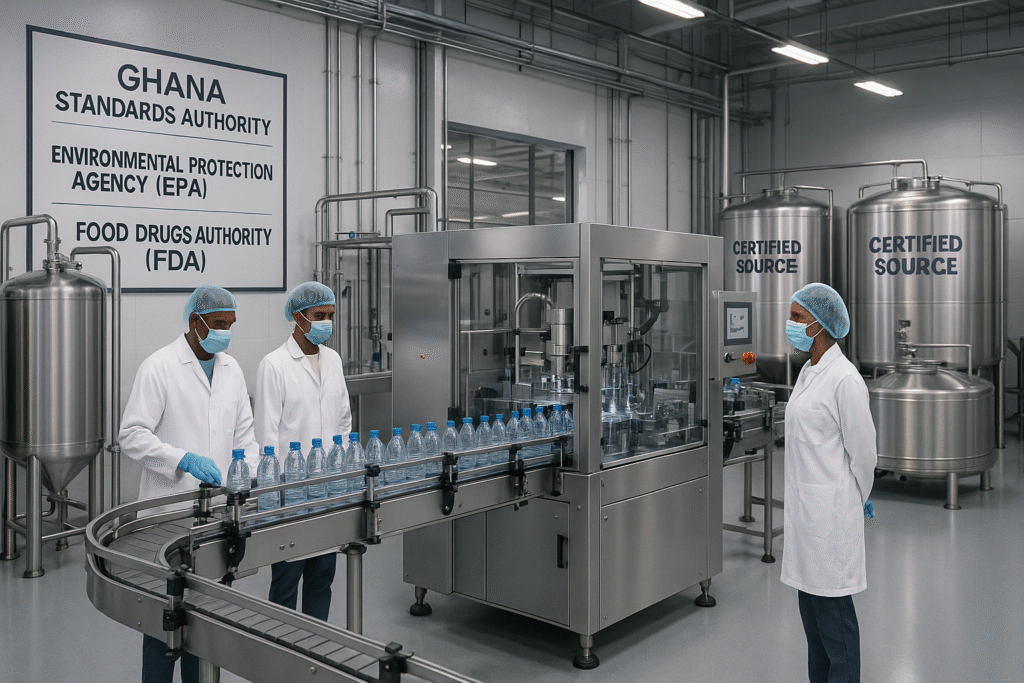
To set up a bottled water production plant in Ghana, investors need to comply with several regulations that govern water purity, production standards, and environmental considerations. The following are key aspects to consider:
1. Ghana Standards Authority (GSA) Certification:
- All bottled water must meet the quality standards set by the GSA, which ensures that the water is safe for consumption. Certification from GSA is required before any product can be sold in the market.
2. Environmental Protection Agency (EPA) Compliance:
- The EPA ensures that water bottling plants adhere to environmental standards, especially concerning the disposal of plastic bottles and waste water. This is critical for maintaining sustainable practices in the industry.
3. Food and Drugs Authority (FDA) Approval:
- The FDA oversees the health and safety of food products, including bottled water. Before starting production, a factory must pass FDA inspections for hygiene, manufacturing processes, and product labeling.
4. Water Source Licenses:
- Licensing for the extraction of groundwater or surface water for bottling purposes is another crucial aspect. It ensures that the water source is sustainable and does not deplete local resources.
5. Scarcity and Sustainability Concerns:
- Given the country’s water scarcity issues, water extraction must be managed to ensure sustainability. Investors need to explore natural springs or renewable groundwater resources to ensure long-term production.
Government Support and Schemes for the Water Bottling Industry in Ghana
The Ghanaian government recognizes the importance of the bottled water sector in both providing safe drinking water and creating jobs. Several support mechanisms are in place:
1. Tax Incentives:
- The government offers tax incentives for businesses that set up manufacturing operations in the country, which include tax holidays and reduced import duties for certain equipment used in the production of bottled water.
2. Infrastructure Support:
- The government is actively working to improve water infrastructure in Ghana, including modernizing water treatment plants and ensuring a more reliable water supply for bottling companies.
3. Public-Private Partnerships (PPPs):
- Through partnerships with private companies, the government seeks to improve water access and support the growth of bottled water production. Investors may also explore opportunities for joint ventures with local entities.
Latest Water Purification Technologies Used in Ghana’s Mineral Water Plants
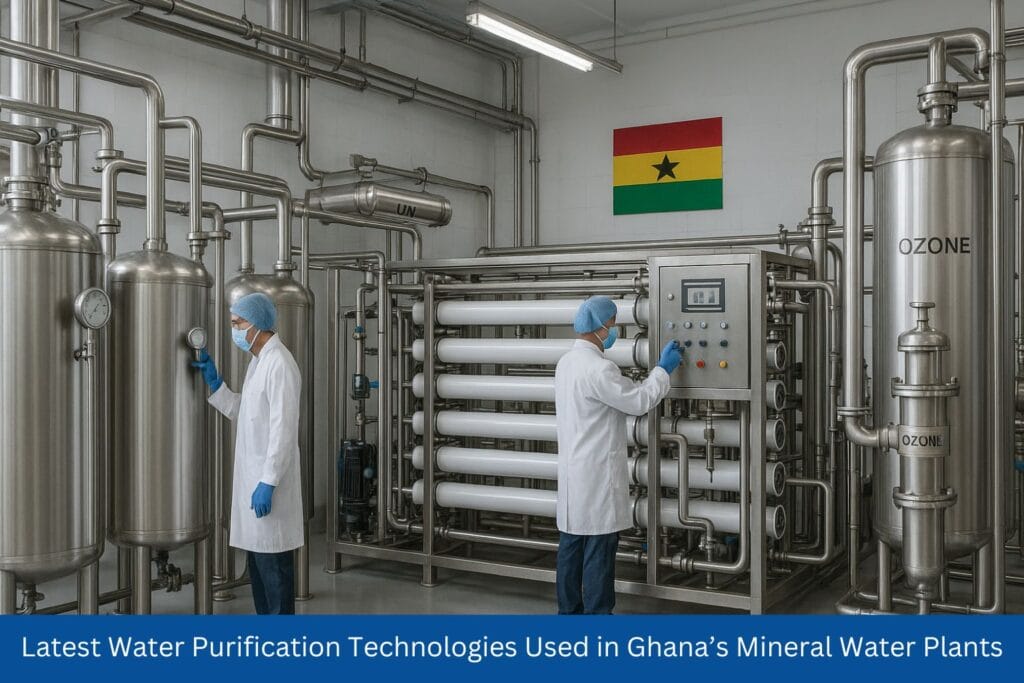
The water bottling industry in Ghana relies on state-of-the-art purification technologies to ensure the water is safe and meets international standards. Some of the technologies employed include:
1. Reverse Osmosis (RO):
- RO is the most commonly used method for purifying water. It effectively removes contaminants and provides high-quality mineral water, ensuring the water is free from bacteria, chemicals, and salts.
2. Ultraviolet (UV) Disinfection:
- UV treatment is used as an additional step after filtration to kill any remaining microorganisms, ensuring that the water is microbiologically safe.
3. Ozonation:
- Some plants use ozone for disinfection, as it provides a more environmentally friendly option compared to traditional chemicals.
4. Carbon Filtration:
- Activated carbon filters help in removing chlorine, bad odors, and other volatile organic compounds, improving the taste and quality of water.
Export Potential of Bottled Mineral Water from Ghana to West African Markets
With its strategic location in West Africa, Ghana has significant potential to become a leading exporter of bottled water to neighboring countries. The following factors play a role:
1. Proximity to West African Markets:
- Ghana’s access to other West African countries, such as Nigeria, Côte d’Ivoire, and Burkina Faso, creates opportunities for exporting bottled water to these rapidly growing markets.
2. Growing Demand in Neighboring Countries:
- As many West African nations struggle with access to clean drinking water, Ghana’s bottled water industry is poised to meet the rising demand in these countries.
3. Regional Trade Agreements:
- Ghana benefits from various regional trade agreements, such as the Economic Community of West African States (ECOWAS), which facilitates smoother export operations.
Challenges and Opportunities in Ghana’s Mineral Water Manufacturing Sector
Challenges:
- Water Scarcity: The availability of high-quality water for bottling is a significant concern. Many areas face inconsistent water supply, and over-extraction of groundwater could lead to environmental issues.
- Environmental Impact of Plastic Bottles: The excessive use of plastic for bottled water has raised environmental concerns, with an increasing need for sustainable packaging solutions.
- High Production Costs: The costs of importing machinery, raw materials, and maintaining high-quality water standards can be significant for producers.
Opportunities:
- Untapped Rural Markets: While urban markets are growing, there are still underserved rural areas with increasing demand for bottled water.
- Eco-friendly Packaging: The increasing global emphasis on sustainability presents an opportunity for businesses to innovate with biodegradable or recyclable bottles.
- Government Incentives: As the government continues to support the industry, the opportunity for setting up new plants in both urban and rural regions is promising.
How Dharamanandan Techno Projects Pvt. Ltd. (DTPPL) Helps Local Entrepreneurs Set Up Mineral Water Plants
Dharamanandan Techno Projects Pvt. Ltd. (DTPPL) is an industry leader in providing turnkey solutions for setting up mineral water plants. Here’s how they support local entrepreneurs in Ghana:
1. Consultation and Feasibility Studies:
- The company conducts thorough feasibility studies to identify the best locations for setting up mineral water plants based on demand, water availability, and infrastructure.
2. Water Treatment Technology:
- Dharamanandan Techno Projects Pvt. Ltd. provides advanced water treatment and purification systems such as reverse osmosis, UV disinfection, and ozonation, ensuring the water meets international quality standards.
3. Turnkey Solutions:
- From designing the plant layout to installation of equipment and machinery, Dharamanandan offers complete turnkey solutions. This reduces the burden on local entrepreneurs by providing them with everything needed to start operations.
4. Ongoing Support and Maintenance:
- They offer after-sales support, including training for local staff and maintenance of water treatment systems, ensuring long-term sustainability and compliance with local regulations.
5. Regulatory Compliance Assistance:
- Dharamanandan Techno Projects helps entrepreneurs navigate the complex regulatory landscape in Ghana, ensuring that the plant meets all licensing and environmental requirements.
Conclusion
The bottled water industry in Ghana presents both exciting opportunities and challenges. With increasing demand for safe drinking water, the potential for investment is significant. However, entrepreneurs must navigate licensing requirements, environmental considerations, and the challenges of water scarcity. Companies like Dharamanandan Techno Projects Pvt. Ltd. play a crucial role in supporting local businesses in setting up mineral water plants by providing expertise, advanced technology, and comprehensive solutions to ensure success in this growing sector.

Commonly Asked Questions by Ghanaian People About Mineral Water
Here are some of the most commonly asked questions and answers related to mineral water and setting up a mineral water plant in Ghana.
1. What is the difference between bottled mineral water and regular bottled water?
Mineral water comes from natural sources like springs or wells and contains essential minerals like calcium, magnesium, and potassium, which provide health benefits. Regular bottled water, on the other hand, may be tap water that has been filtered and purified but lacks the natural minerals found in mineral water.
2. Why is there a growing demand for bottled water in Ghana?
The growing demand for bottled water in Ghana is primarily due to concerns about the safety and quality of tap water. Many people in urban and rural areas prefer bottled water as a safe alternative to water from wells or municipal sources, which may be contaminated with bacteria, chemicals, or other impurities. Additionally, the rising health awareness among Ghanaians contributes to the increase in bottled water consumption.
3. What are the costs involved in setting up a mineral water plant in Ghana?
Setting up a mineral water plant in Ghana involves several costs, including:
- Land Acquisition: The cost depends on the location of the plant.
- Equipment: Costs for water purification systems (e.g., reverse osmosis, UV treatment), bottling machinery, and packaging systems can vary depending on the plant size.
- Licensing and Regulatory Fees: These include costs for obtaining licenses from the Ghana Standards Authority (GSA), Food and Drugs Authority (FDA), and the Environmental Protection Agency (EPA).
- Operational Costs: These include labor, utilities, maintenance, and raw materials like bottles and caps.
4. How profitable is the bottled water business in Ghana?
The bottled water business in Ghana can be highly profitable, with annual growth rates of over 10% in recent years. Profit margins depend on the scale of operations, cost-efficiency, and market positioning. On average, small-scale plants can achieve a profit margin of around 15-20%, while larger operations can expect higher margins if they have strong brand recognition and wide distribution networks. The industry’s rapid growth and relatively low competition in certain regions offer promising profitability, particularly for those targeting both urban and rural markets.
5. What are the licensing and regulatory requirements for setting up a mineral water plant in Ghana?
To set up a mineral water plant in Ghana, entrepreneurs must obtain the following approvals:
- Ghana Standards Authority (GSA) Certification: Ensures that the water meets safety and quality standards.
- Food and Drugs Authority (FDA) Approval: Ensures that the plant operates under health and hygiene standards and the final product is safe for consumption.
- Environmental Protection Agency (EPA) Compliance: Ensures that the plant meets environmental standards related to water usage, waste management, and pollution control.
- Water Source License: Entrepreneurs need a license to extract groundwater or use surface water for bottling purposes, ensuring sustainability.
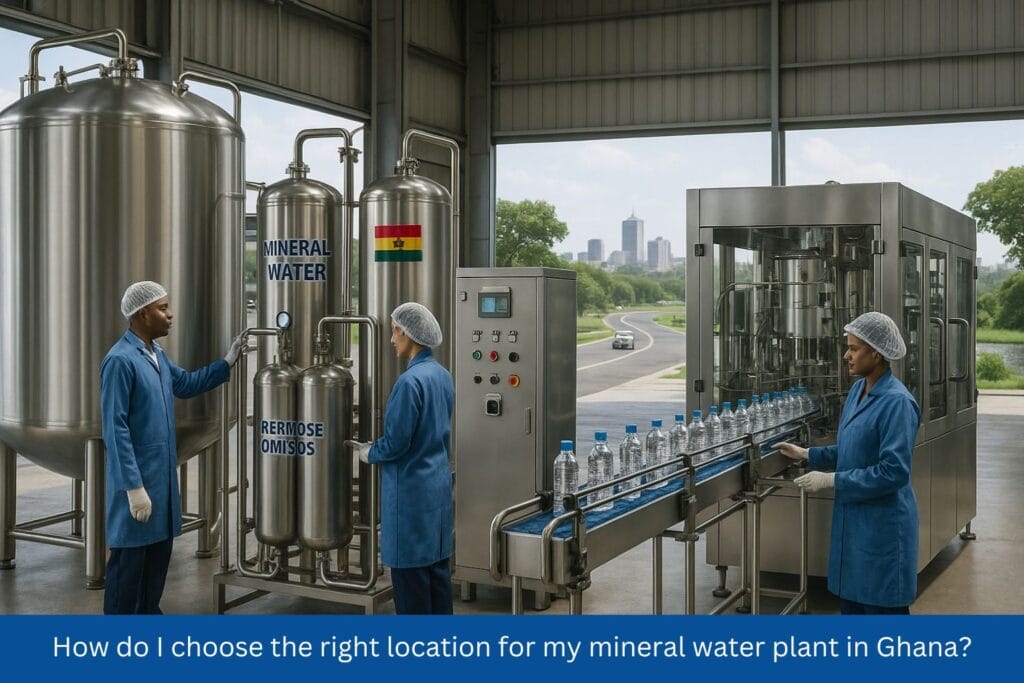
6. How do I choose the right location for my mineral water plant in Ghana?
When choosing a location for a mineral water plant in Ghana, consider the following factors:
- Proximity to water sources: Choose a location near clean, sustainable water sources (e.g., natural springs or groundwater).
- Access to transportation: The plant should be near good road networks for easy distribution of products.
- Population Density: Urban areas with a higher population density, like Accra, Kumasi, or Takoradi, have higher demand for bottled water.
- Availability of labor: Choose a location where skilled labor is available for plant operations.
- Regulatory Considerations: Make sure the location complies with local regulations for water extraction and environmental impact.
7. What are the challenges of setting up a mineral water plant in Ghana?
The main challenges of setting up a mineral water plant in Ghana include:
- Water Scarcity: Finding reliable and sustainable water sources can be challenging, especially during periods of drought.
- High Initial Costs: The setup costs, including purchasing equipment and obtaining permits, can be significant.
- Environmental Concerns: Managing plastic waste from bottled water and ensuring sustainable practices is an ongoing challenge.
- Regulatory Compliance: Navigating the regulatory environment can be complex, requiring strict adherence to quality standards and environmental rules.
- Competition: The market is becoming increasingly competitive, especially in urban centers, and new entrants need strong marketing strategies to stand out.
8. How much can I expect to earn from operating a mineral water plant in Ghana?
Earnings from a mineral water plant in Ghana depend on factors such as plant size, distribution capacity, market demand, and operational efficiency. A well-established plant producing and selling approximately 100,000 bottles per month could generate annual revenues ranging from $200,000 to $500,000. As the plant expands its distribution network and gains brand recognition, profits can grow significantly. It’s also crucial to factor in costs like raw materials, packaging, labor, and marketing when calculating profitability.
9. What are the latest water purification technologies used in Ghana’s mineral water plants?
Mineral water plants in Ghana commonly use several advanced purification technologies:
- Reverse Osmosis (RO): This method effectively removes contaminants, salts, and minerals, ensuring high-quality water.
- Ultraviolet (UV) Disinfection: UV light kills bacteria, viruses, and microorganisms, ensuring the water is microbiologically safe.
- Ozonation: Some plants use ozone to disinfect water, providing an eco-friendly alternative to chemicals.
- Activated Carbon Filtration: This technology is used to remove chlorine, organic compounds, and odors from the water.
10. Can I export bottled mineral water from Ghana to other countries?
Yes, Ghana has great export potential for bottled water, especially to neighboring West African countries such as Nigeria, Côte d’Ivoire, and Burkina Faso. Ghana’s location and favorable trade agreements with the Economic Community of West African States (ECOWAS) make it easier to export bottled water within the region. The demand for safe, drinkable water in other West African countries provides a valuable market for Ghanaian mineral water producers. Exporting bottled water is a growing opportunity for businesses in the sector.
11. What are the environmental concerns associated with bottled water in Ghana?
The main environmental concerns surrounding bottled water in Ghana include:
- Plastic Waste: The overuse of plastic bottles poses a significant environmental challenge, contributing to pollution.
- Water Over-extraction: Unsustainable water extraction for bottling can deplete local groundwater reserves, leading to long-term environmental damage.
- Energy Consumption: Running water treatment plants and bottling facilities requires substantial energy, which can contribute to carbon emissions.

Director – Global Marketing and Sales
Mr. Bhavesh from Dharmanandan Techno Projects Pvt. Ltd. has played a pivotal role in elevating the DTPPL brand to the global stage, leveraging his exceptional expertise in marketing and communications. He is committed to helping clients achieve significant growth while strengthening their own brands. Dharmanandan Techno Projects Pvt. Ltd. is a leading manufacturer and supplier of water purification systems and turnkey solutions for mineral water plants. With years of experience in designing and delivering high-quality water treatment solutions, the company provides end-to-end services, including system design, installation, maintenance, and ongoing support. Specializing in scalable and customizable water plants, DTPPL has successfully served industries worldwide, ensuring clean and safe drinking water across diverse applications.